Asphalt Sealcoating in Montgomery County, MD
Two real methods, two real materials — the right one depends on your driveway, not a one-size-fits-all sales pitch.
The Right Sealcoating Method for Your Driveway
Sealcoating protects asphalt from the two things that break it down fastest: water working its way into the surface, and UV rays breaking down the asphalt binder over time. Done right, it adds real years to a driveway’s life. Done wrong — or done with whatever product happens to be on the truck that day — it doesn’t do much at all. We use two different methods, and which one we recommend depends on the actual condition and age of your driveway, not a single default answer.
Oil-Based Sealer, Pressurized Application
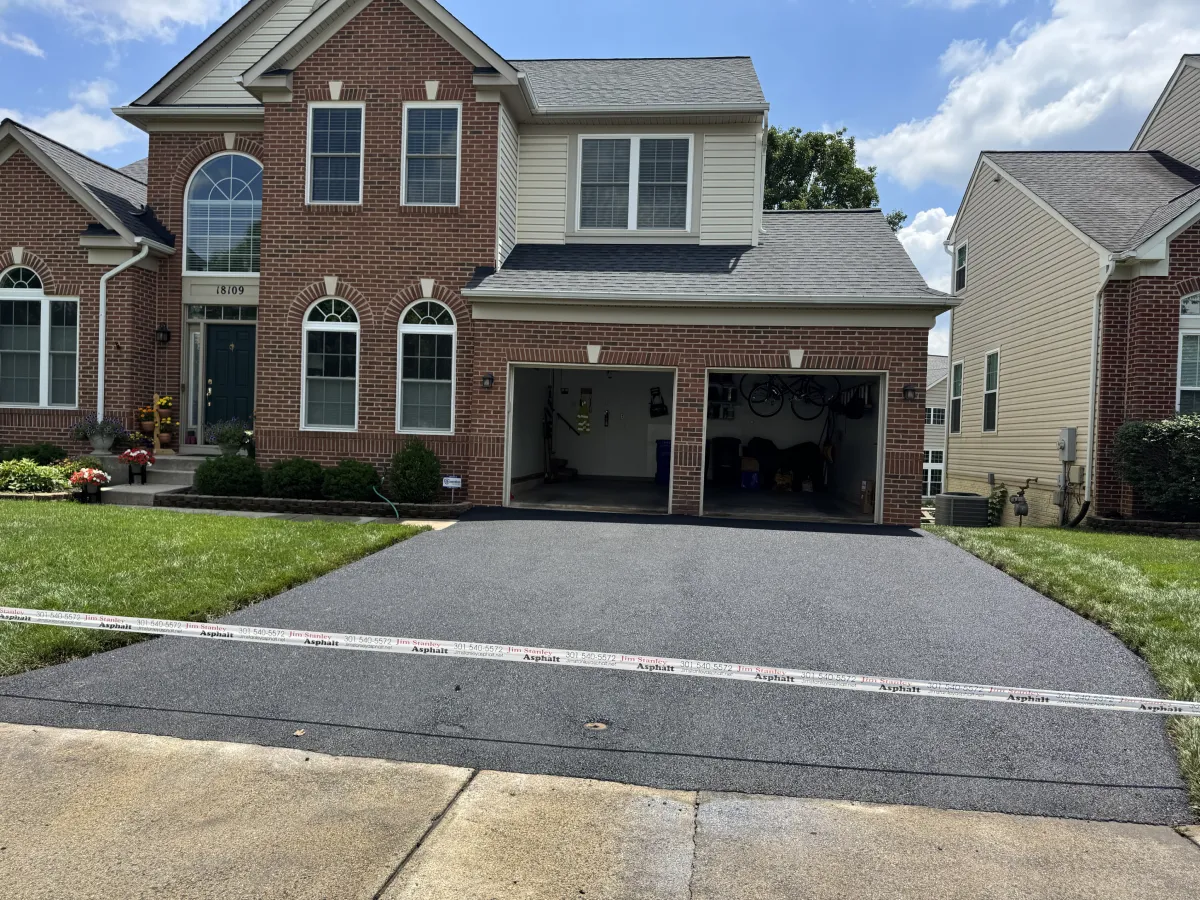
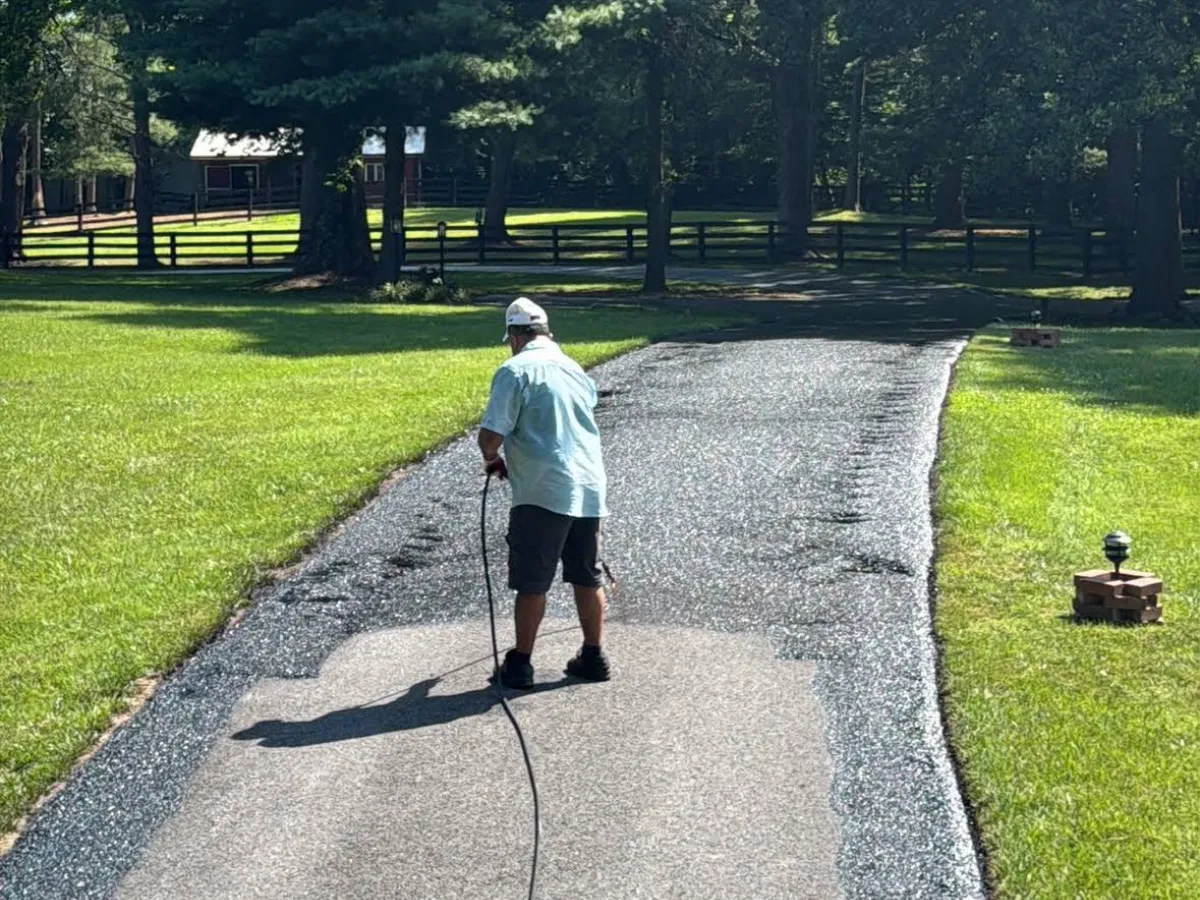
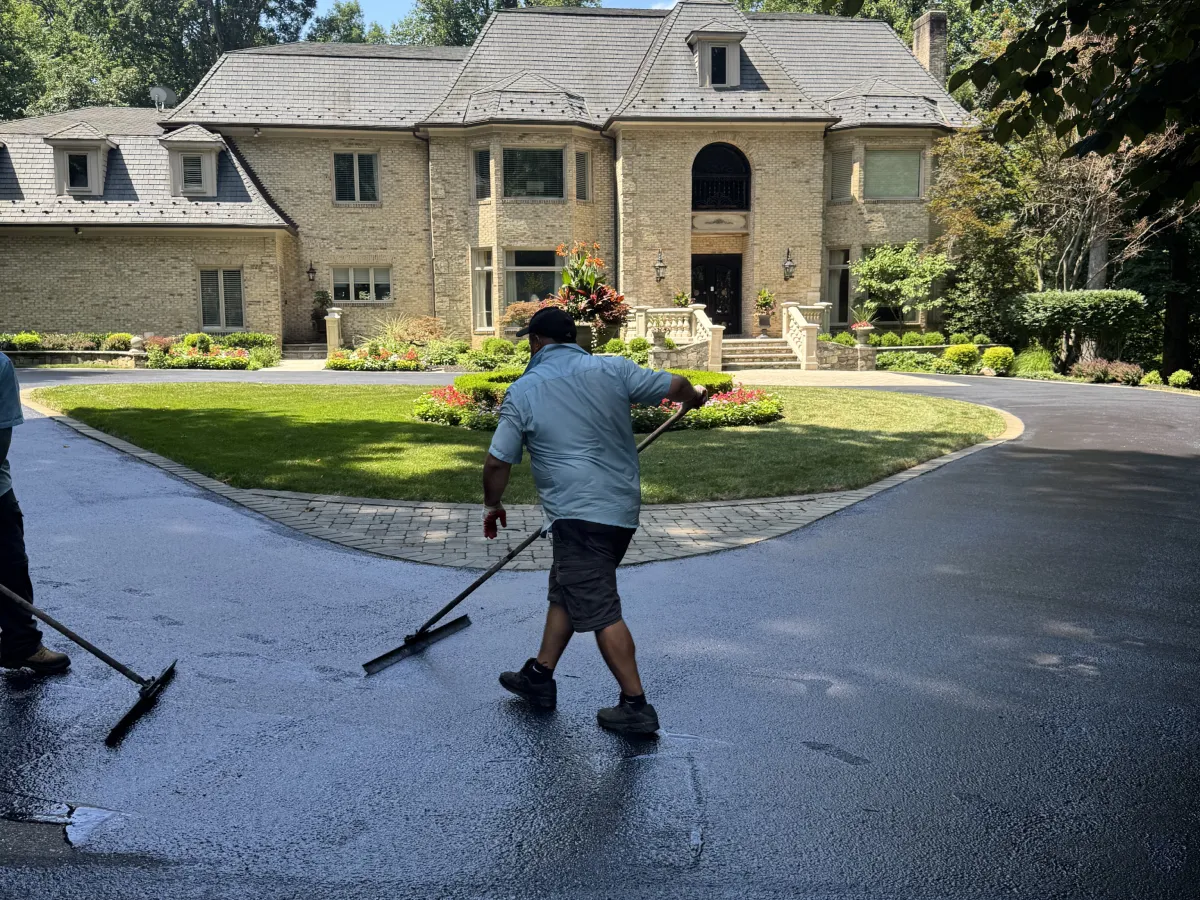
For newer driveways, we apply an oil-based sealer under pressure, forcing it into every void, crack, and pore in the surface. This method is about prevention — it’s the right choice when a driveway is still in good shape and the goal is to keep it that way. The pressurized application gets material into places a brush simply can’t reach, waterproofing the surface thoroughly and helping a newer driveway hold its look and its integrity for years before it ever shows real wear.
Latex Sealer, Brush-Applied
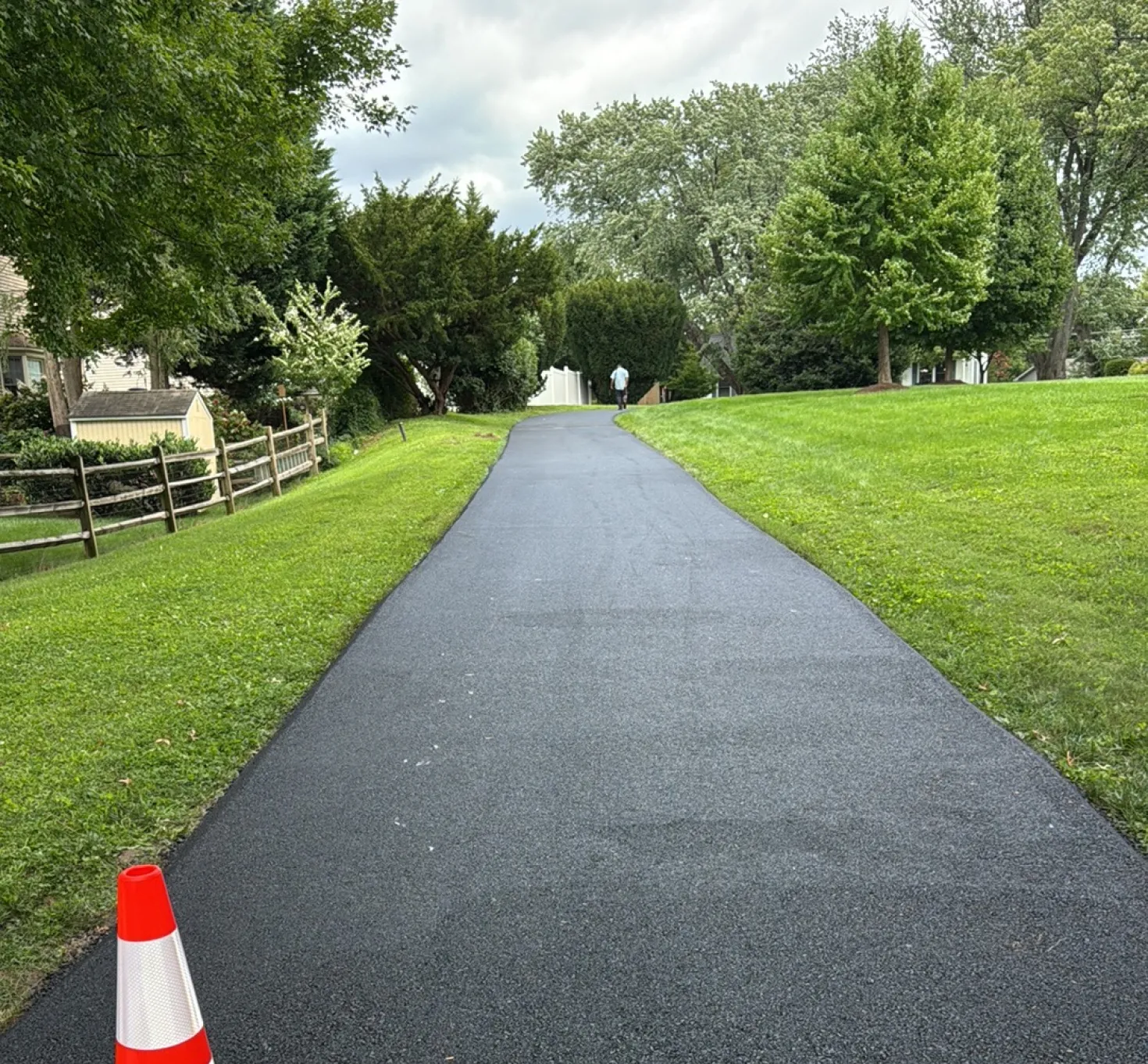
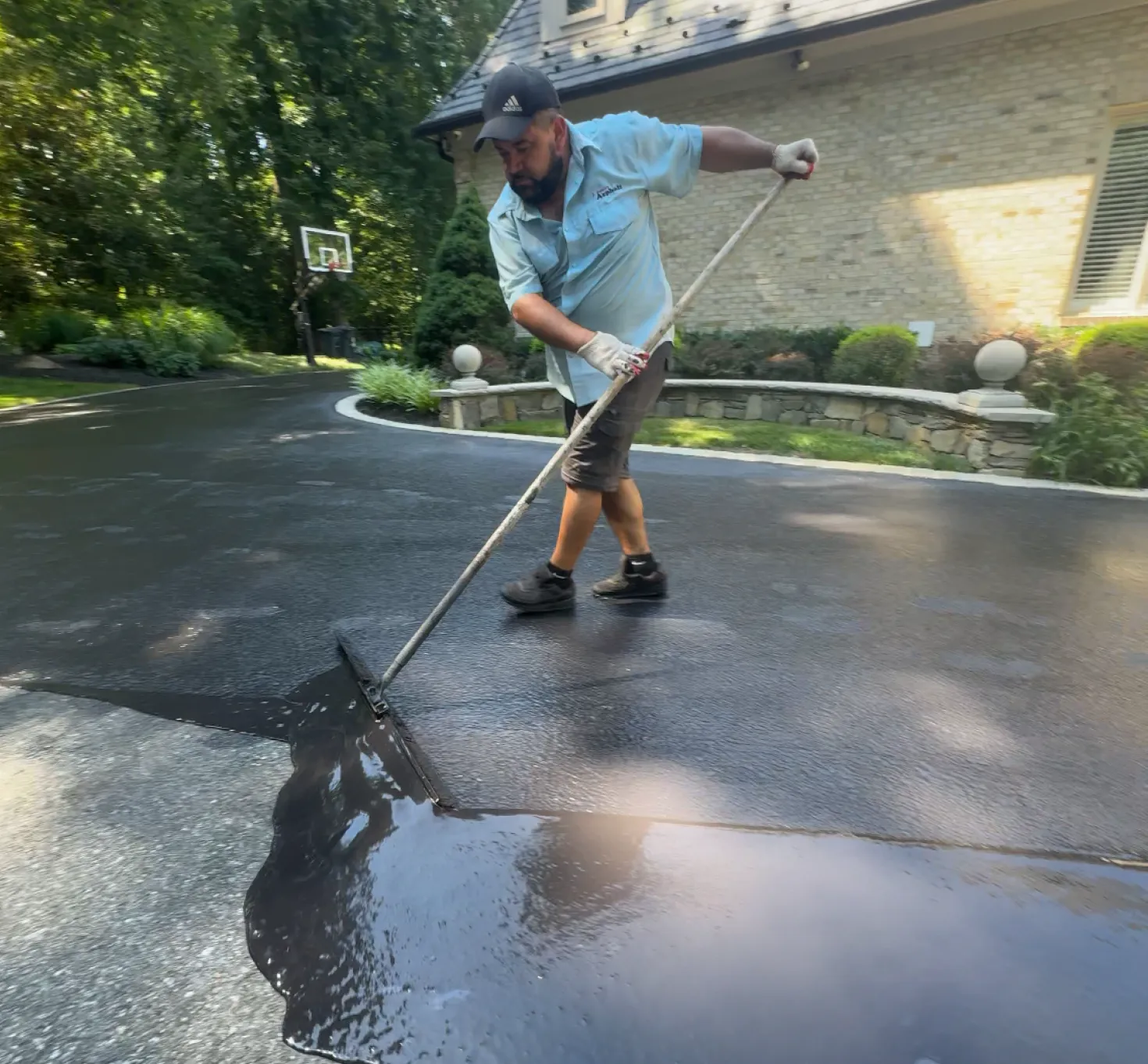
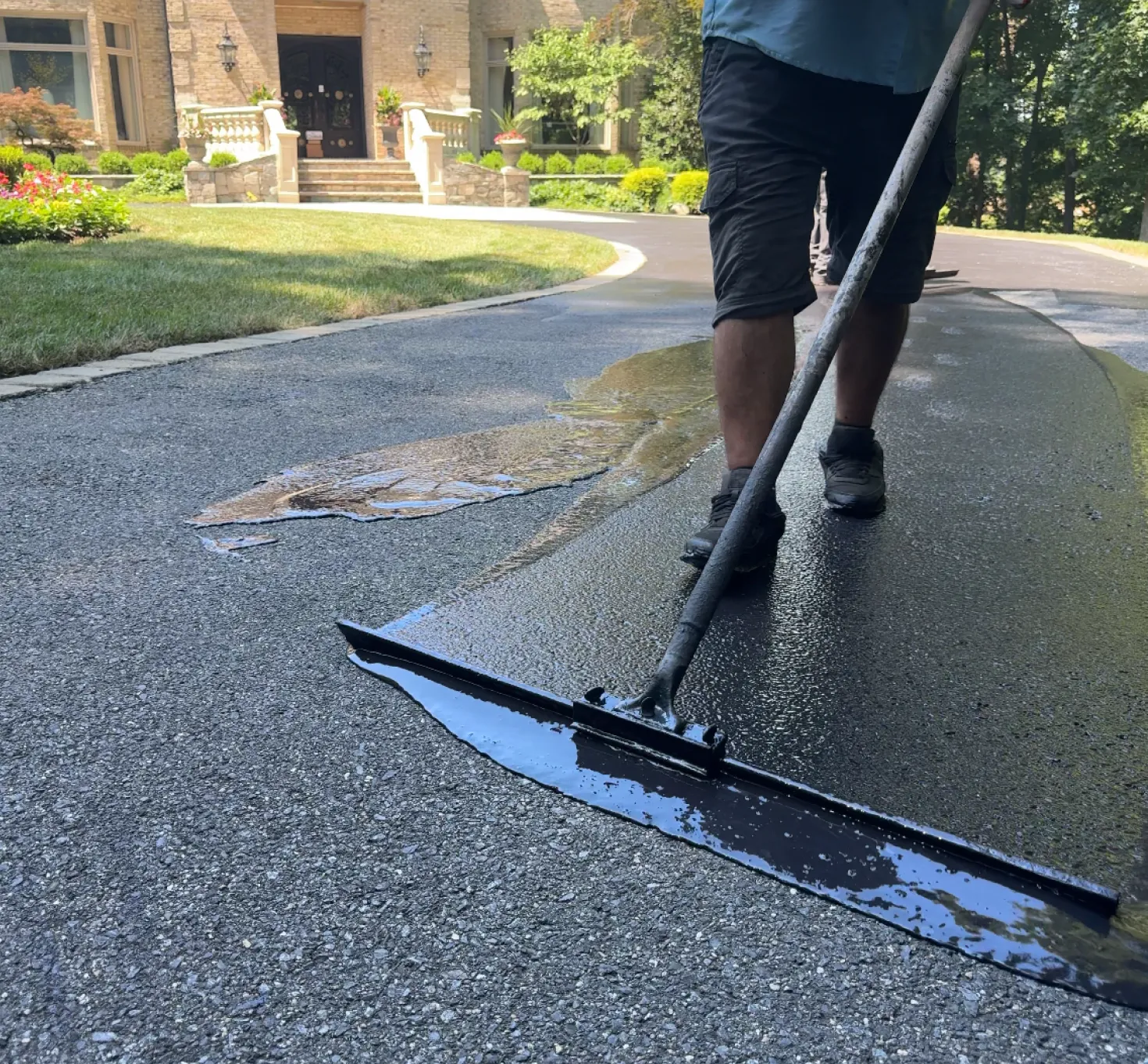
For older driveways, we use a latex sealer, brushed on by hand with brooms. This isn’t just a different application method for the same job — it’s suited to a different situation. Older driveways often have more surface wear already, and brush-applying latex lets us work the material into that existing wear, filling in as needed rather than just coating a surface that’s already begun to show its age. It’s still fundamentally about waterproofing, just matched to a driveway that’s further along in its life than one getting its first-ever seal.
Why the Distinction Matters
A lot of paving companies use one sealer, one method, on every driveway regardless of age or condition. That’s easier for them, but it’s not actually the right approach every time. A newer driveway doesn’t need the same treatment as one that’s fifteen years old and already showing wear — using the wrong method either wastes money on a driveway that didn’t need that level of treatment, or under-treats a driveway that needed more attention than a quick coat. We look at the actual driveway in front of us and recommend the method that fits it.
How Often You Should Reseal
Most driveways benefit from resealing every 2 to 3 years, though the exact timing depends on your driveway’s age, sun exposure, and tree canopy. We’ll give you an honest answer based on the condition we actually see, not a generic recommendation.
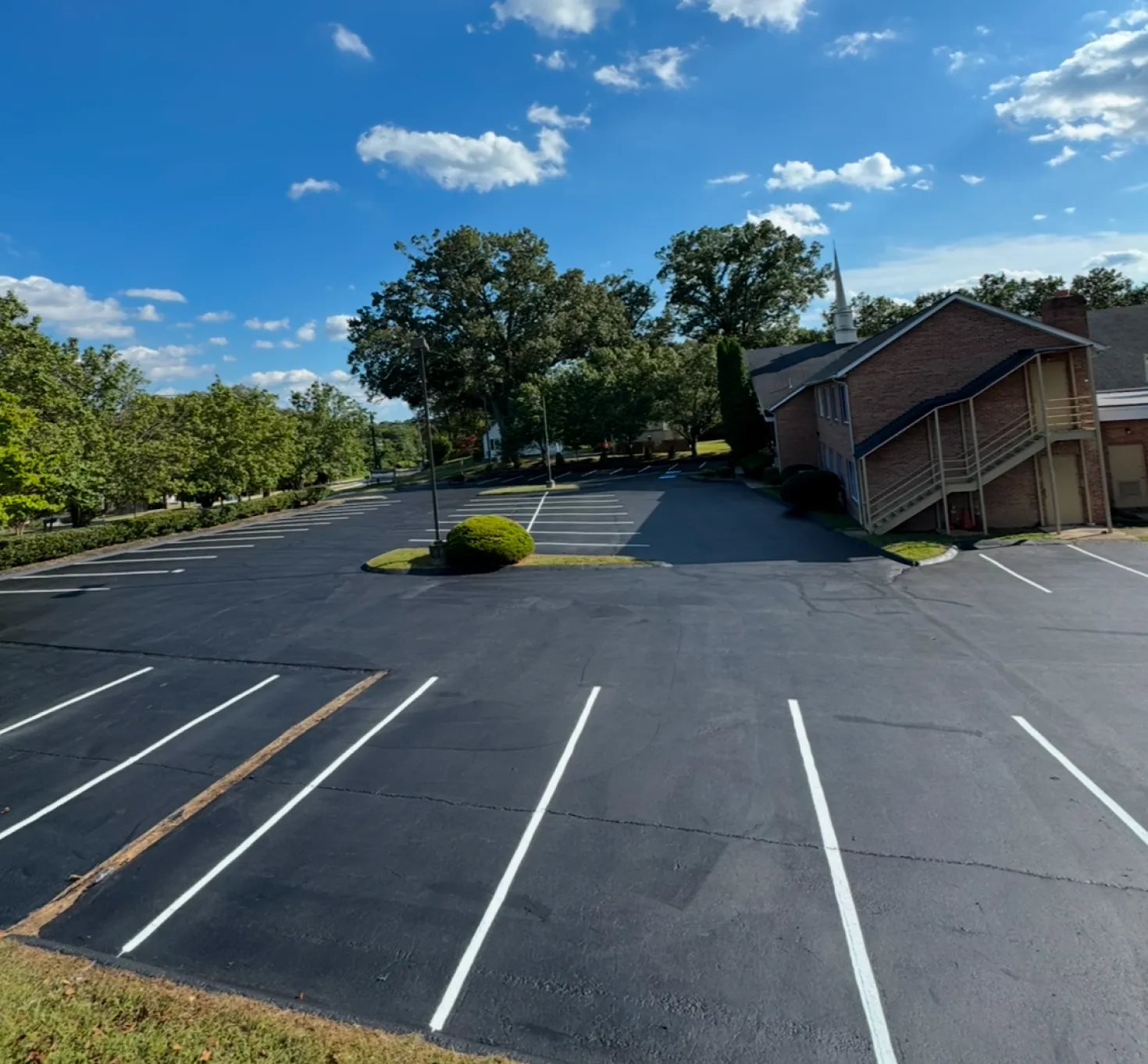
See Real Examples of Our Work
Own or manage a commercial property? Visit our Montgomery County commercial page.
Why Montgomery County Homeowners Call Us
Same owner, same crew since 1988. Jim or Mike is on every single job — not a salesman, not a project manager you never see again after the estimate. We own our equipment, all of it — not rented by the day.
Highest rated on Google with verified reviews from real Montgomery County customers. Not bought, not incentivized.
Google Guaranteed, MHIC licensed, fully insured. MHIC #01-66672, on the record.
We don’t push unnecessary work. If your driveway is brand new, we’ll tell you sealing can wait. If it needs it now, we’ll explain exactly why.