Asphalt Paving in Colesville, MD
Family-owned driveway paving, sealcoating, and repair for Colesville homeowners since 1988.
Driveway Paving for Colesville’s Established Neighborhoods
Colesville sits in the eastern part of Montgomery County along the Route 29 and New Hampshire Avenue corridors — an unincorporated community that’s been here since before the county itself had its current form. The name first appears in the 1806 Montgomery County tax records as “Coalsville,” after someone with the Cole or Coale family name who ran a store at the corner of New Hampshire Avenue and Notley Road. The community has no official borders and no municipal government, but it has a distinct identity — residential neighborhoods on larger lots, mature trees on most properties, and a quieter character than the denser Silver Spring communities to the south.
The 20905 zip code, where Bob’s property on Locustwood Court sits, covers the northern part of Colesville toward Ashton — bigger lots, some horse properties, and a semi-rural feel that separates it from the more developed areas closer to Route 29. The homes here were built primarily in the 1970s, which puts the driveways in the same age range as Derwood and parts of Damascus — old enough to be showing real wear, but often on bases that still have life in them if you catch the surface problems early.
We’ve been paving in Colesville since 1988 and are based in Gaithersburg — a straight shot up Route 355 and across the county.
What We Do in Colesville
Driveway Paving and Replacement
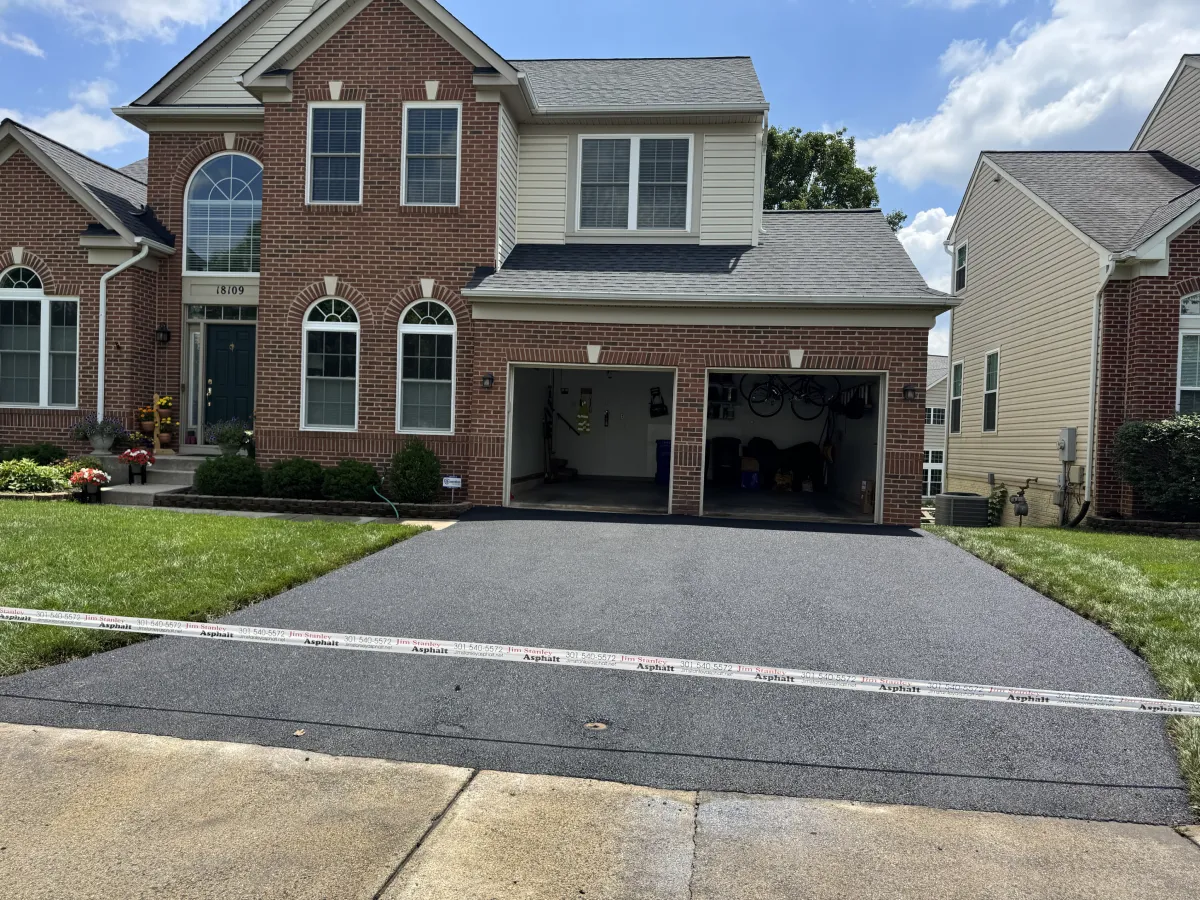
Colesville’s 1970s-era driveways were built on thinner bases than what we’d put down today, and after 50 years of vehicle traffic and freeze-thaw cycles the base material underneath has often broken down past the point where a surface repair holds. When the cracks keep coming back and patches don’t stick, we remove everything, rebuild with proper stone and compacted base asphalt, and pave new.
Driveway Widening and Extensions
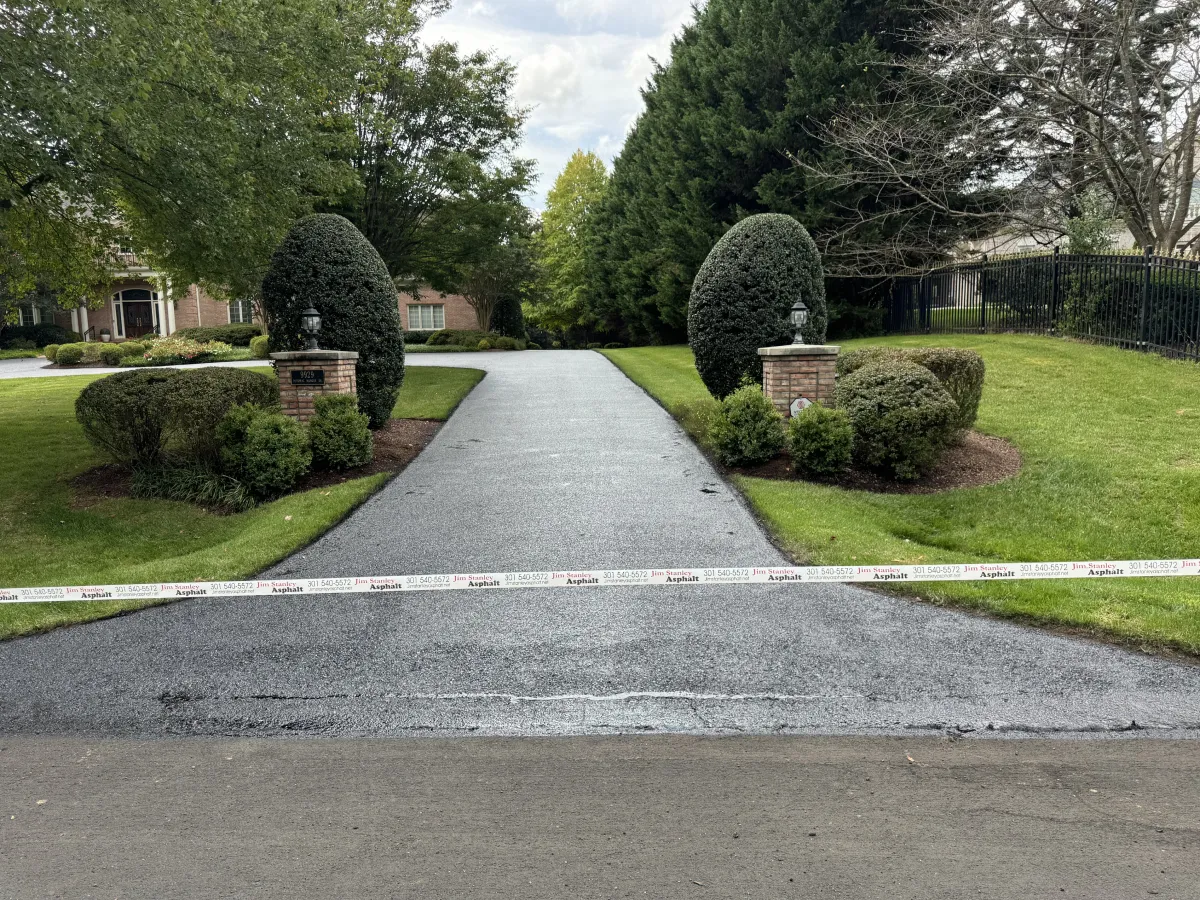
The original driveways on Colesville’s larger lots were often sized for a single-car era. Extending the surface to add a second parking lane or a turnaround takes proper base work under the new section and a clean saw-cut tie-in to the existing drive so both sections perform as one.
Sealcoating
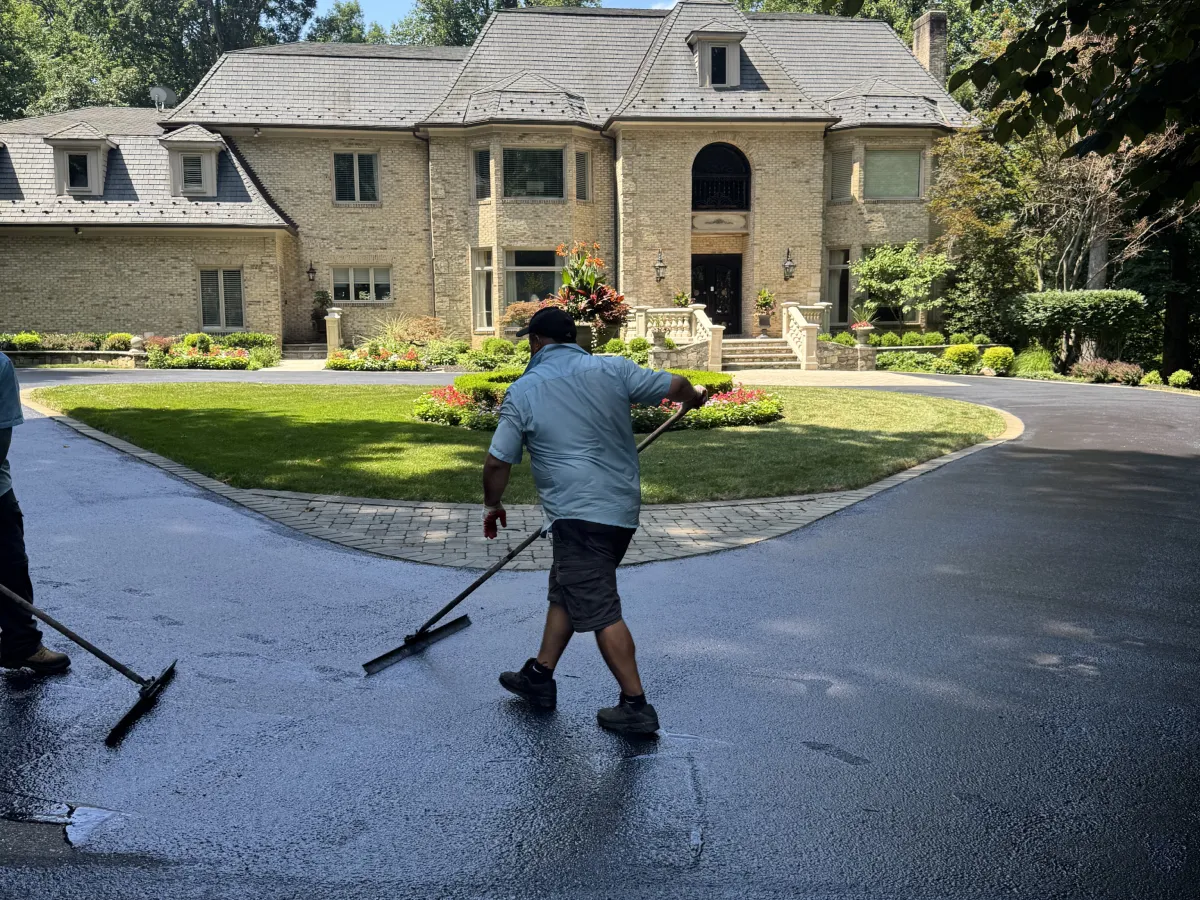
Colesville driveways sit under heavy tree canopy on properties with mature hardwoods, and that shade keeps the surface damp through most of the day. Moisture that never fully dries out works into the asphalt slowly — softening the binder, accelerating oxidation, and shortening the surface life compared to driveways in open-sun neighborhoods. Sealing on a regular cycle is the protection that keeps that process from getting ahead of you.
Crack Filling and Patching
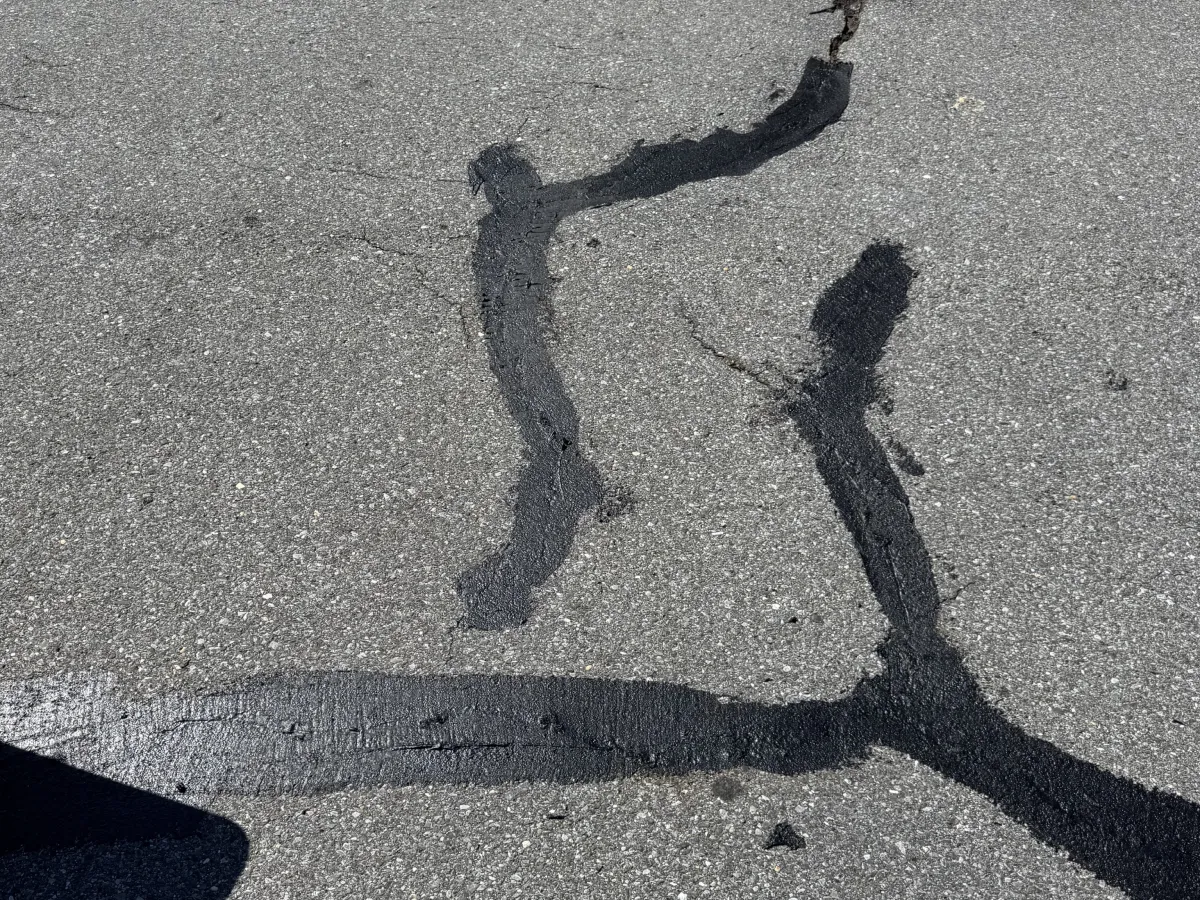
The combination of tree root pressure, clay soil, and the freeze-thaw cycle is what drives most of the crack patterns on Colesville driveways. We fill with heated rubberized sealant where the damage is still at the surface, and cut out and rebuild sections where root movement or base failure has broken through.
Resurfacing and Overlay
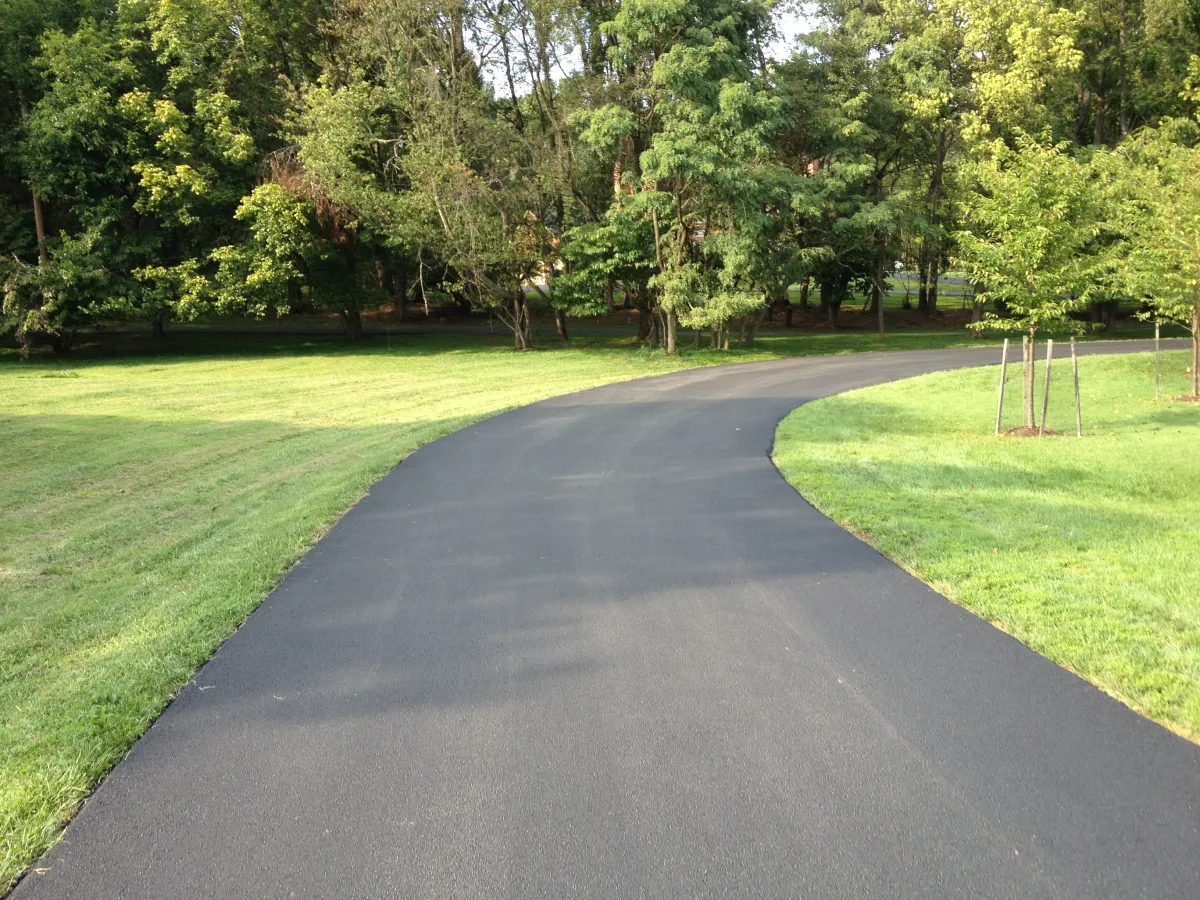
When the base is still sound but the surface has cracked and worn, a resurface is the right call. We mill down the transitions at the garage, street, and walkway, tack coat the existing surface, and machine-lay fresh topping asphalt. On a Colesville property, a well-timed resurface adds 15 to 20 years without the disruption of a full tear-out.
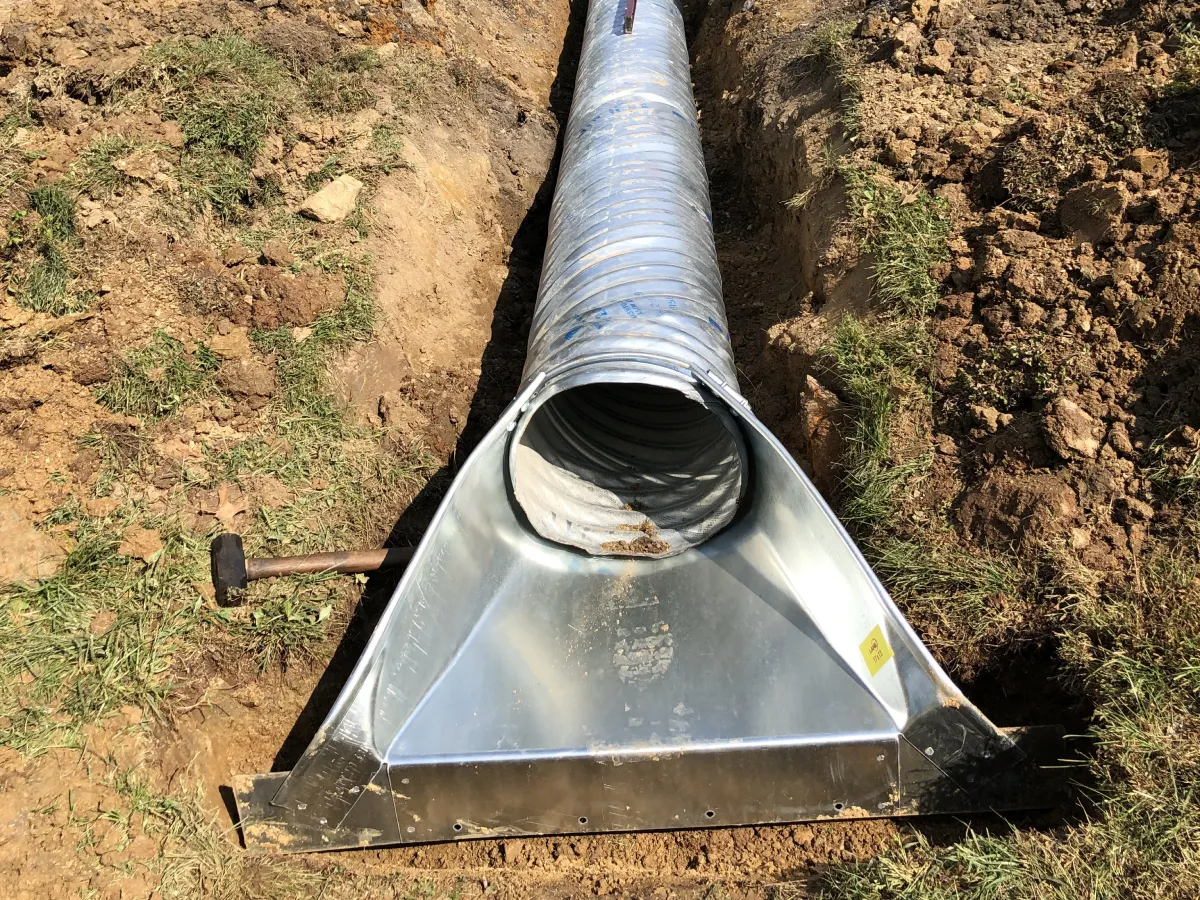
Culvert Pipe Replacement
Properties along the Route 29 corridor and the Northwest Branch drainage areas sometimes have pipes under their driveways that have been in the ground since the original development. When those pipes fail, the driveway sinks. We handle the full job from excavation through repaving.
Driveway Resurfacing for Bob on Locustwood Court
Colesville, MD — Completed July 2026
What We Found
Bob’s driveway at 1 Locustwood Court, Colesville was 830 square feet — a 1970s era surface with two problems that had been getting worse over time. The apron at the street had a dip that collected standing water after every rain. The area in front of the garage was sitting too high, which meant water was draining back toward the garage instead of away from it. Neither problem was cosmetic. Both were drainage failures that needed to be corrected at the same time as the surface was replaced, or they’d come right back through the new asphalt.
What We Did
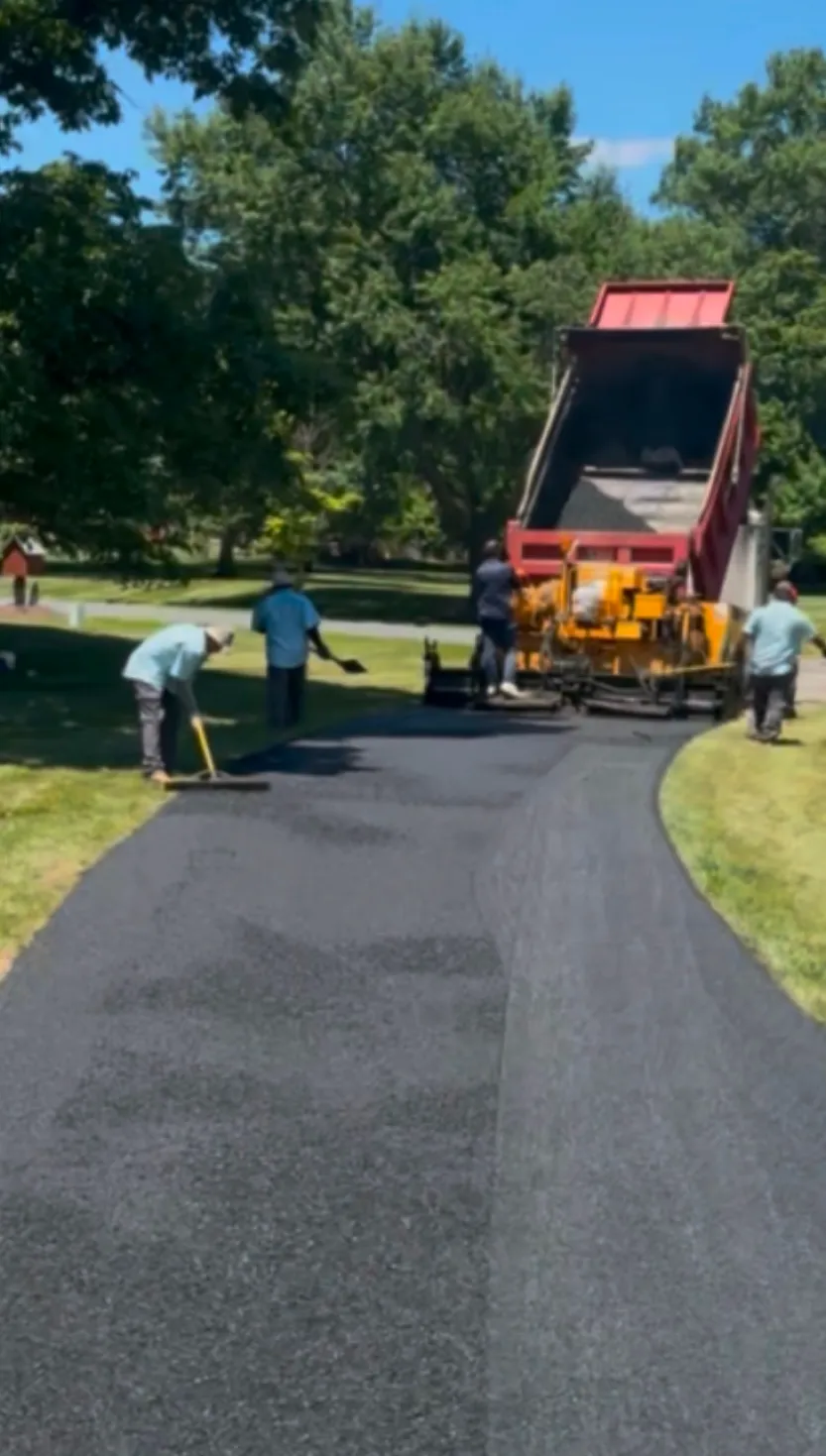
We removed 140 to 170 square feet of cracked asphalt from the problem areas and hauled it away. We milled down the surface at the street to correct the grade at the apron, eliminating the dip that had been holding water. In the areas where we removed the old asphalt, we laid 3 inches of 19mm base. We tack coated the entire driveway and machine-laid 2.5 inches of topping asphalt across the full 830 square feet, then power rolled with a 3- to 5-ton roller. All edges were banked at a 45-degree angle and the job site was cleaned before we left. One-year workmanship warranty included.
The Result
The driveway now drains correctly at both the street and the garage — water moves away from the house the way it’s supposed to. The surface problem and the drainage problem were fixed in the same job, which is the only way to do it right.
“Great job! Very professional and efficient… good advice for maintaining my repaved driveway.”
— Bob, Locustwood Court, Colesville
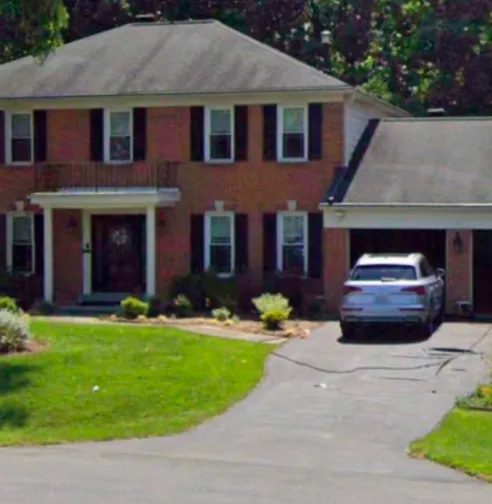
Before — worn surface with dip at apron and drainage issue at garage
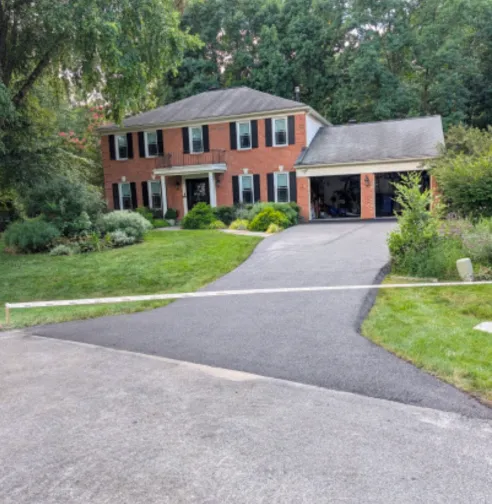
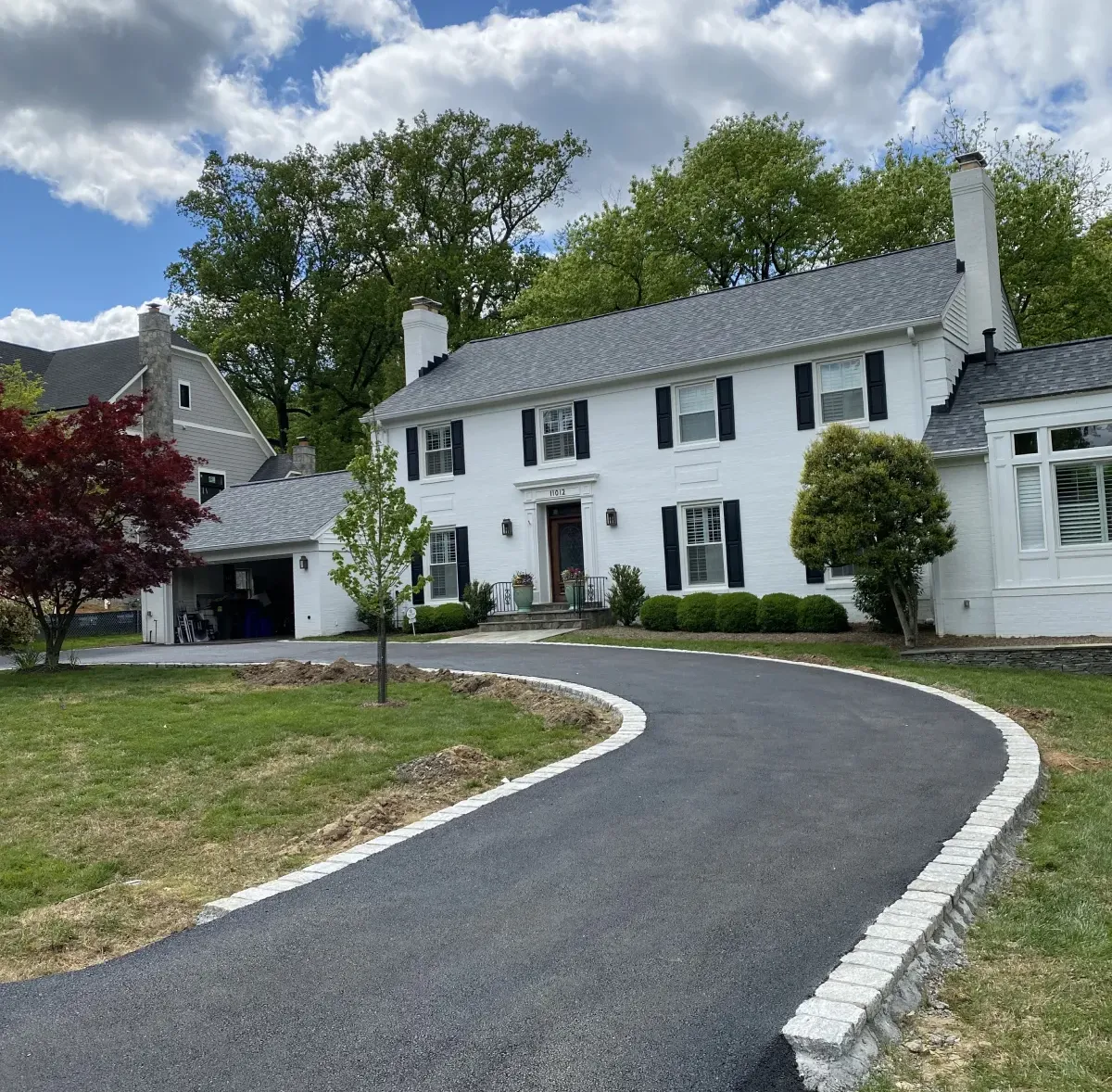
After — resurfaced driveway, corrected grade, clean edges
Why Colesville Driveways Are Different
Colesville’s 20905 zip code sits further from Silver Spring’s urban core than most people realize — the properties here are larger, the lots more wooded, and the drainage patterns more complex than what you’d find in the closer-in neighborhoods. The Northwest Branch runs through this part of the county, and properties near its tributary drainage areas deal with soil that holds moisture longer than the clay upland further west. That moisture, combined with Colesville’s heavy tree canopy, means driveways here face more sustained water exposure than driveways in drier, sunnier parts of the county.
The age factor is the same one we see in Derwood and Damascus — most of the housing stock went in during the 1970s, which means most of the driveways are approaching 50 years old. At that age, the base material has been carrying weight and absorbing freeze-thaw stress for five decades. The driveways that still have life in them are the ones that were built on solid stone and compacted properly to begin with. The ones that were put down thin are the ones that keep failing no matter how many times the surface gets patched.
Colesville Neighborhoods and Landmarks
Colesville’s name dates to 1806, when “Coalsville” appeared in the county tax records — a small commercial node at the corner of New Hampshire Avenue and Notley Road named after a store owner whose family name was Cole or Coale. The area’s first land patent dates to 1714, when Archibald Edmonston patented “Easy Purchase,” a 900-acre tract that covered what is now central Colesville. Milimar, at 410 Randolph Road, is the oldest surviving structure in the community — built around 1790 and listed on the National Register of Historic Places.
Philip E. Thomas, born in Colesville in 1776, went on to become the first president of the Baltimore and Ohio Railroad, one of the most consequential figures in American transportation history. President Franklin Pierce reportedly purchased a farm in Colesville in 1855, and President Grover Cleveland was a frequent visitor to Valley View, the estate of Joseph F. Burr on New Hampshire Avenue.
Northwest Branch Park runs through the community — trails, streams, and woodland along the Northwest Branch of the Anacostia River, a favorite for hikers and birdwatchers. Colesville United Methodist Church is one of the oldest community institutions. The Strawberry Festival, held every May at New Hampshire Avenue and Hobbes Drive, ran for more than 25 years before ending in 2011. Stonegate is one of the most established residential neighborhoods, known for its swim club and active homeowners association.
Springbrook High School anchors the southern edge of Colesville. The nearest Metro is Glenmont on the Red Line — Colesville is a car-dependent community, with Route 29 and New Hampshire Avenue as the primary corridors connecting residents to Silver Spring, the Beltway, and Washington.
Don’t see your neighborhood listed? We serve all of Colesville and the surrounding area. Call and we’ll come take a look.
Own or manage a commercial property in Colesville? Visit our Montgomery County commercial page.
Why Colesville Homeowners Call Us
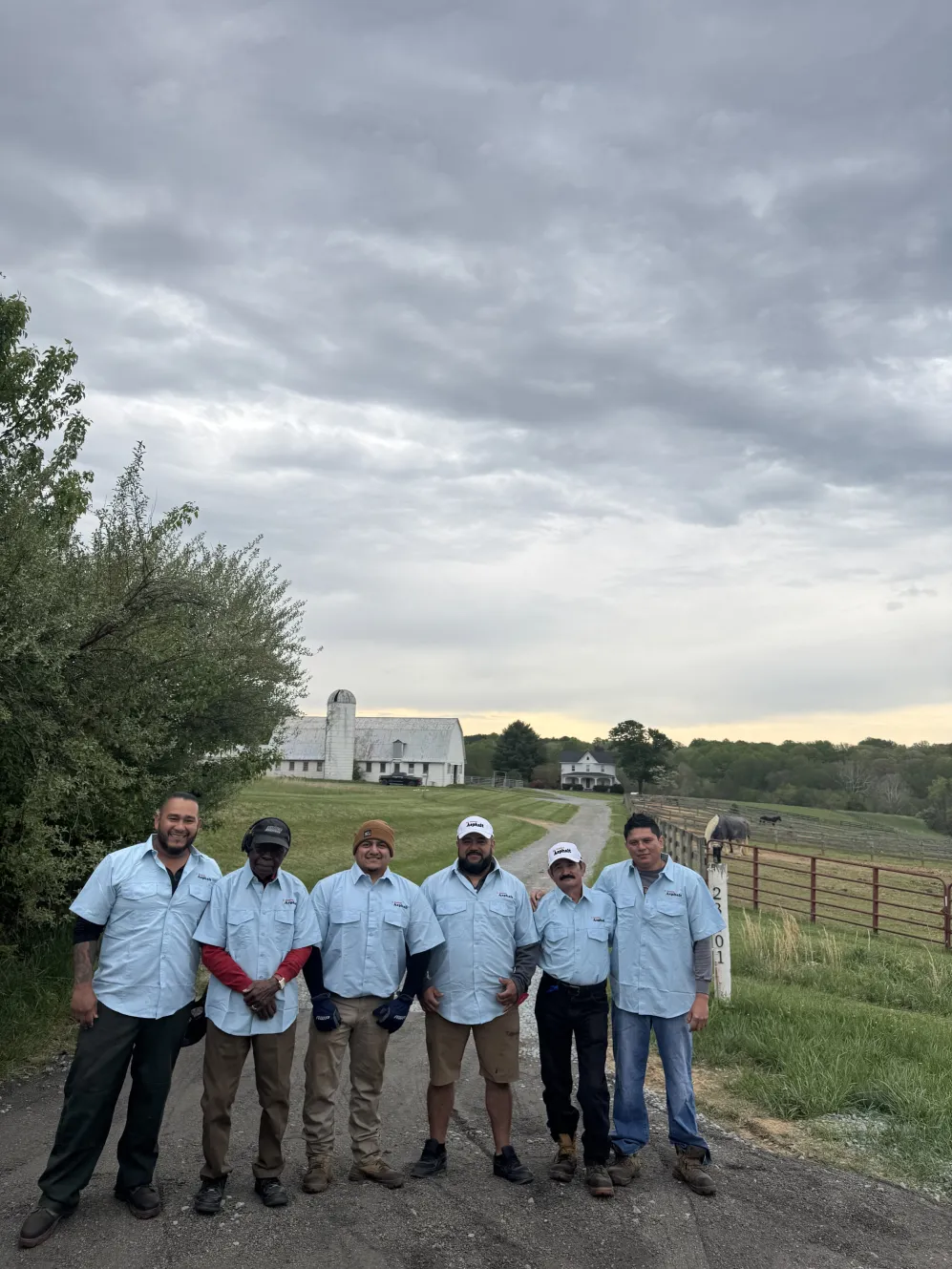
Same owner, same crew since 1988. Jim Stanley founded this company, and his son Mike runs it today. Jim or Mike is on every single job — not a salesman, not a project manager you never see again after the estimate. Our crew has been with us for years. These are experienced guys who know what they’re doing, and we don’t rotate them out or sub the work to whoever’s available that week. You get the same faces from estimate to completion.
We own our equipment. Our trucks, our paver, our roller — all ours. Not rented by the day, not borrowed from another crew. We show up ready, every time.
Highest rated on Google with verified reviews from your Montgomery County neighbors. Not bought, not incentivized — real people who hired us and took the time to write about it. Look us up before you decide.
Google Guaranteed, MHIC licensed, fully insured. We passed Google’s background check and screening. MHIC #01-66672 means we’re licensed by the State of Maryland. Both are on the record.
We don’t push unnecessary work. If your driveway’s drainage problem can be fixed with a targeted resurface, we’ll tell you that. If the base has failed and the surface work is just delaying the inevitable, we’ll show you why before we recommend the bigger job.
We know Colesville. The mature canopy and the moisture it holds. The clay and the drainage patterns along the Northwest Branch corridor. The 1970s housing stock and the driveways hitting the end of their original surface life. We’ve been paving here since 1988 and we’re not going anywhere.