Asphalt Paving in Takoma Park, MD
Family-owned driveway paving, sealcoating, and repair for Takoma Park homeowners since 1988.
A City Founded in 1883 Has Driveways That Have Seen It All
Takoma Park is a city of about 17,629 people in southern Montgomery County, just northeast of Washington, D.C. — and it is unlike any other city in the county. Founded in 1883 by real estate developer Benjamin Franklin Gilbert as Washington’s first planned railroad suburb, it was built along the Metropolitan Branch of the Baltimore and Ohio Railroad at an elevation of about 350 feet, deliberately positioned above the malarial lowlands of the city below. Gilbert envisioned a “sylvan suburb” — wooded, healthful, and connected. Every deed he issued included a clause prohibiting the manufacture or sale of “spirituous liquors.” The Seventh-day Adventist Church, drawn by both the healthful setting and the anti-alcohol covenant, established their world headquarters here in 1904, founding what is now Washington Adventist University and Washington Adventist Hospital. By 1913, Takoma Park was the largest city in Montgomery County.
The name came from a last-minute decision. The train station that anchored the development was originally called “Brightwood.” Gilbert disliked it. A fellow guest at a Washington hotel suggested “Takoma” — derived from an indigenous word for the Cascade peak now known as Mount Rainier — and the name stuck. Gilbert added “Park” and had the station name changed.
Today Takoma Park is called “Azalea City” for the Glen Dale azalea hybrids developed by early resident Benjamin Y. Morrison, the first director of the U.S. National Arboretum, whose hybrid azaleas still bloom across the community every spring. It’s also been called “the Berkeley of the East” for its long history of progressive activism — it declared itself a Nuclear Free Zone in 1983, became one of the first sanctuary cities in the nation, and in 2013 became the first city in the United States to extend voting rights to 16- and 17-year-olds in local elections. It is the largest historic district in Montgomery County.
The homes here tell the story of when they were built. The oldest section of the city — roughly bounded by Piney Branch Road, Philadelphia Avenue, Carroll Avenue, and Eastern Avenue — contains over 600 contributing historic buildings from the 1880s through the 1930s. The Victorian-era houses built between 1883 and 1900 are fanciful Queen Anne and Shingle Style structures with turrets, multiple gables, and wraparound porches. The Craftsman bungalows and brick cottages that followed are more restrained but equally distinctive. A handful of mid-century modern homes designed by Charles M. Goodman in 1951 on Takoma Avenue are now their own National Register Historic District — open floor plans, walls of glass, cathedral ceilings, and cedar paneling.
We’ve been paving in Takoma Park since 1988 and are based in Gaithersburg, about 25 minutes north.
What We Do in Takoma Park
Driveway Paving and Replacement
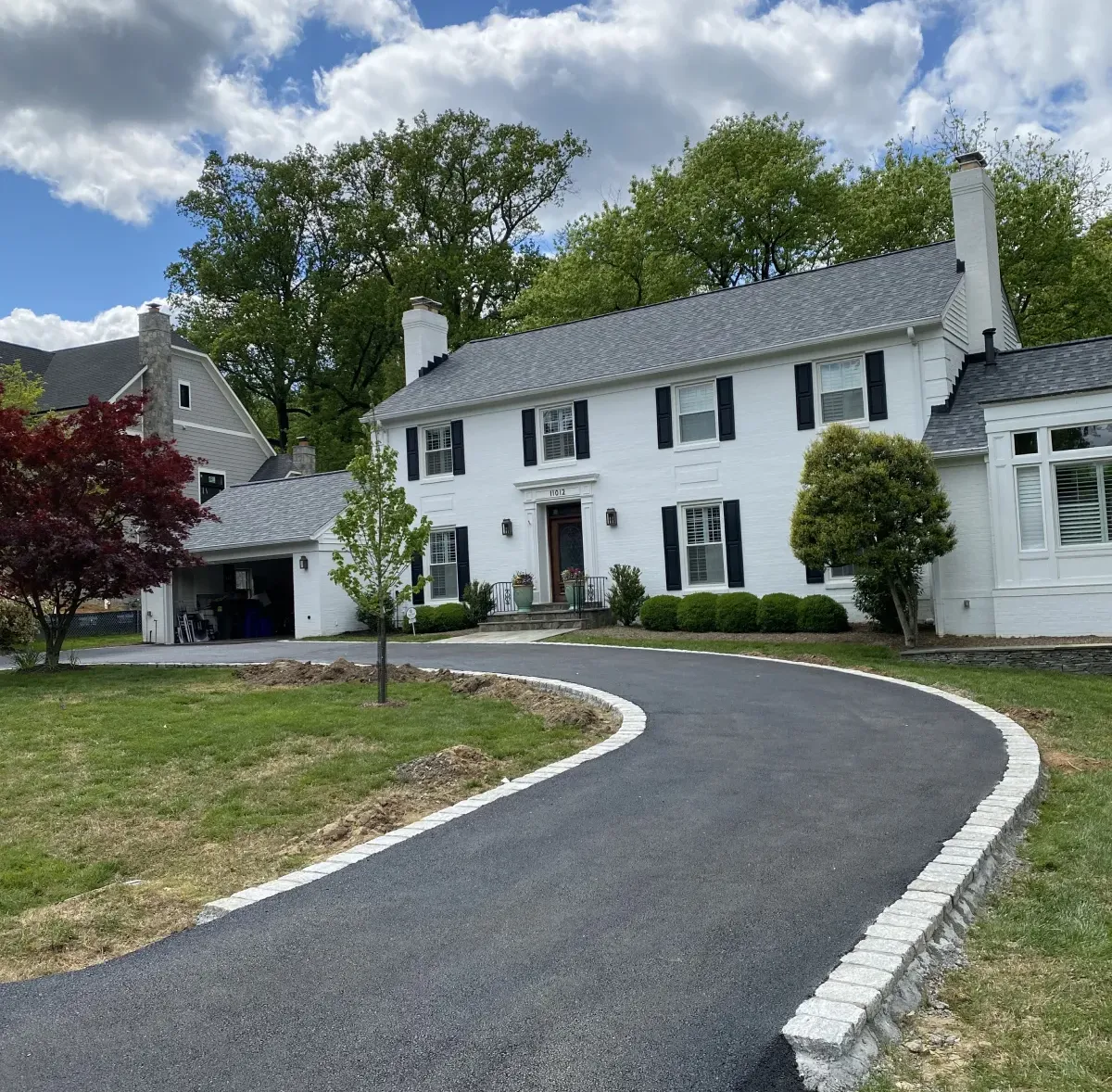
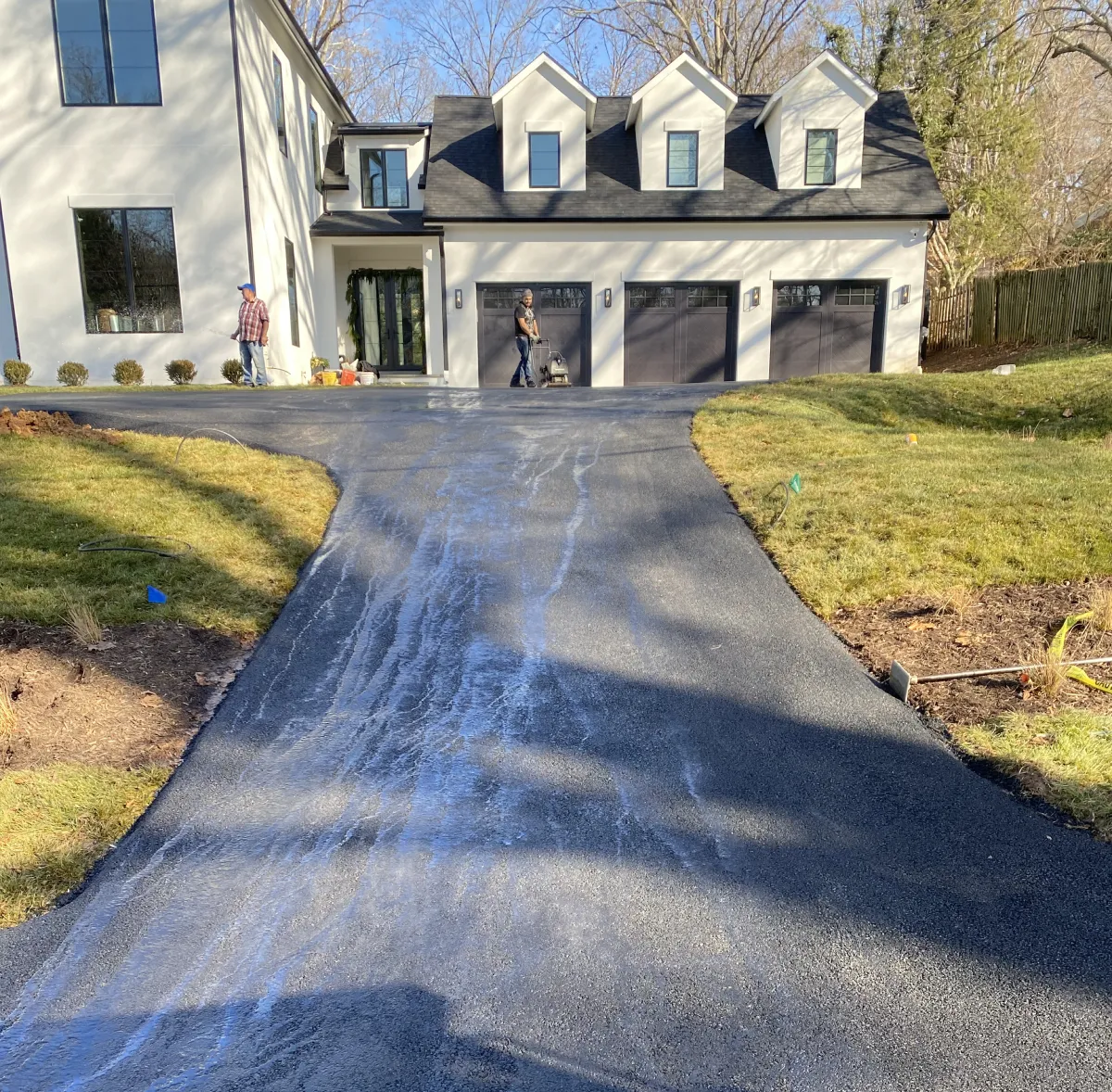
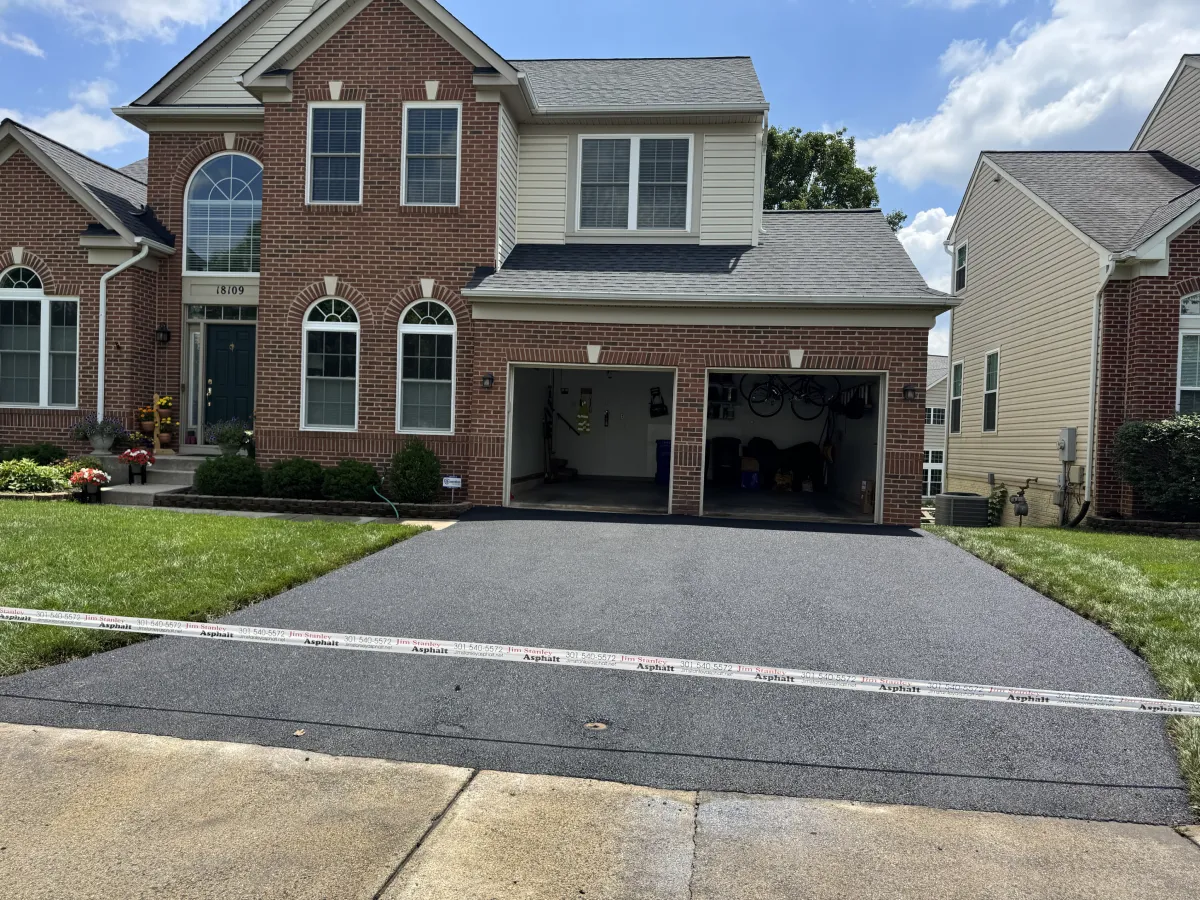
Takoma Park’s housing stock spans 140 years of construction, and the driveways that serve those homes reflect the full range of that age. A Victorian from 1893 and a Craftsman bungalow from 1922 can sit on the same block, each with a driveway at a completely different point in its life cycle. When the base has failed and surface repairs won’t hold, we remove everything, rebuild with proper stone and compacted base asphalt, and pave new — with the attention to narrow lots and mature trees that Takoma Park’s dense residential streets demand.
Driveway Widening and Extensions
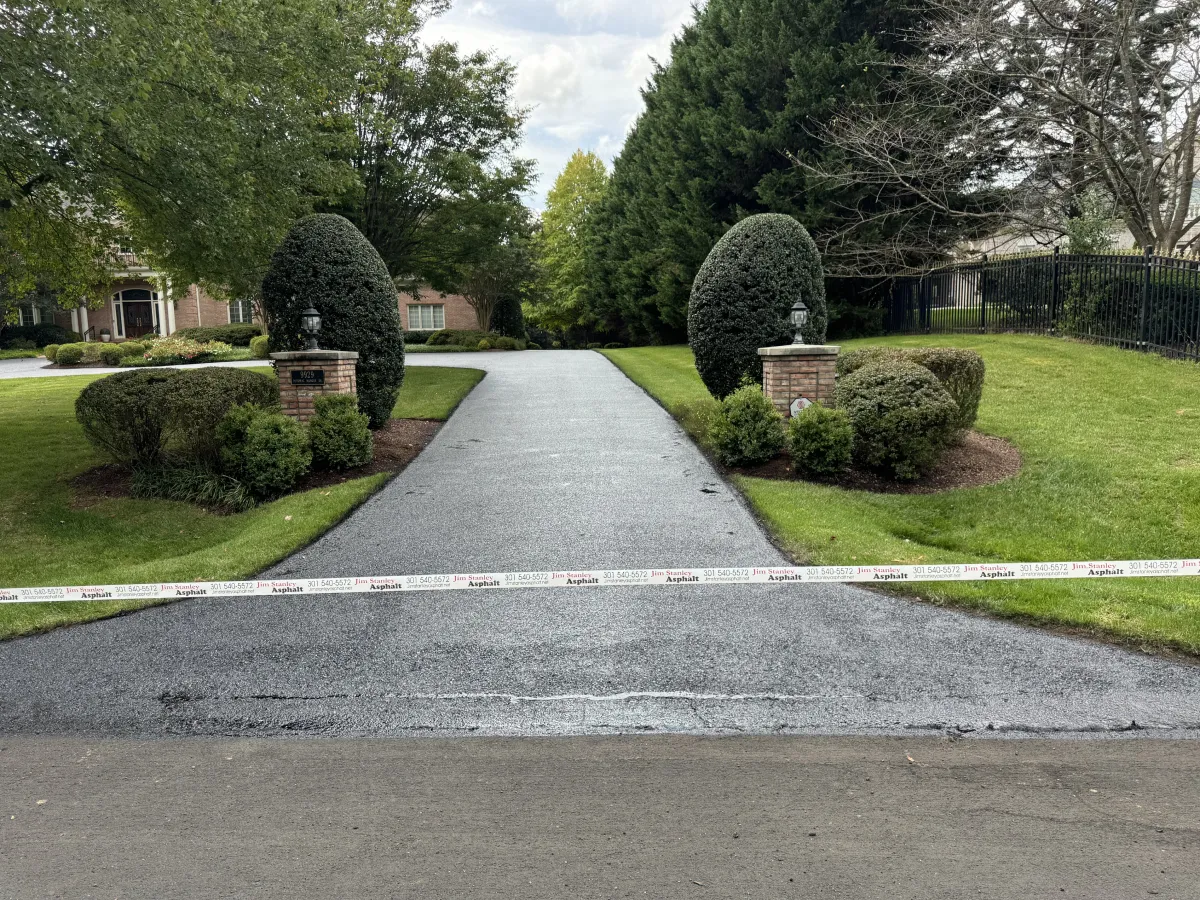
Many of Takoma Park’s older properties were built when automobile ownership was not the norm, and the driveways — where they exist at all — were sized accordingly. Adding a proper approach, widening a single-lane drive, or extending a short pad to accommodate how a property is actually used today all require the same foundation work as any new asphalt job — compacted stone base, base asphalt, tack coat, topping — done right the first time.
Sealcoating
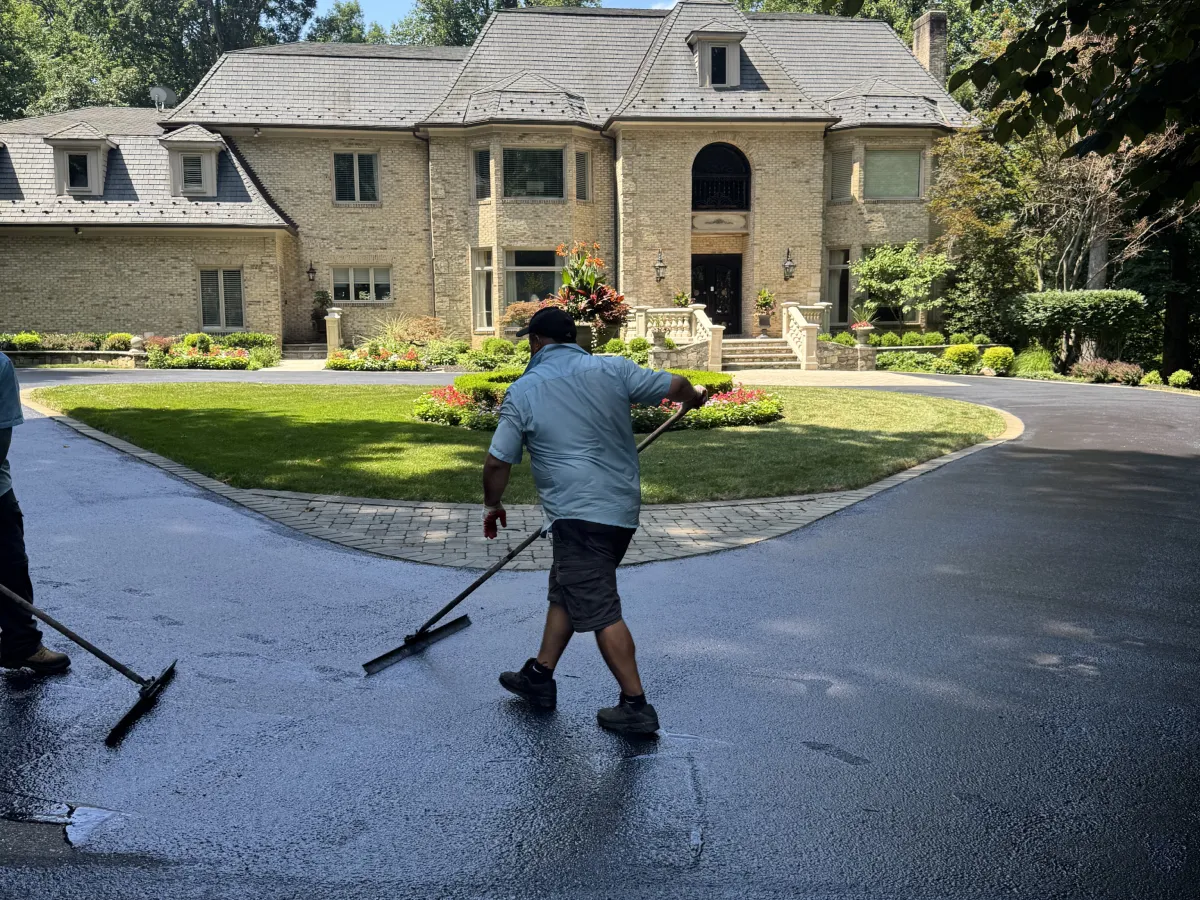
Takoma Park is a Tree City USA — the canopy is dense, deliberate, and protected. That same canopy that makes the streets beautiful keeps driveways shaded through much of the day, which slows drying after rain and creates the sustained moisture conditions that wear through asphalt binder from the top down. We seal on the right schedule for the surface we actually find, not a fixed calendar that ignores what the driveway has been through.
Crack Filling and Patching
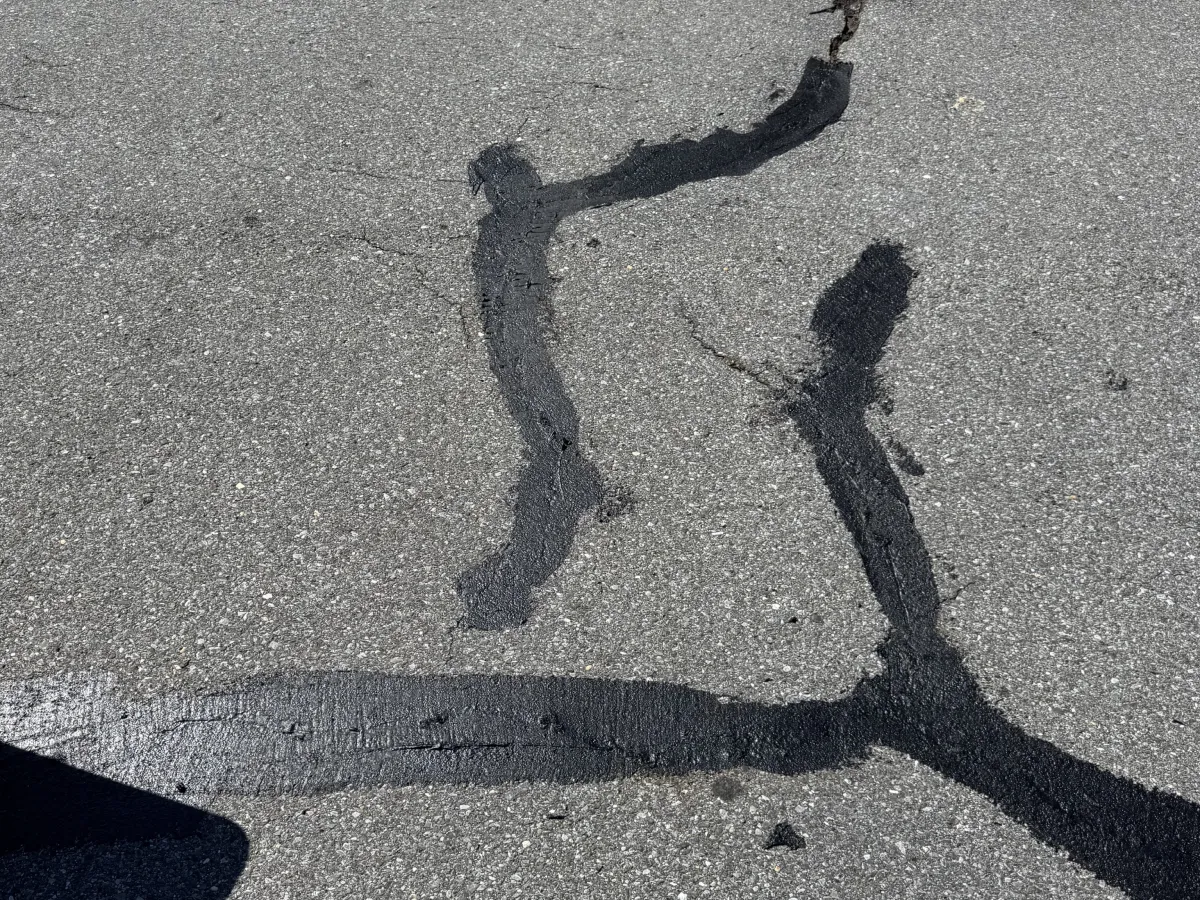
The root systems from Takoma Park’s mature street trees — many of them planted before World War II — run under the driveways of nearly every property in the historic district. Root heave, freeze-thaw cycling, and decades of vehicle traffic converge on these surfaces in a way that suburban driveways on newer streets don’t experience. We fill with heated rubberized sealant where the damage is still at the surface, and cut out and rebuild where the roots or base have shifted underneath.
Resurfacing and Overlay
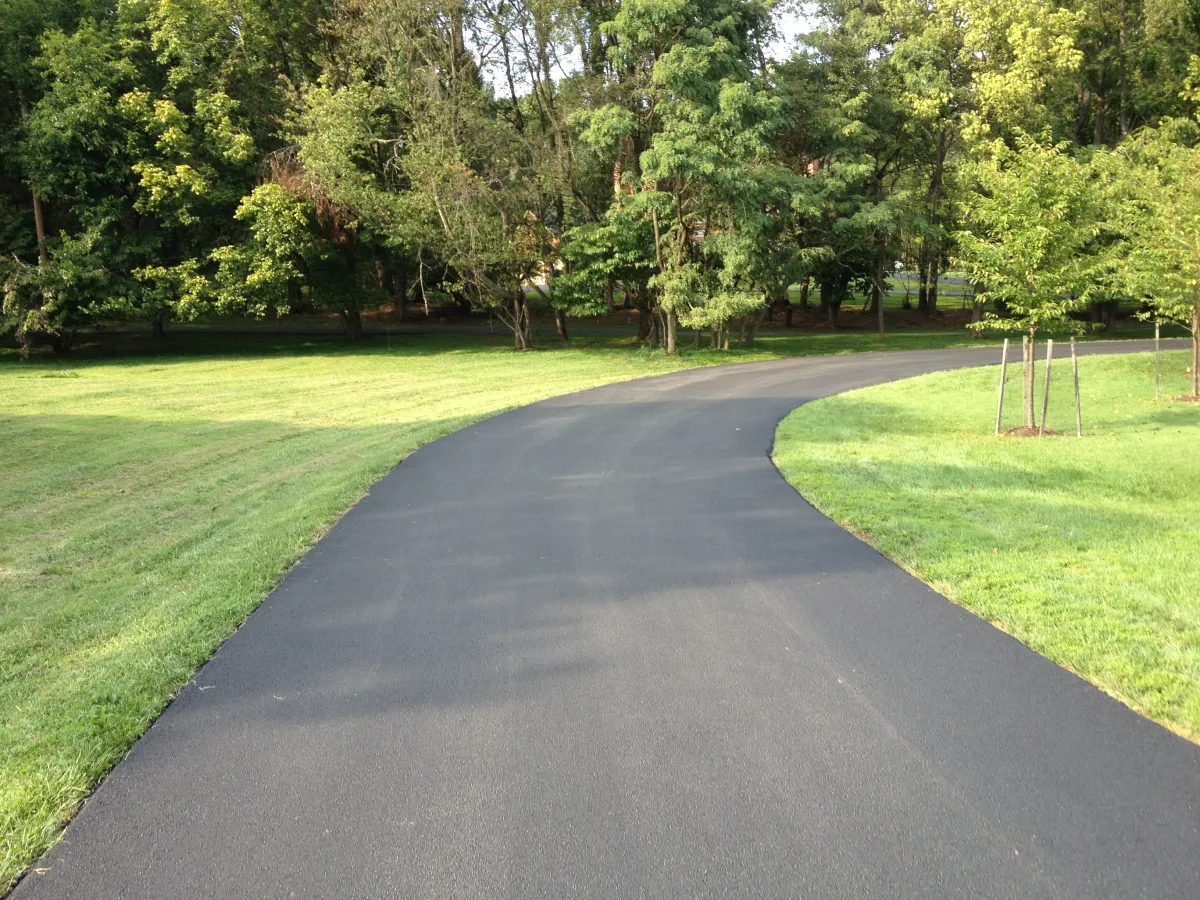
When the base is still structurally sound but the surface has cracked and worn through, a resurface extends the driveway’s life without the cost and disruption of a full tear-out. We mill the transitions at the street, garage, and walkway so the new layer meets every edge flush, tack coat the existing surface, and machine-lay fresh topping asphalt.
Culvert Pipe Replacement
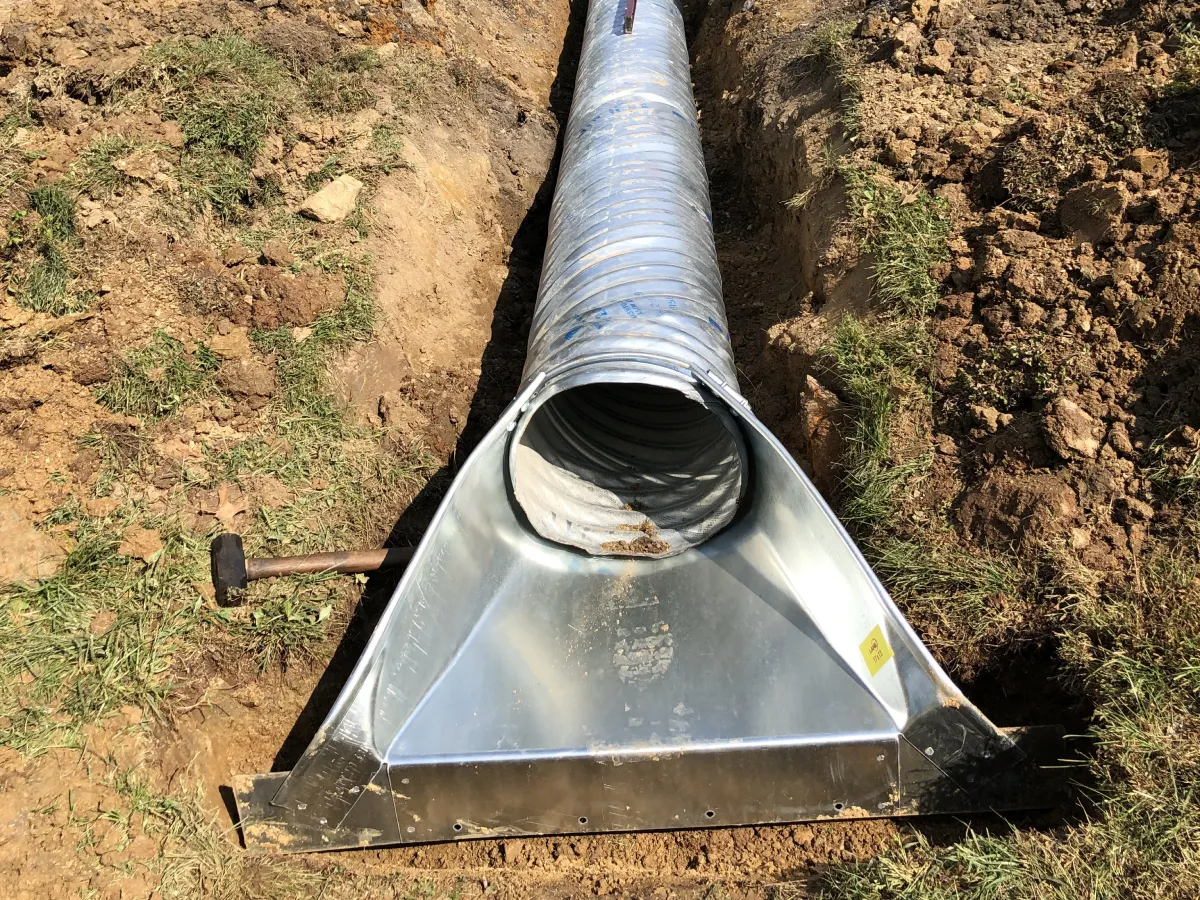
Some of Takoma Park’s oldest properties have drainage infrastructure under their driveways that has been in the ground since the original development. When those pipes fail, the driveway above them collapses and no surface repair holds. Montgomery County requires a permit for culvert work. We handle the full job — excavation, pipe, base rebuild, and repaving.
Why Takoma Park Driveways Are Different
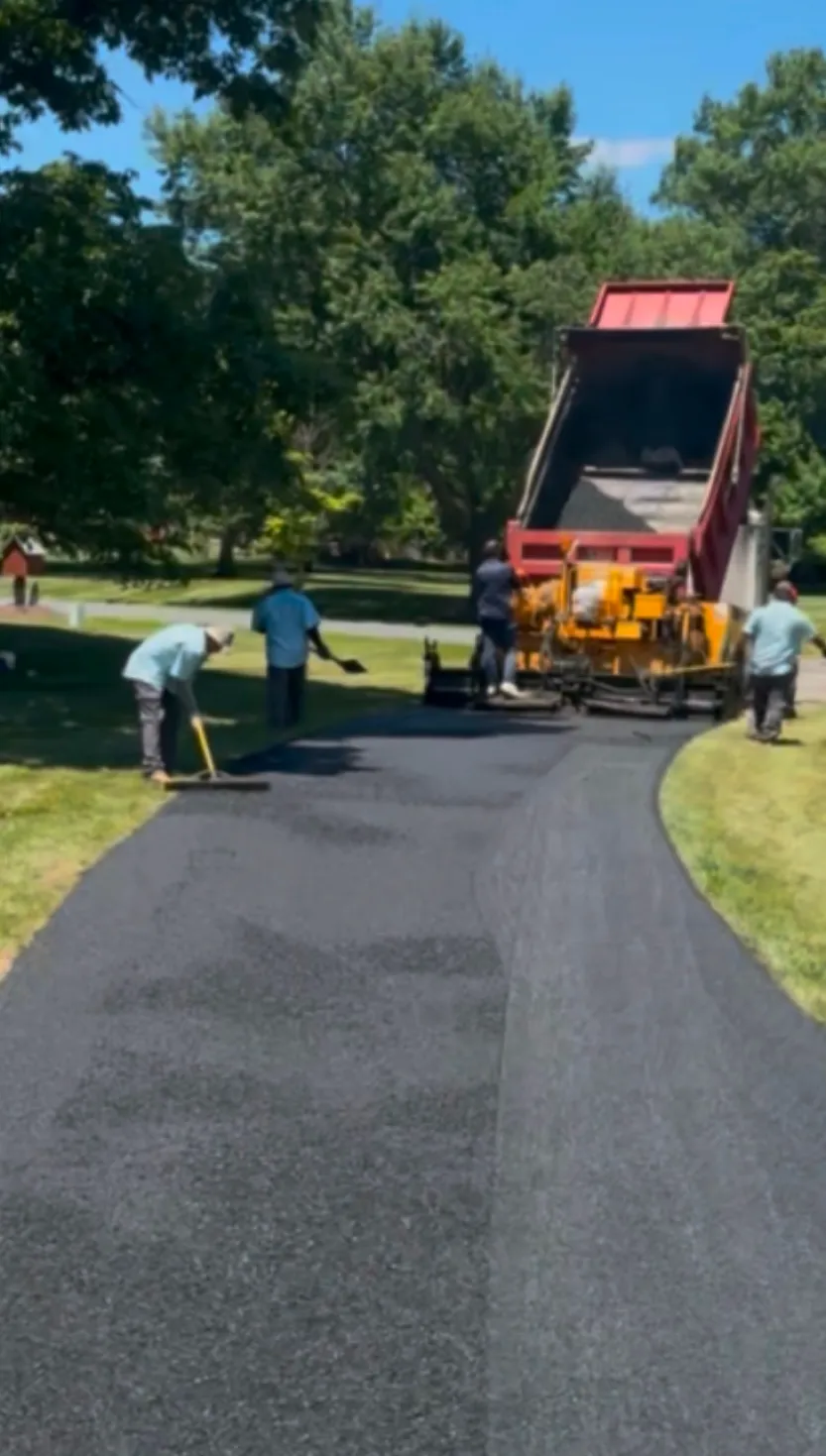
Takoma Park is the oldest planned suburb in the Washington area — and its driveways are some of the oldest in Montgomery County. The historic district alone contains over 600 homes built before 1930. That age means root systems that have been growing for a century, base material that was put down with equipment and standards that no longer exist, and surfaces that have been patched, sealed, and repaved in layers that don’t always bond to each other or drain correctly.
The density of the city adds another layer of complexity. Takoma Park’s lots are small by Montgomery County standards — the city covers just 2.1 square miles — and the streets are narrow. Equipment access requires the kind of careful planning that suburban driveways on wide cul-de-sacs don’t. Working within the constraints of a dense, tree-lined urban neighborhood without damaging root systems, tearing up lawn edges, or blocking a narrow street longer than necessary is a different proposition than paving in a newer subdivision.
Takoma Park Neighborhoods, Parks, Trails, and Schools
Neighborhoods
Takoma Park’s distinct neighborhoods each have their own character. Old Town Takoma — centered on Carroll Avenue and the surrounding blocks — is the historic commercial and social heart of the city, with the Sunday farmers market (running year-round since 1983), independent shops, cafes, and galleries in preserved early-20th-century storefronts. Takoma Junction is a secondary commercial node and residential area, home to the well-known Takoma Park Co-op. North Takoma is the quieter, more wooded residential section north of the commercial district, with larger older homes and direct access to Sligo Creek Trail. Long Branch in the eastern section of the city runs along Long Branch Creek and has its own stream valley trail system. The Flower Avenue corridor and surrounding streets are another distinct residential pocket known for a mix of housing styles and active community gardens.
Parks and Green Space
Sligo Creek and the linear park along it is the defining natural feature of Takoma Park. The creek runs diagonally through the city before joining the Northwest Branch of the Anacostia River. Sligo Creek North Neighborhood Playground sits along the parkway with direct trail access. Takoma/Piney Branch Park (also known as Takoma Woods) at 2 Darwin Avenue covers 17 acres with a playground, basketball courts, volleyball, and a skateboard area. Hodges Field behind Takoma Park Elementary has athletic fields and open space. Waldo’s Wilds at 6500 Allegheny Avenue is a community-managed natural area. Long Branch Stream Valley Park runs through the eastern section of the city with wooded trails along the creek. Takoma Old Town Urban Park at Westmoreland and Carroll Avenues is the central gathering space in Old Town. Stream Valley Parks run along both Longbranch and Sligo Creeks throughout the city.
Bike Paths and Trails
The Sligo Creek Trail runs 9 miles from Kemp Mill south through Takoma Park to the Anacostia watershed. Within Takoma Park, sections of Sligo Creek Parkway close to cars on weekends and holidays, turning the road into a car-free path for cyclists, runners, and walkers. The Metropolitan Branch Trail runs alongside the Red Line tracks and connects Takoma Park to Silver Spring to the north and into Washington, D.C. to the south — linking to the larger regional trail network that reaches Georgetown and the Potomac River via the Crescent Trail. Capital Bikeshare operates five stops in the Takoma area. Takoma Park holds a Silver-level Bicycle-Friendly Community designation.
Schools
Public schools are served by Montgomery County Public Schools. Elementary students attend Takoma Park Elementary School (PreK–2) and Piney Branch Elementary School (grades 3–5); Sligo Creek Elementary School offers a French Immersion program open to all MCPS families. Takoma Park Middle School serves grades 6–8. Montgomery Blair High School serves grades 9–12 and is nationally recognized for its magnet program in science, math, and computer science. Private options include Takoma Academy (Adventist, grades 9–12), Don Bosco Cristo Rey High School (Catholic, grades 9–12), and John Nevins Andrews School (Adventist, K–8). Washington Adventist University and Montgomery College Takoma Park/Silver Spring Campus are both located within or adjacent to the city.
Don’t see your neighborhood listed? We serve all of Takoma Park. Call and we’ll come take a look.
Own or manage a commercial property in Takoma Park? Visit our Montgomery County commercial page.
Why Takoma Park Homeowners Call Us
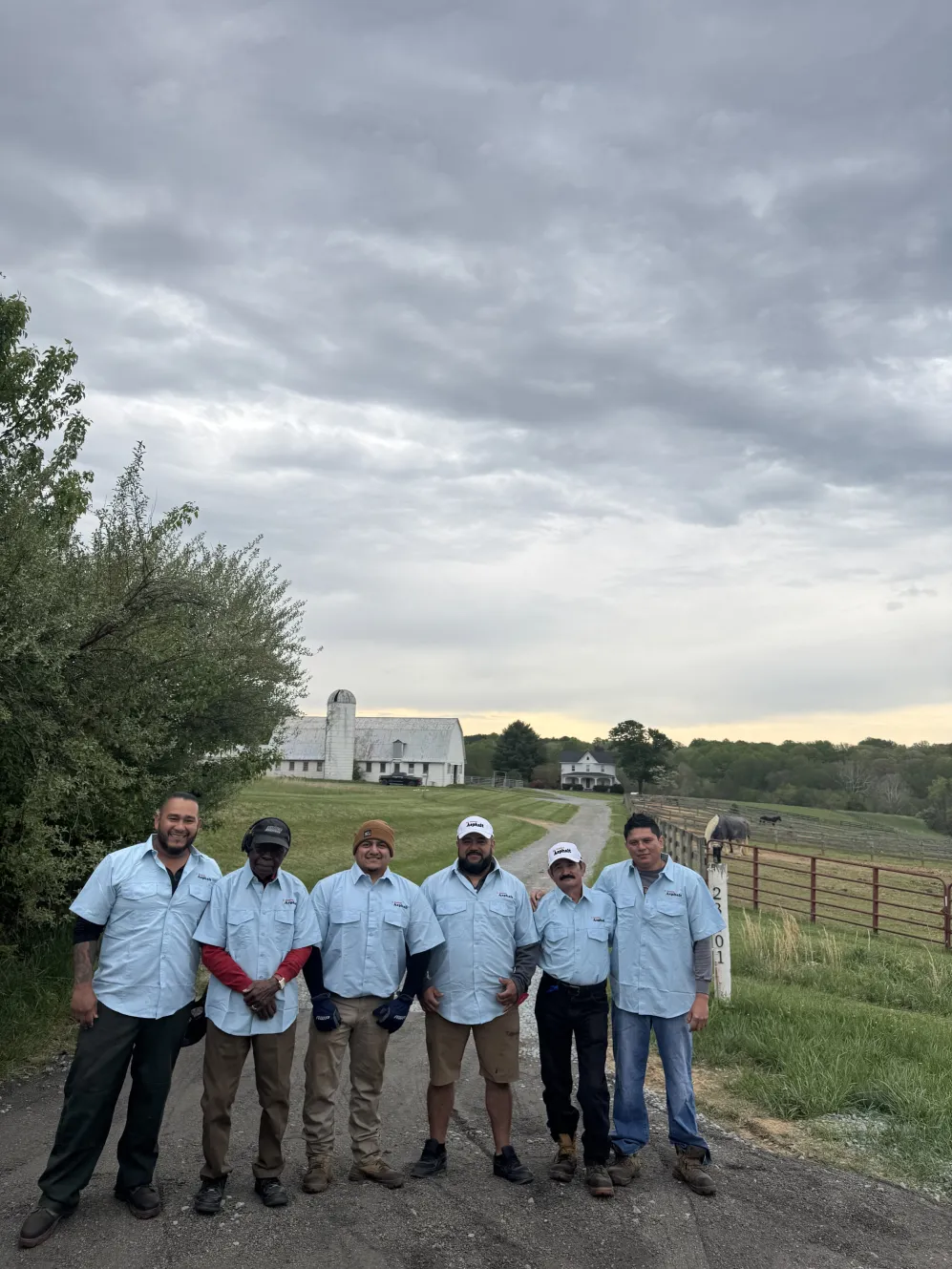
Same owner, same crew since 1988. Jim Stanley founded this company, and his son Mike runs it today. Jim or Mike is on every single job — not a salesman, not a project manager you never see again after the estimate. Our crew has been with us for years. These are experienced guys who know what they’re doing, and we don’t rotate them out or sub the work to whoever’s available that week. You get the same faces from estimate to completion.
We own our equipment. Our trucks, our paver, our roller — all ours. Not rented by the day, not borrowed from another crew. We show up ready, every time.
Highest rated on Google with verified reviews from your Montgomery County neighbors. Not bought, not incentivized — real people who hired us and took the time to write about it. Look us up before you decide.
Google Guaranteed, MHIC licensed, fully insured. We passed Google’s background check and screening. MHIC #01-66672 means we’re licensed by the State of Maryland. Both are on the record.
We don’t push unnecessary work. A driveway in the Takoma Park historic district that needs a surface repair doesn’t need a full replacement, and we’re not going to tell you it does. We look at what’s actually there and tell you what it needs.
We know Takoma Park. The Victorian and Craftsman homes and the century-old root systems underneath their driveways. The narrow streets and tight equipment access. The density and the mature canopy that shape everything about how driveway work gets done here. We’ve been paving here since 1988 and we’re not going anywhere.