Asphalt Paving in Ashton, MD
Family-owned driveway paving, sealcoating, and repair for Ashton homeowners since 1988.
Local Paving Experience Rooted in Ashton’s Rural Character
Ashton sits in the northeastern corner of Montgomery County where Route 108 meets New Hampshire Avenue — an unincorporated community with no official borders, no municipal government, and a character that’s been worth preserving since the county first tried to define it. The 1998 Ashton Master Plan described the goal as “preserving the character of Sandy Spring/Ashton as a historic rural community.” Even as development pressure has increased, the area around the Route 108 and New Hampshire Avenue crossroads still reads as something different from the rest of Montgomery County — larger lots, rolling hills, mature trees, and properties that don’t look like anything built in the last twenty years.
Ashton sits alongside Sandy Spring, and the two communities are combined by the Census Bureau into a single Ashton-Sandy Spring census-designated place. The Quakers who settled Sandy Spring around 1715 shaped this entire corner of the county — their commitment to working the land, their refusal to enslave people a full century before the Emancipation Proclamation, and their role as a major waypoint on the Underground Railroad are all part of what makes this area’s history unlike anywhere else in Montgomery County.
The name Ashton itself is disputed. Some longtime residents say it comes from a large ash tree that once stood at the junction of Route 108 and New Hampshire Avenue. Others believe it’s a portmanteau of two Thomas family homes — Ashland and Clifton — that stood about a mile from the crossroads on either side. We’ve been paving in Ashton since 1988 and are based in Gaithersburg — about 20 minutes west on
Route 108.
What We Do in Ashton
Driveway Paving and Replacement
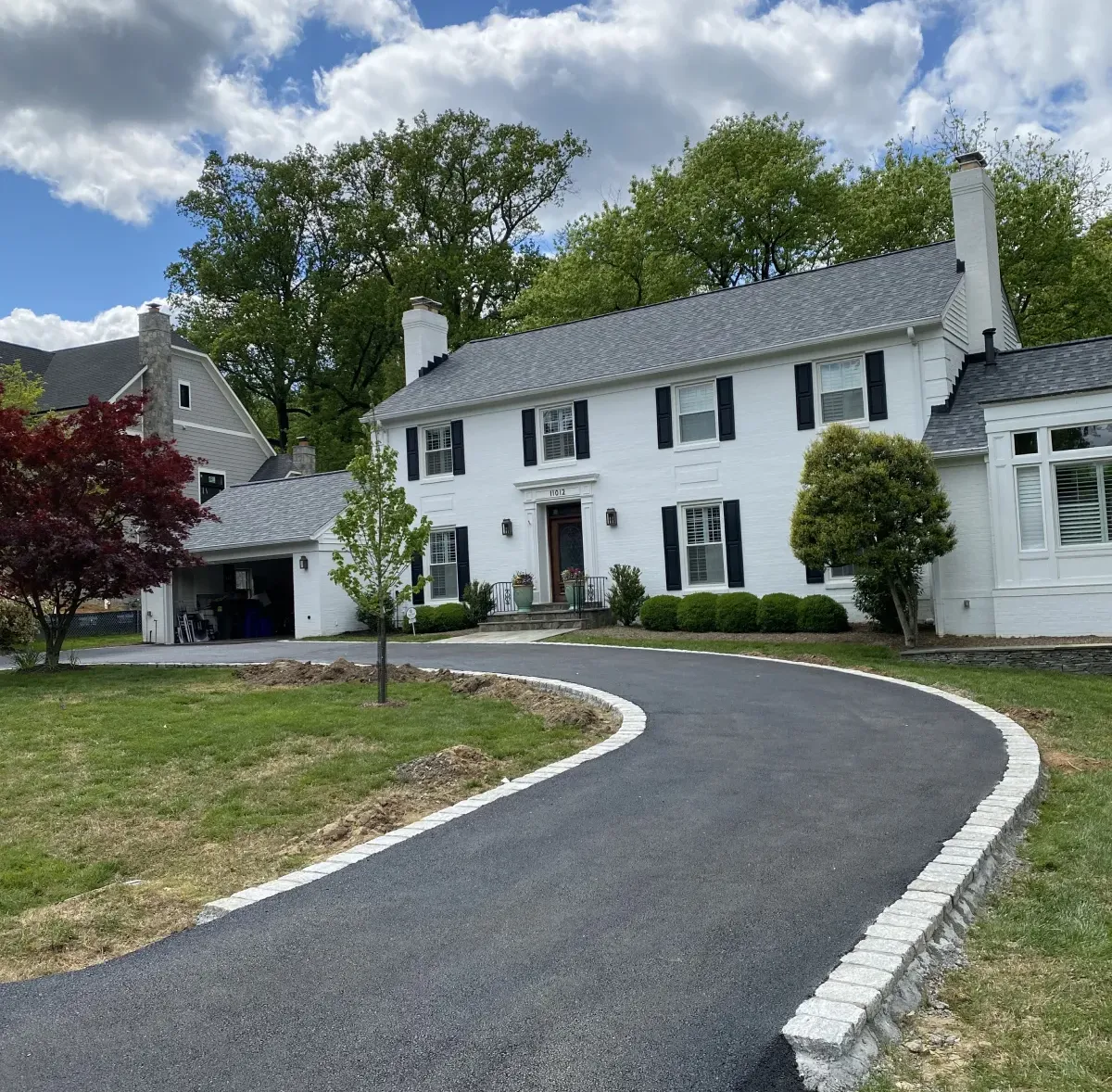
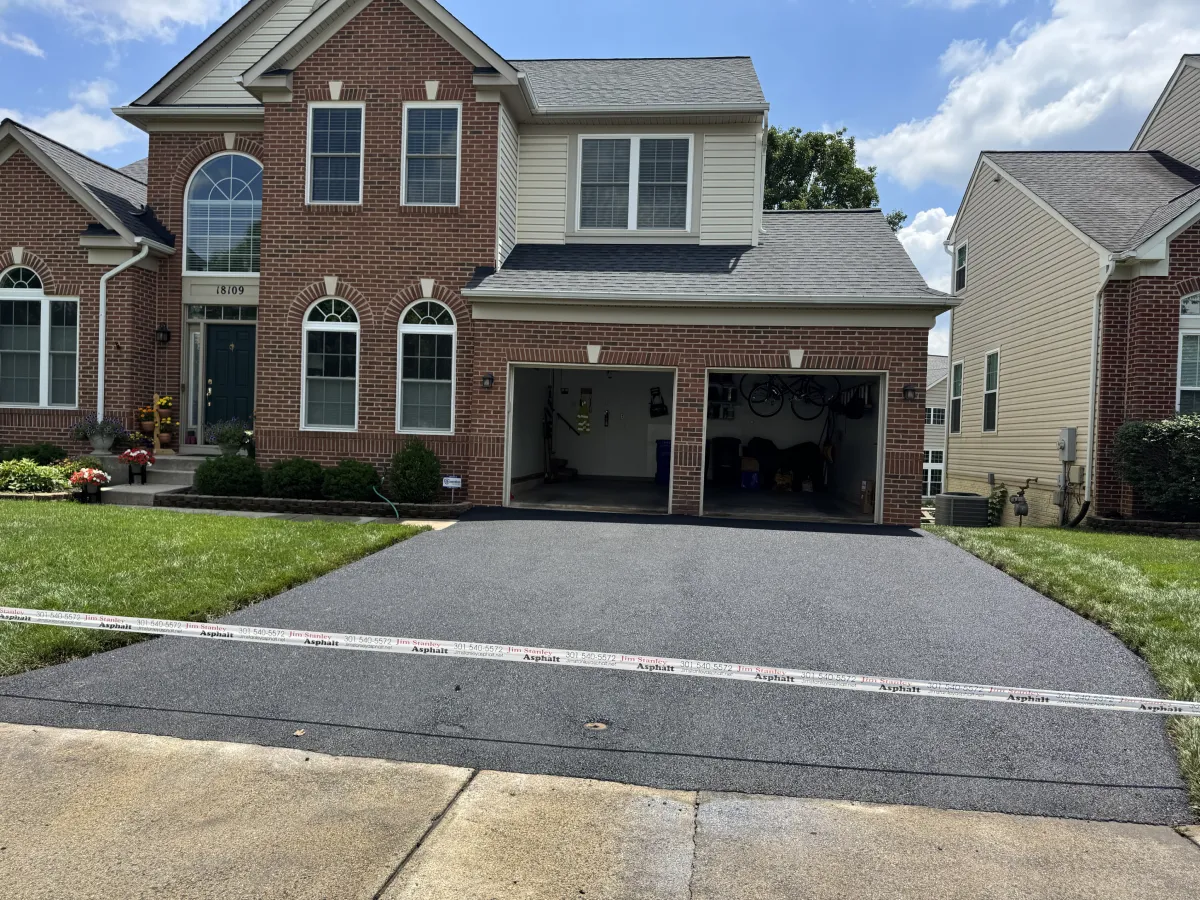
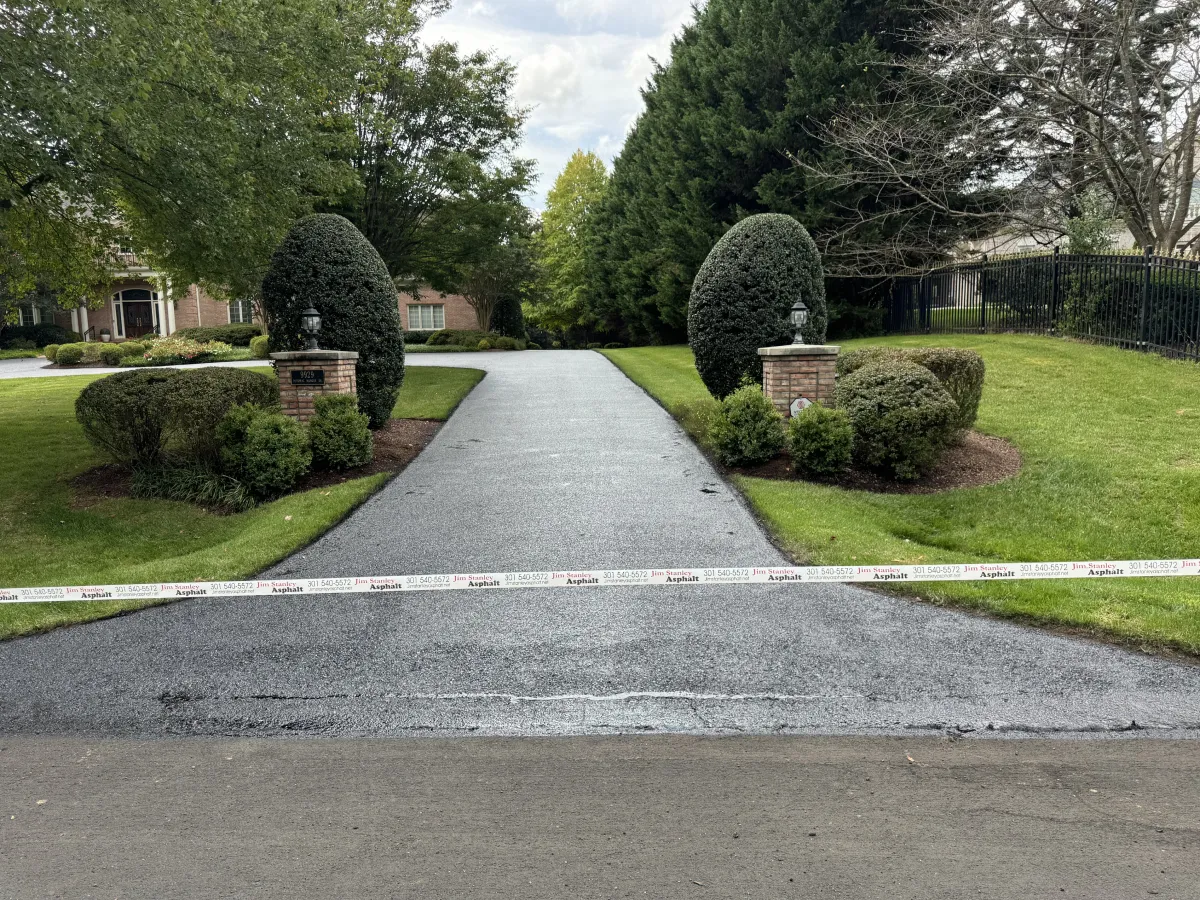
Ashton’s properties sit on larger lots than most of Montgomery County, and the driveways reflect that. Long curved drives, sweeping approaches, driveways that wind through mature trees before reaching the house — these are not suburban two-car aprons. They’re significant paving projects that require real equipment and a crew that knows how to work a winding layout from the road to the garage without leaving transitions that don’t drain properly. We’ve been doing this kind of work in the county’s rural northeastern communities for 35 years.
Driveway Widening and Extensions
On an Ashton property, widening is often about adding a turnaround area or extending the approach rather than adding a second car lane. The scale is different here than in town. We build the base under the new section to match the existing drive and tie it in cleanly.
Sealcoating
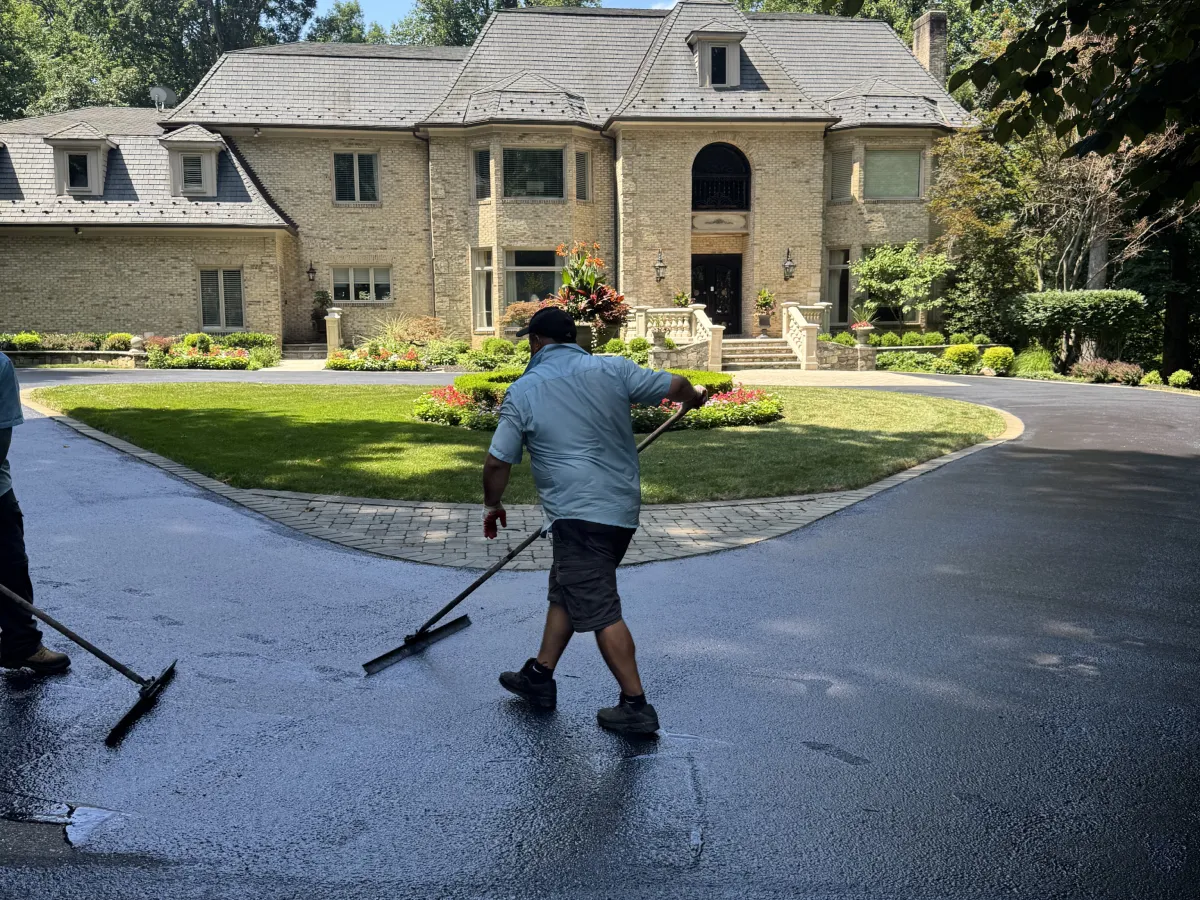
Ashton driveways run through heavy tree canopy on properties where the shade lasts most of the day. The moisture that canopy holds is what shortens driveway life on these large wooded lots — not UV exposure, which is what breaks down driveways in open-sun communities. We assess each driveway and apply the right sealer for the surface condition we find, not a one-size approach.
Crack Filling and Patching
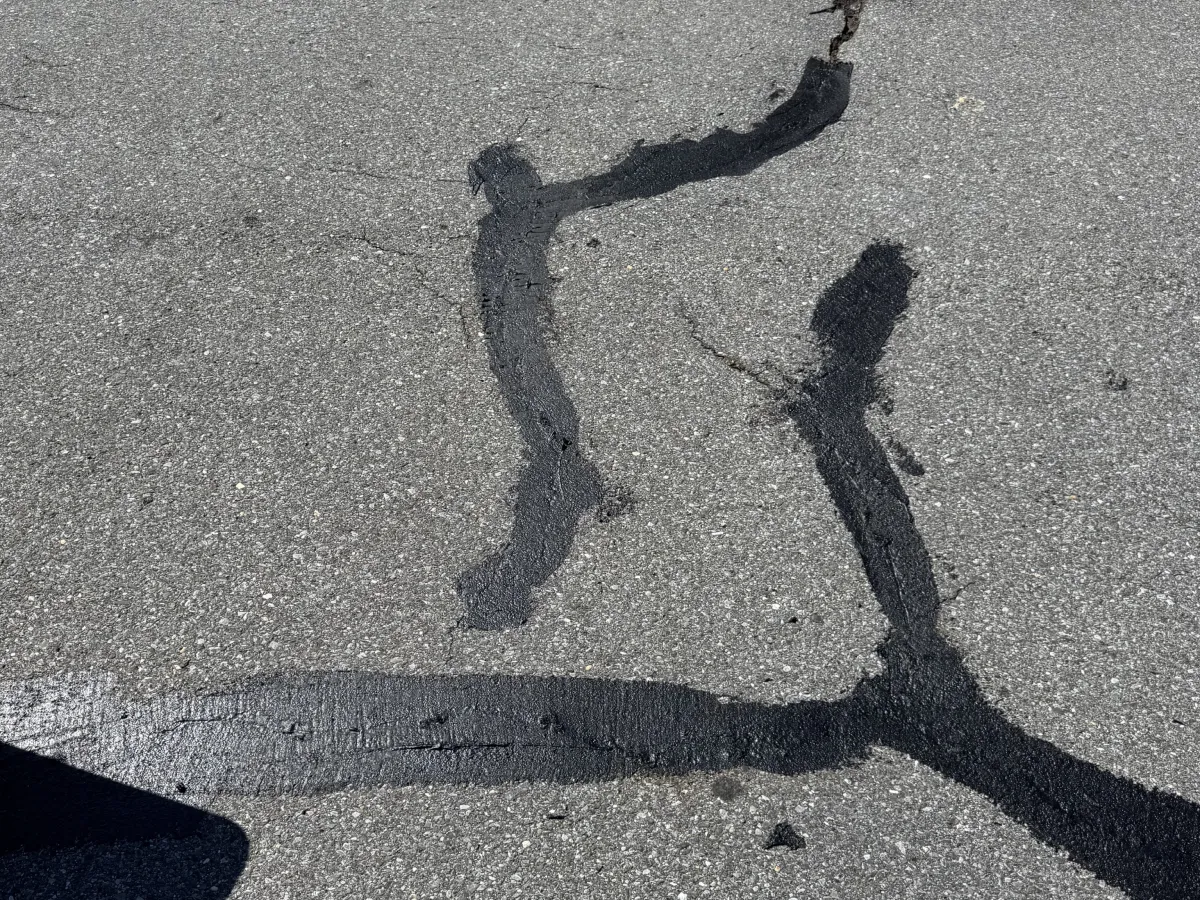
Long driveways on large rural lots develop crack patterns that differ from suburban driveways. The edges take the most stress on a winding drive where vehicles occasionally drop a wheel off the pavement. We fill with heated rubberized sealant for surface cracks and cut out and rebuild where the base has shifted.
Resurfacing and Overlay
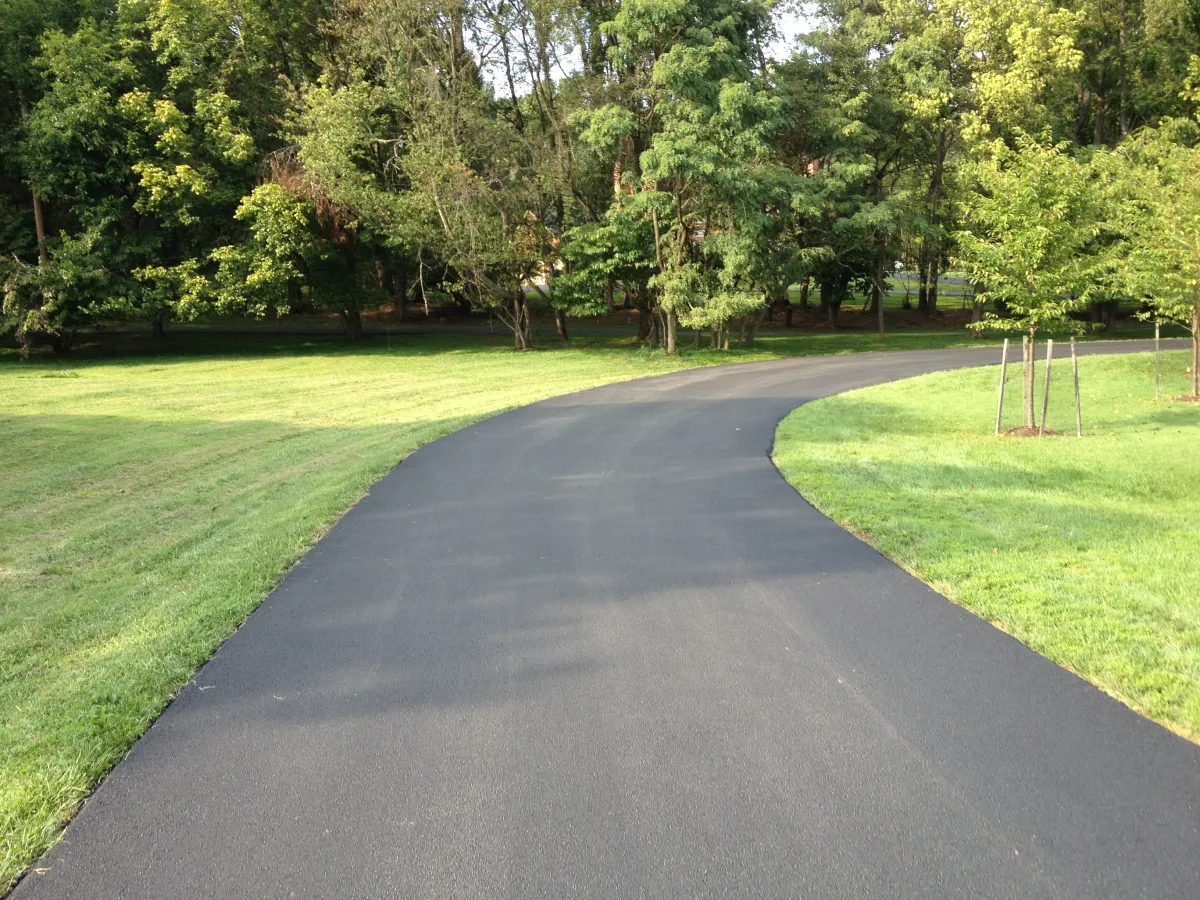
A nearly 5,000-square-foot driveway doesn’t need to come out entirely when the base underneath is still solid. We mill the transitions, tack coat the existing surface, and machine-lay fresh topping asphalt. The result looks and performs like a new driveway at a fraction of the cost of a full replacement.
Culvert Pipe Replacement
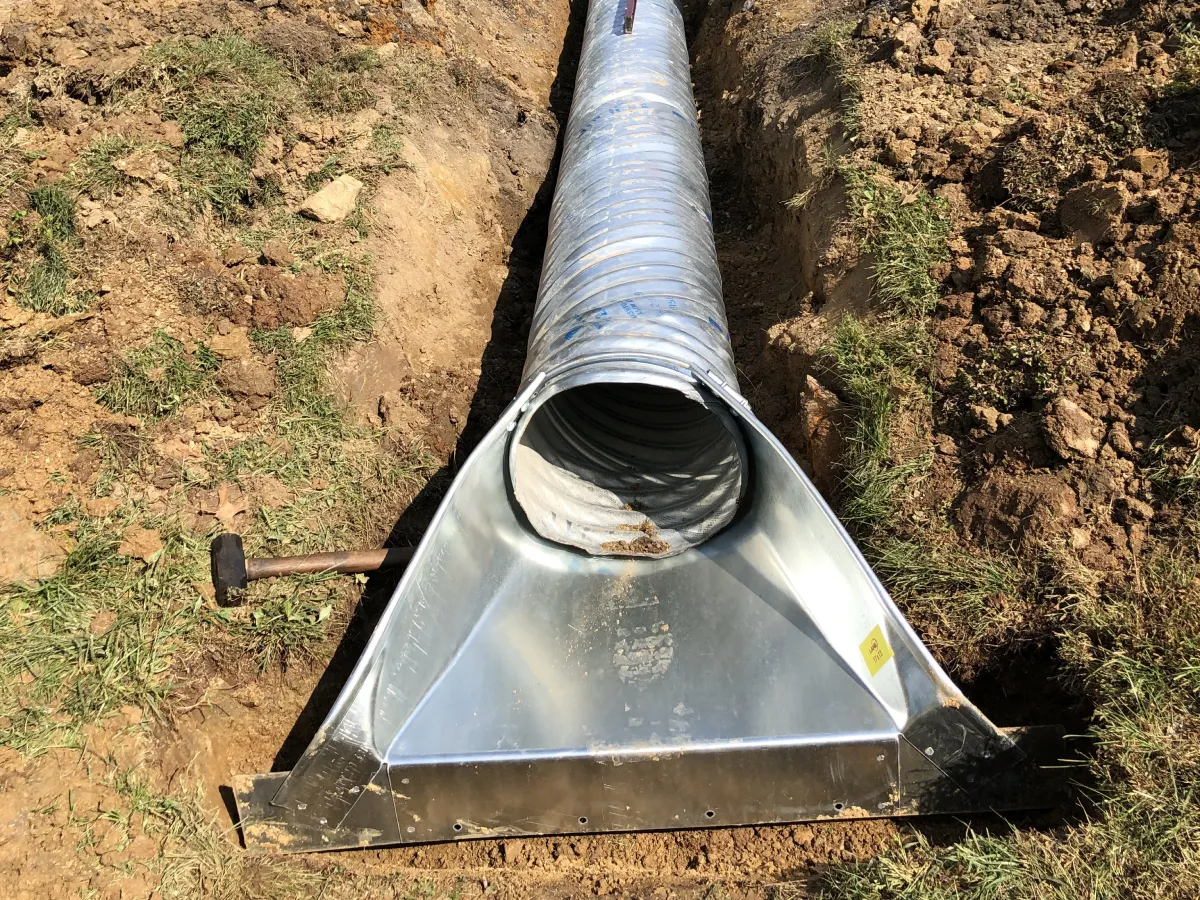
Rural properties in Ashton often have drainage infrastructure under their driveways that predates the house itself. When those pipes fail, the driveway sinks and no surface repair holds. We handle the full job from excavation through repaving.
Why Ashton Driveways Are Different
Ashton driveways aren’t suburban driveways that happen to be in a rural zip code. The properties here sit on lots that are measured in acres rather than square feet, with approaches that wind through trees, grade changes that have to drain correctly over a long run, and surfaces that can be 200 or 300 feet from the road to the garage. The challenges are different from what a crew encounters on a standard residential driveway, and so are the solutions.
The heavy Ashton canopy means moisture exposure is the primary wear factor — not UV. Shade and damp are what break down asphalt on these properties, and a driveway that sits under mature oaks and maples from morning to evening sees a different pattern of deterioration than a driveway in a sunlit suburb. The clay soil that runs through this part of the county adds freeze-thaw pressure from below. On a long winding driveway, even a modest frost heave can displace enough material to crack the surface over a significant section.
Driveway Resurfacing for Iad on New Hampshire Avenue
Ashton, MD — Completed June 2026
What We Found
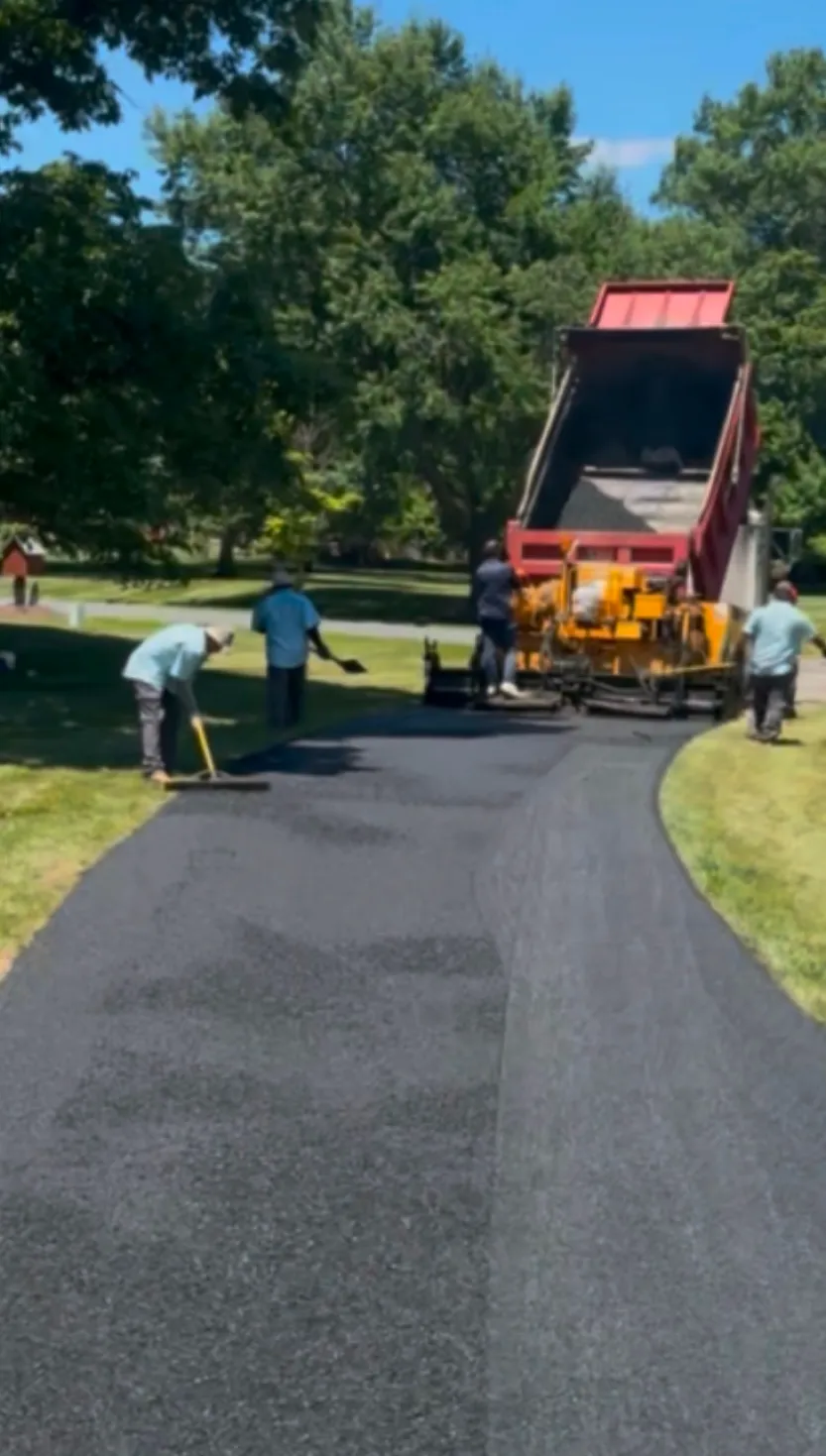
Iad’s driveway on New Hampshire Avenue, Ashton was roughly 4,920 square feet — a long, curving approach through mature trees that had worn through at the transitions near the garage, walkway, and street connection. About 180 to 200 square feet of asphalt had cracked and failed entirely and needed to come out. The rest of the surface was worn but the base underneath was still intact.
What We Did
We removed the 180 to 200 square feet of failed asphalt and hauled it away. We milled down the surface at the garage, walkway, and street so the new layer would meet every transition flush. In the areas where we removed the old asphalt, we laid 3 inches of 19mm base. We tack coated the entire 4,920 square feet and machine-laid 2.5 inches of topping asphalt, then power rolled with a 3- to 5-ton roller. All edges were banked at a 45-degree angle and the job site was cleaned before we left. One-year workmanship warranty included.
The Result
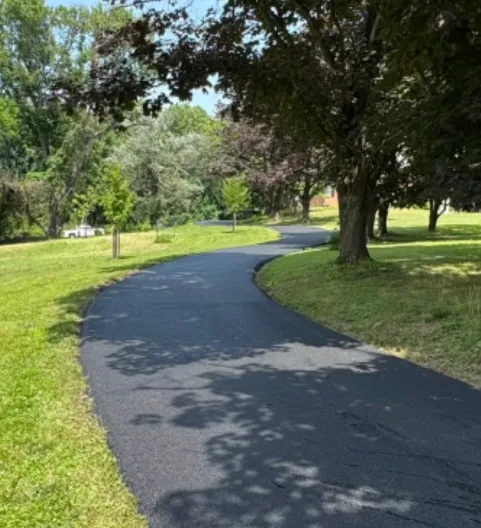
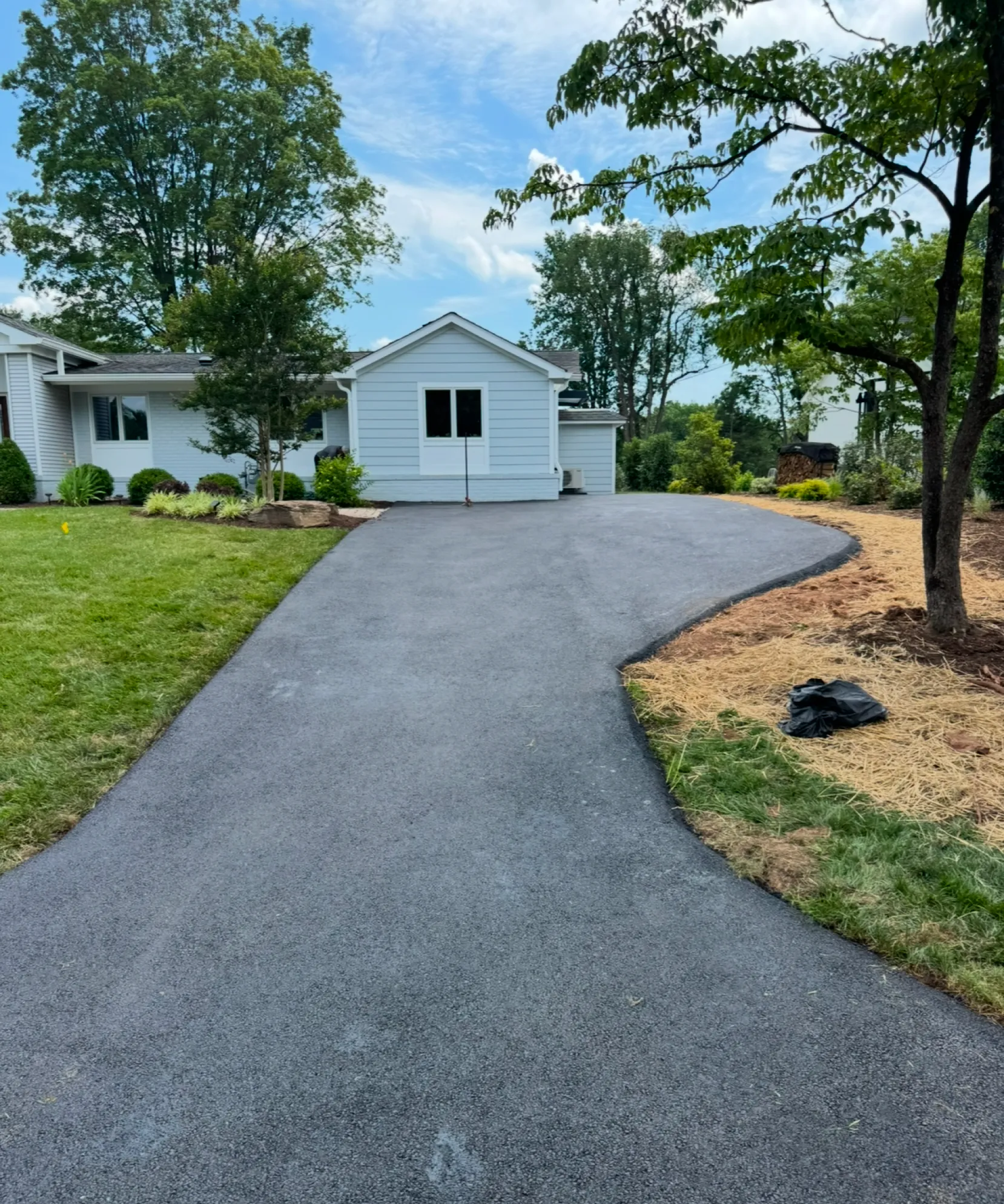
Nearly 5,000 square feet of fresh asphalt winding through mature trees on a New Hampshire Avenue property — on schedule, on point, and looking the way a driveway this size should look.
“Mike and his crew did an outstanding job on our new driveway. Everything was done on point, on schedule, and the finished product looks amazing. I HIGHLY recommend Jim Stanley Asphalt.”
— Iad, New Hampshire Avenue, Ashton
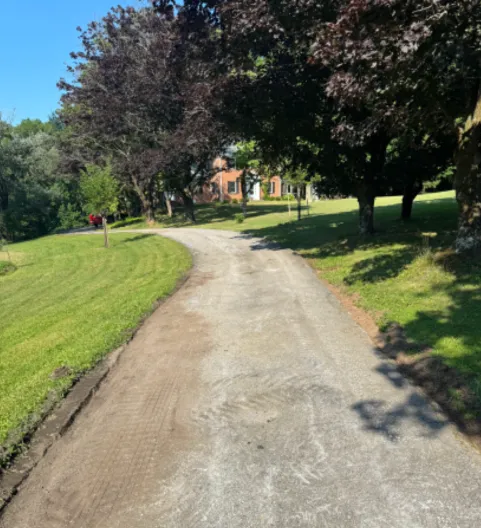
Before — old worn surface showing cracking and wear on the curved approach
After — fresh resurfaced driveway curving through mature trees
Ashton Neighborhoods and Landmarks
The name Ashton is traced to the crossroads of Route 108 and New Hampshire Avenue — either a large ash tree that stood there, or a blend of the names Ashland and Clifton, two Thomas family homes that flanked the intersection about a mile out on either side. Clifton, at 17107 New Hampshire Avenue, was built in 1742, is associated with the local Quaker community, and is listed on the National Register of Historic Places.
Sandy Spring, which borders Ashton to the west, was settled by Quakers around 1715. Richard Snowden patented “Snowden’s Manor” — 1,000 acres — in 1715 and gradually expanded it to over 9,000 acres. The Quakers outlawed slavery among their members in 1777, a full century before the Emancipation Proclamation, and a community of free Black residents settled alongside them. The area became a major waypoint on the Underground Railroad — in 1857, fugitive slave Dred Scott was sheltered here while the Supreme Court case bearing his name was being decided. The Sandy Spring Friends Meetinghouse, built in 1817 in Federal-style brick and listed on the National Register of Historic Places, is the physical center of that history.
The Sandy Spring Museum on Bentley Road preserves the area’s Quaker heritage and hosts rotating art exhibitions. The Sandy Spring Slave Museum and African Art Gallery documents the free Black community that lived here alongside the Quakers. The Sandy Spring Farmers Club, established here, is the oldest agricultural organization in the United States. Sandy Spring Bank traces its roots to the Savings Institution of Sandy Spring, organized in 1868 — the oldest bank in Montgomery County.
Adventure Park at Sandy Spring offers zip lines, aerial courses, and outdoor activities. Dempsey’s of Ashton, at the Route 108 and New Hampshire Avenue crossroads, has been a local diner institution since 1993. Sherwood High School serves the Ashton-Sandy Spring area. Neighborhoods include Ashton Estates, Ashton Meadows, Ashton Oaks, Ashton Pond, Auburn Village, Ednor Acres, and Bradfords Rest.
Don’t see your neighborhood listed? We serve all of Ashton and the surrounding area. Call and we’ll come take a look.
Own or manage a commercial property in Ashton? Visit our Montgomery County commercial page.
Why Ashton Homeowners Call Us
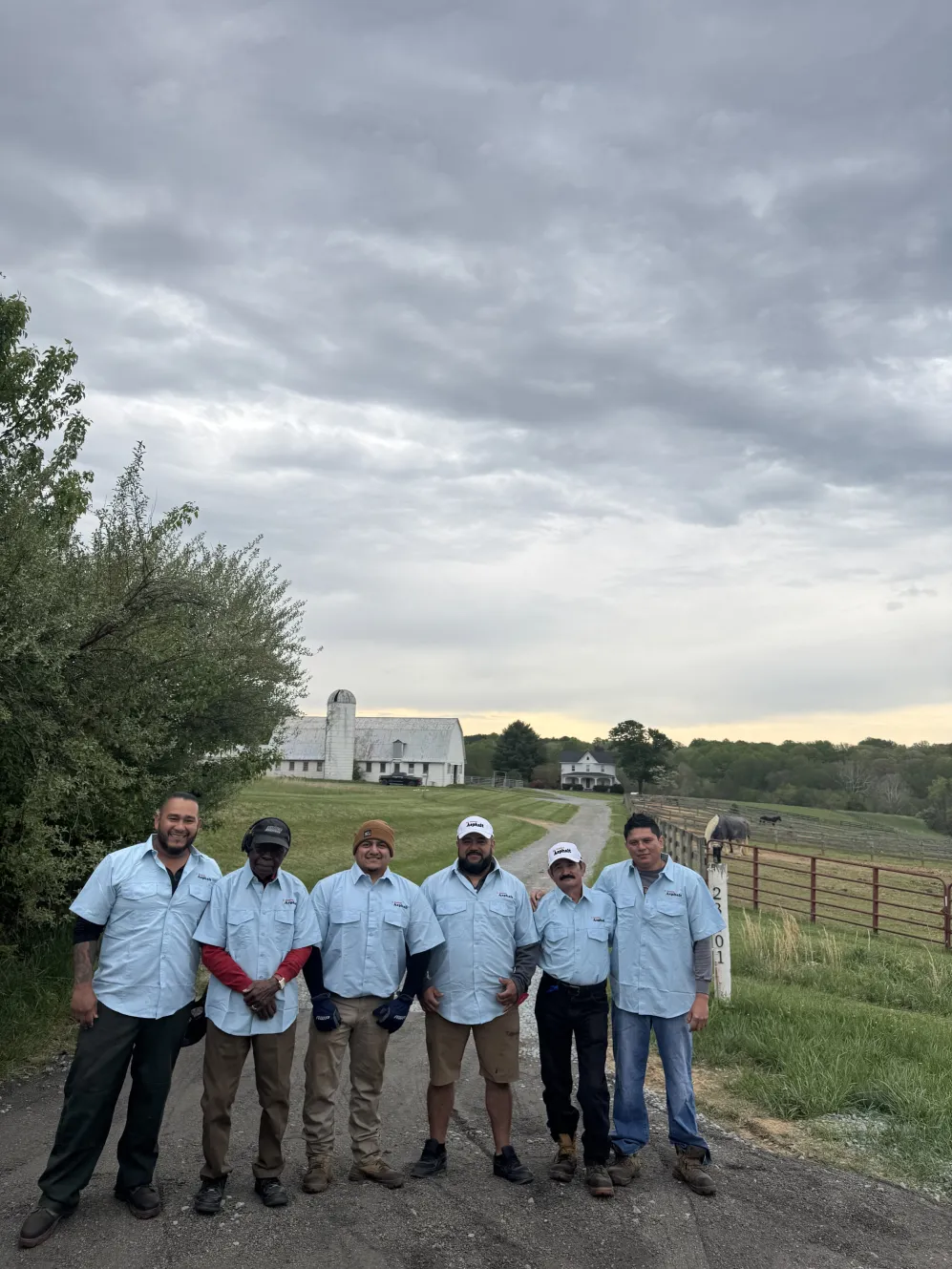
Same owner, same crew since 1988. Jim Stanley founded this company, and his son Mike runs it today. Jim or Mike is on every single job — not a salesman, not a project manager you never see again after the estimate. Our crew has been with us for years. These are experienced guys who know what they’re doing, and we don’t rotate them out or sub the work to whoever’s available that week. You get the same faces from estimate to completion.
We own our equipment. Our trucks, our paver, our roller — all ours. Not rented by the day, not borrowed from another crew. We show up ready, every time.
Highest rated on Google with verified reviews from your Montgomery County neighbors. Not bought, not incentivized — real people who hired us and took the time to write about it. Look us up before you decide.
Google Guaranteed, MHIC licensed, fully insured. We passed Google’s background check and screening. MHIC #01-66672 means we’re licensed by the State of Maryland. Both are on the record.
We don’t push unnecessary work. If your driveway needs a resurface, we’ll tell you that — not try to sell you a full tear-out on a base that’s still solid. If it does need to come out, we’ll explain why before we start.
We know Ashton. The long curved driveways on acre-plus lots. The heavy canopy and the moisture patterns it creates. The clay soil and the freeze-thaw pressure it puts on long driveway runs. We’ve been paving here since 1988 and we’re not going anywhere.