Asphalt Paving in Garrett Park, MD
Family-owned driveway paving, sealcoating, and repair for Garrett Park homeowners since 1988.
A Historic Town Deserves Careful Paving: Garrett Park Driveways
Garrett Park is one of the smallest incorporated towns in Montgomery County and one of the most distinctive. About 996 residents, roughly 400 homes, no home mail delivery, no sidewalks on most streets, and a tree canopy so dense the town has its own dedicated arboretum committee to manage it. Henry W. Copp founded it in 1886, laid it out as an English village, and named the streets after Walter Scott novels — Kenilworth, Waverly, Montrose, Rokeby, Strathmore. The town itself was named after Robert W. Garrett, president of the B&O Railroad, whose tracks run through it. The B&O station was built in 1893, and builders who developed the original lots got reduced rail rates, while new residents received free trips to move their furniture in.
The entire town has been on the National Register of Historic Places since 1975 — all 154 acres of it. And in 1962, Garrett Park became the first community in the United States to declare itself a Nuclear Free Zone through a town referendum. That’s the kind of place this is: a community that has been deliberately itself for over 130 years.
The homes here span three architectural eras — 1890s Victorian houses built by the town’s founders, 1920s Chevy houses built by Maddux Marshall and Co., and 1950s Prairie Style homes designed by architect Alexander Richter. That range of building eras means an equally wide range of driveway ages, and a wide range of what’s underneath them when they fail.
We’ve been paving in Garrett Park since 1988 and are based in Gaithersburg — about 10 minutes north.
What We Do in Garrett Park
Driveway Paving and Replacement
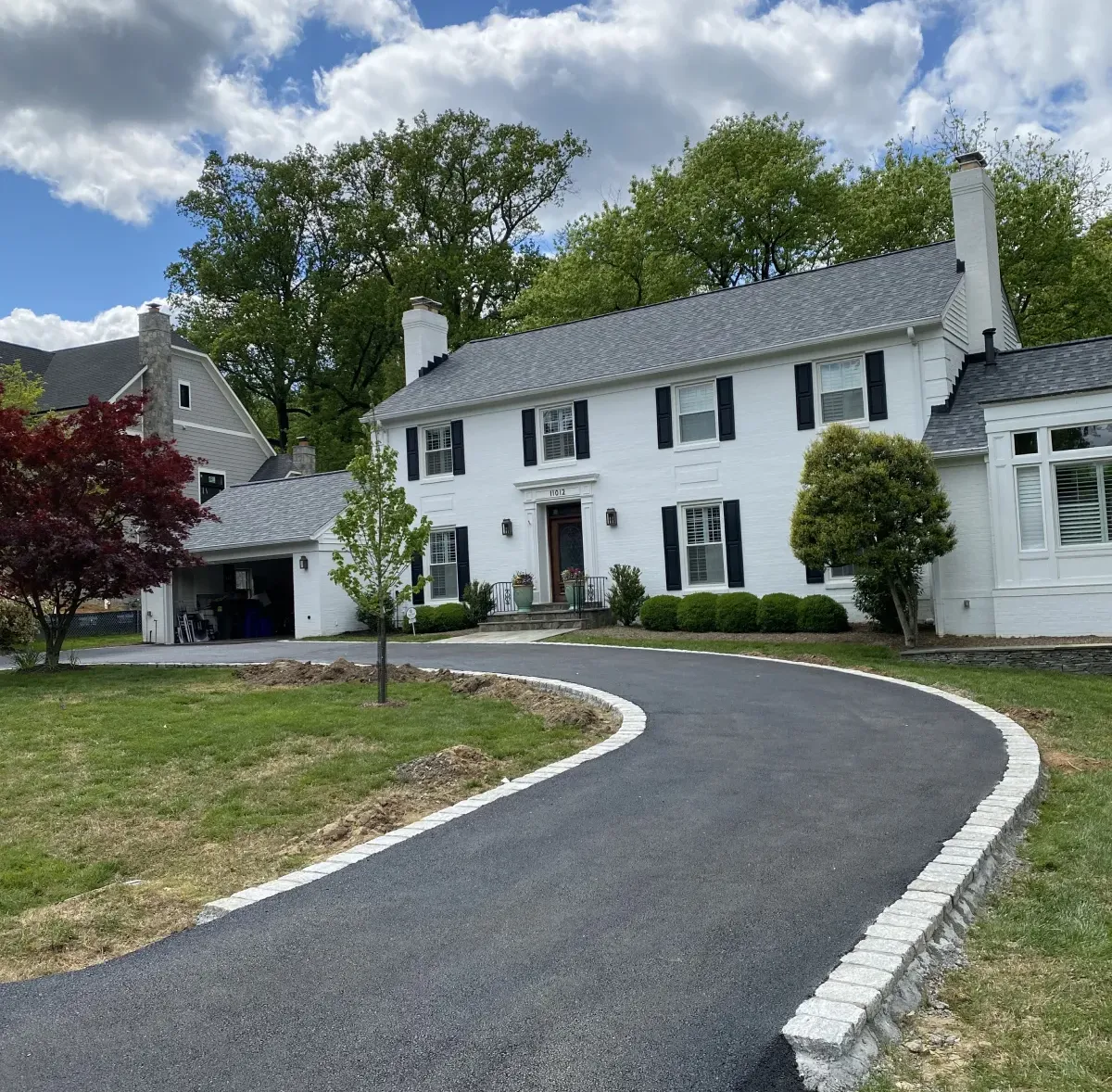
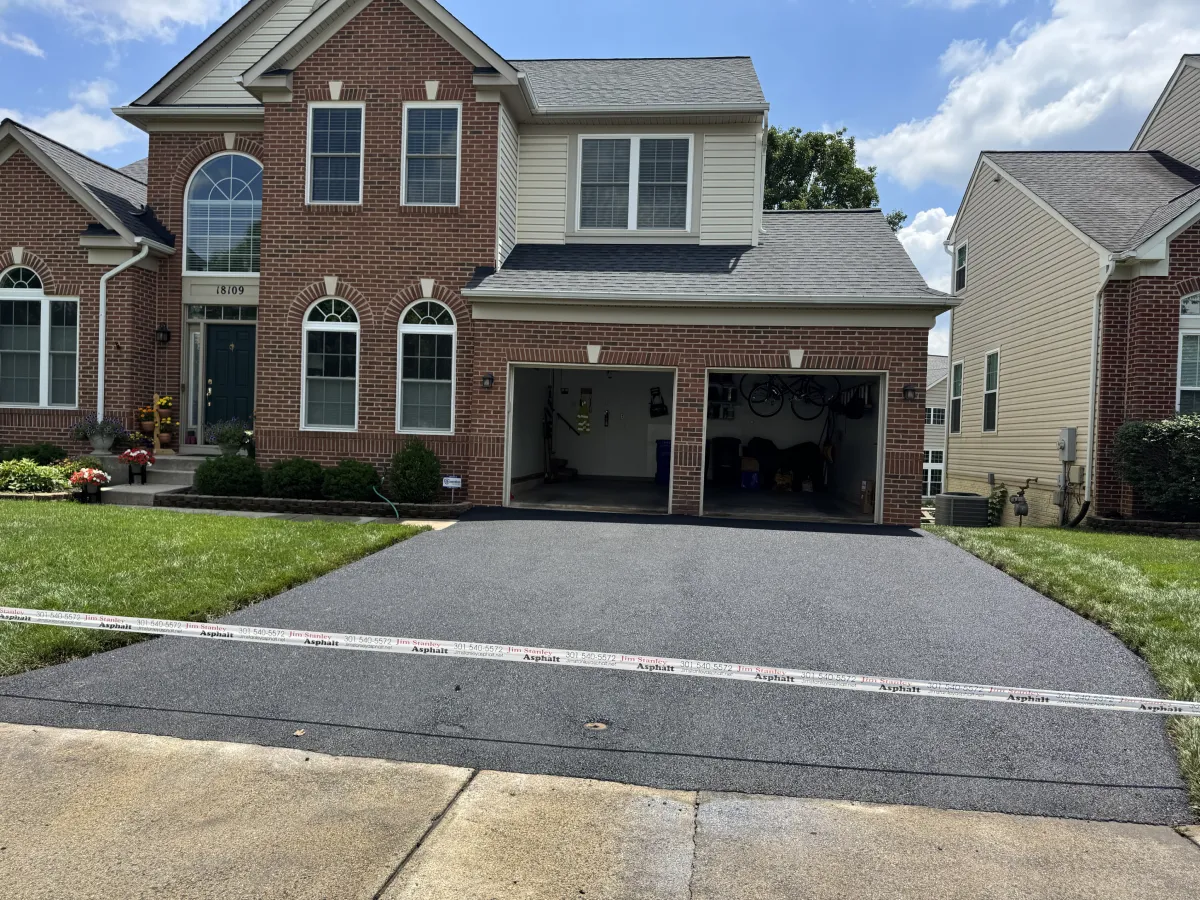
Garrett Park’s lots are small and the streets are narrow, which puts real constraints on equipment access for any paving job. We work within those constraints without damaging the root systems that the town’s arboretum committee works to protect. When a driveway needs to come out entirely, we remove it, rebuild the base, and pave new — with the kind of attention to access and site conditions that a dense, wooded historic town demands.
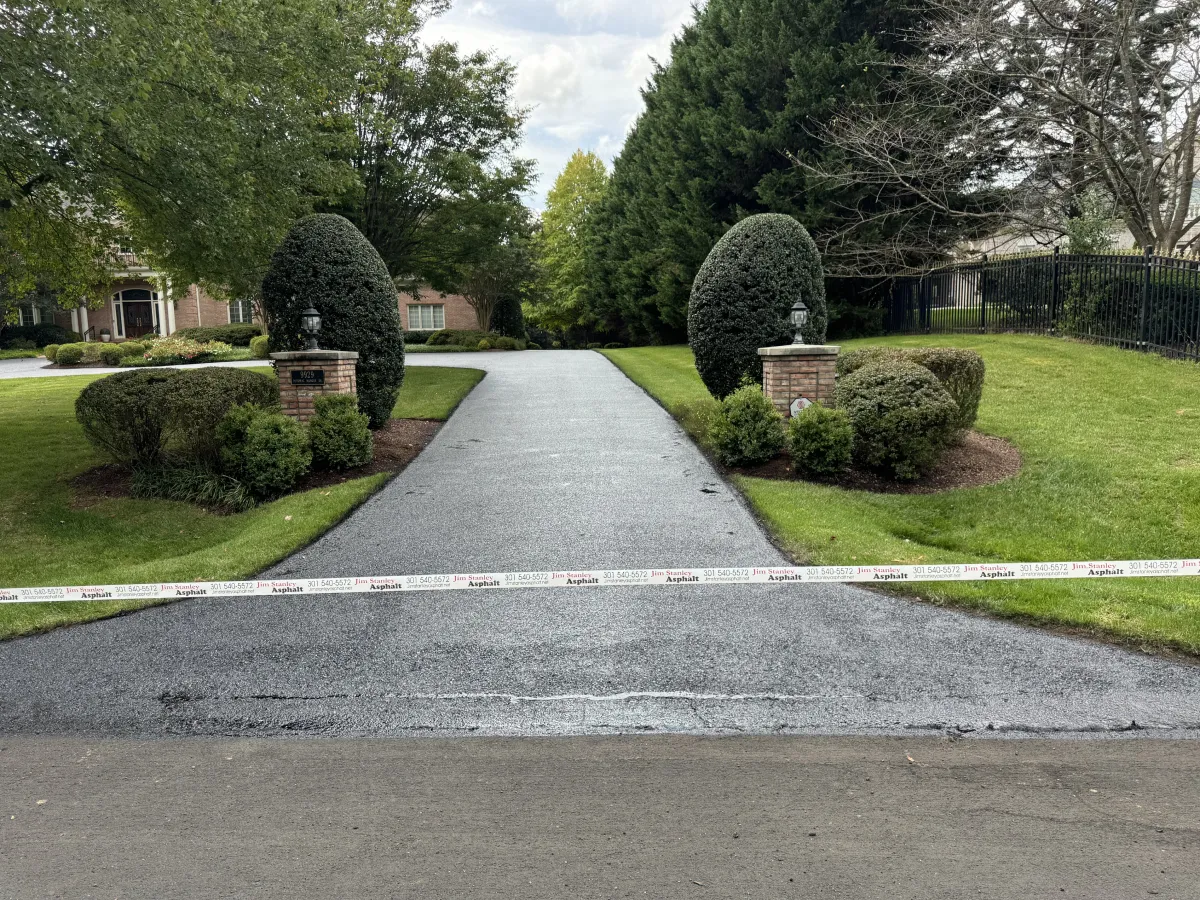
Driveway Widening and Extensions
Some Garrett Park properties were built in an era when one car per household was the norm, and the driveways reflect that. Extending an existing circular drive with a new approach, adding a parking pad off the side, or widening a single-lane driveway to accommodate how a property is actually used today all require the same foundation work as any new asphalt — compacted gravel, base asphalt, tack coat, topping — built properly from the ground up so the new section performs the same way as the rest of the driveway for the same length of time.
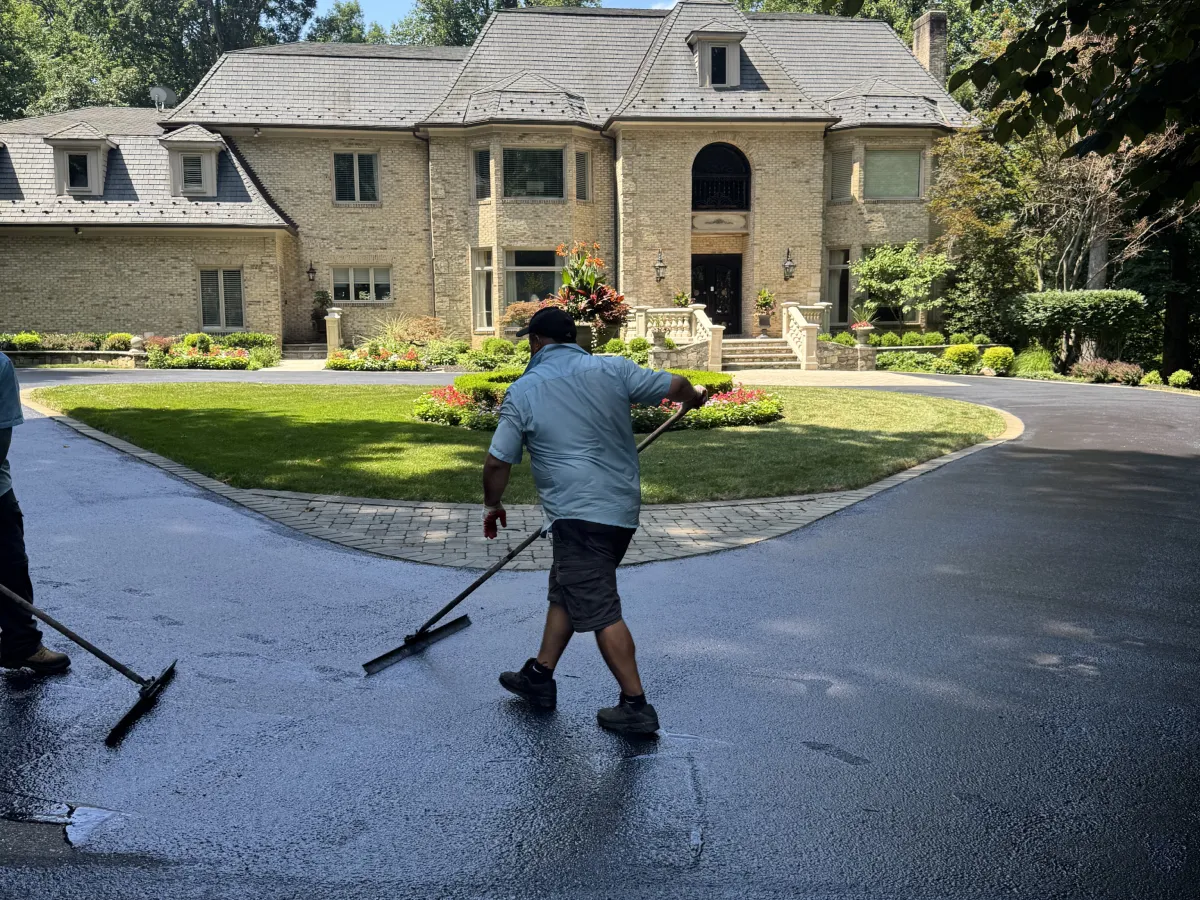
Sealcoating
Garrett Park’s arboretum canopy keeps driveways shaded through much of the day, which slows the drying cycle and keeps moisture on the surface longer than in open-sun neighborhoods. That sustained dampness is what oxidizes the binder and shortens driveway life. Sealing on the right schedule is what interrupts that process before it progresses past the surface.
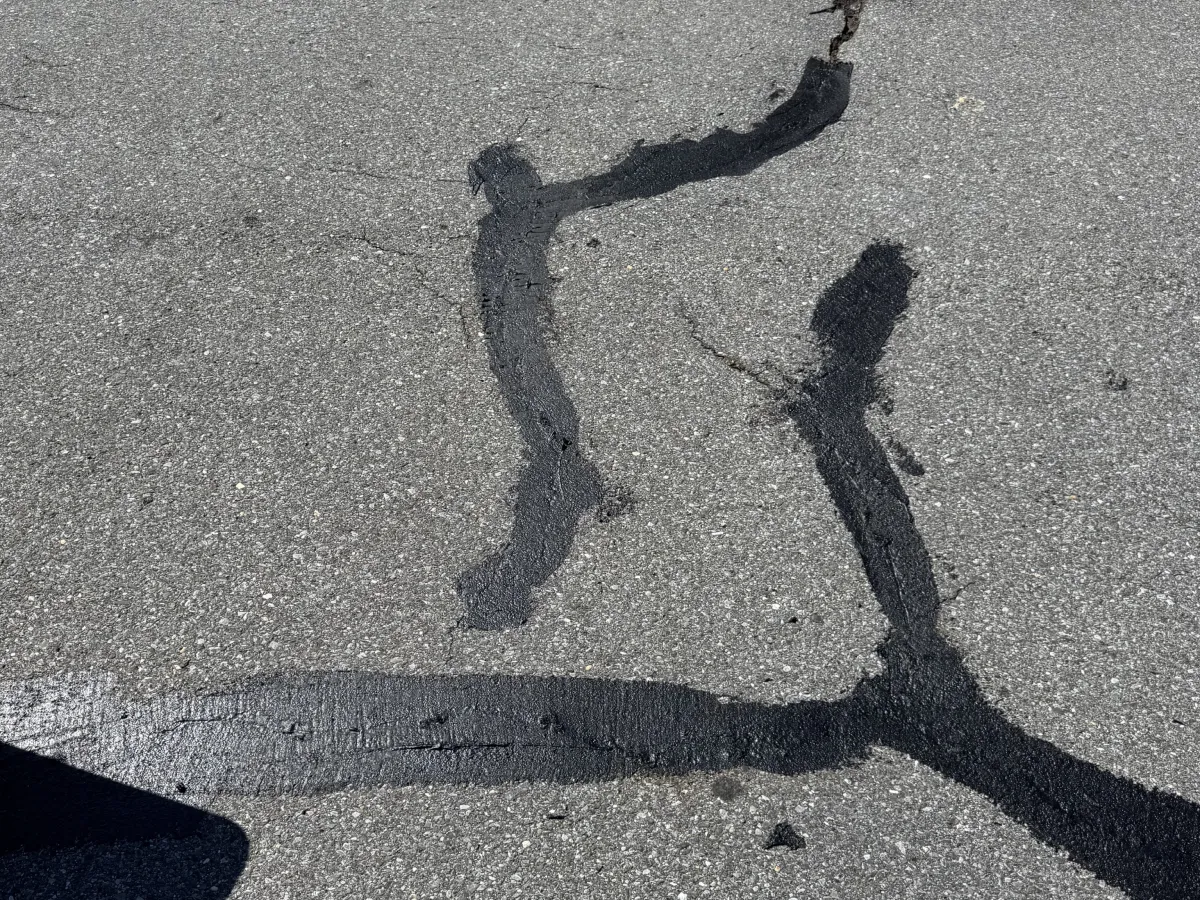
Crack Filling and Patching
The mature trees that make Garrett Park what it is also run root systems under every driveway in town. Root heave cracks the surface from below while freeze-thaw pressure works it from the side. We fill with heated rubberized sealant where the damage is still surface-level, and cut out and rebuild where the roots or the base have shifted underneath.
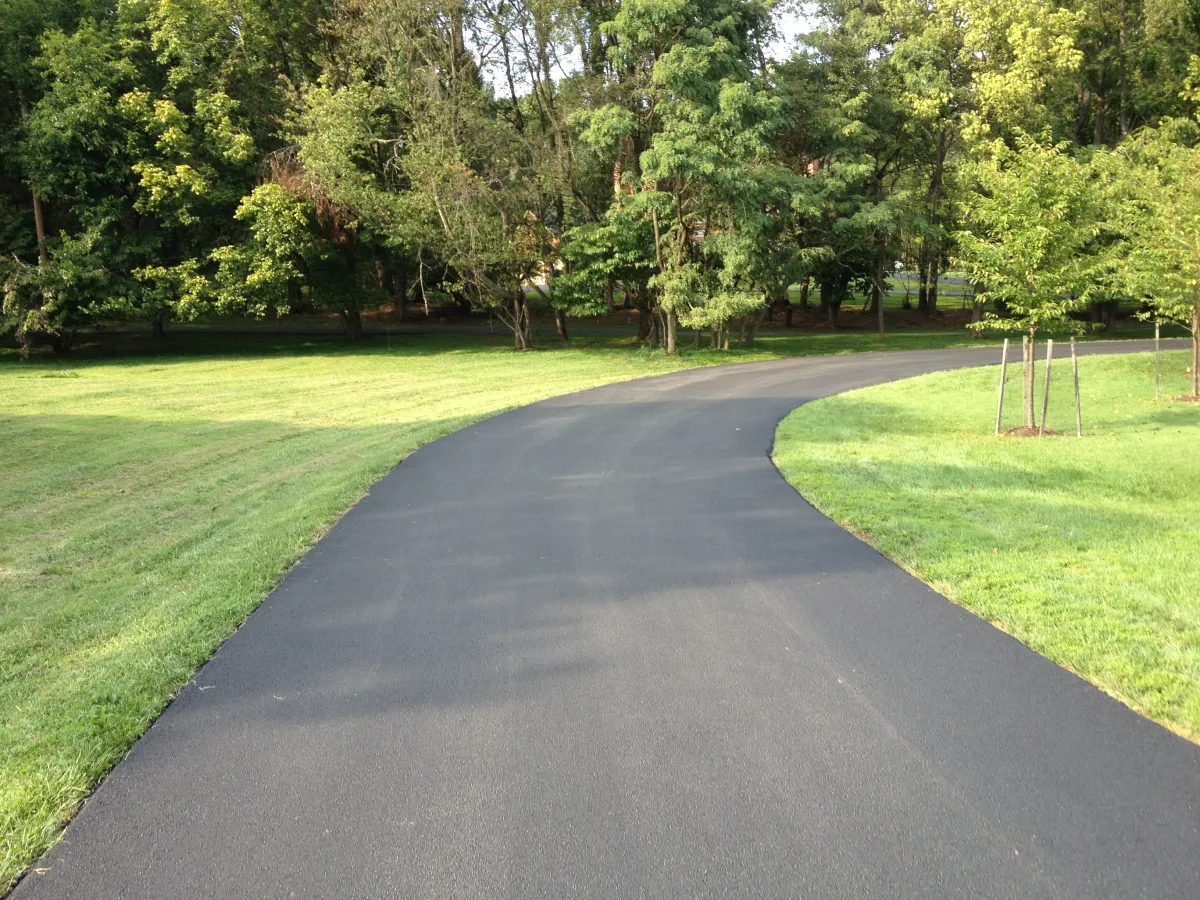
Resurfacing and Overlay
When the base is still viable but the surface has worn through, a resurface extends the driveway’s life without the disruption of a full tear-out. We mill the transitions, address any grade or edging issues before topping goes down, tack coat the existing surface, and machine-lay fresh asphalt.
Culvert Pipe Replacement
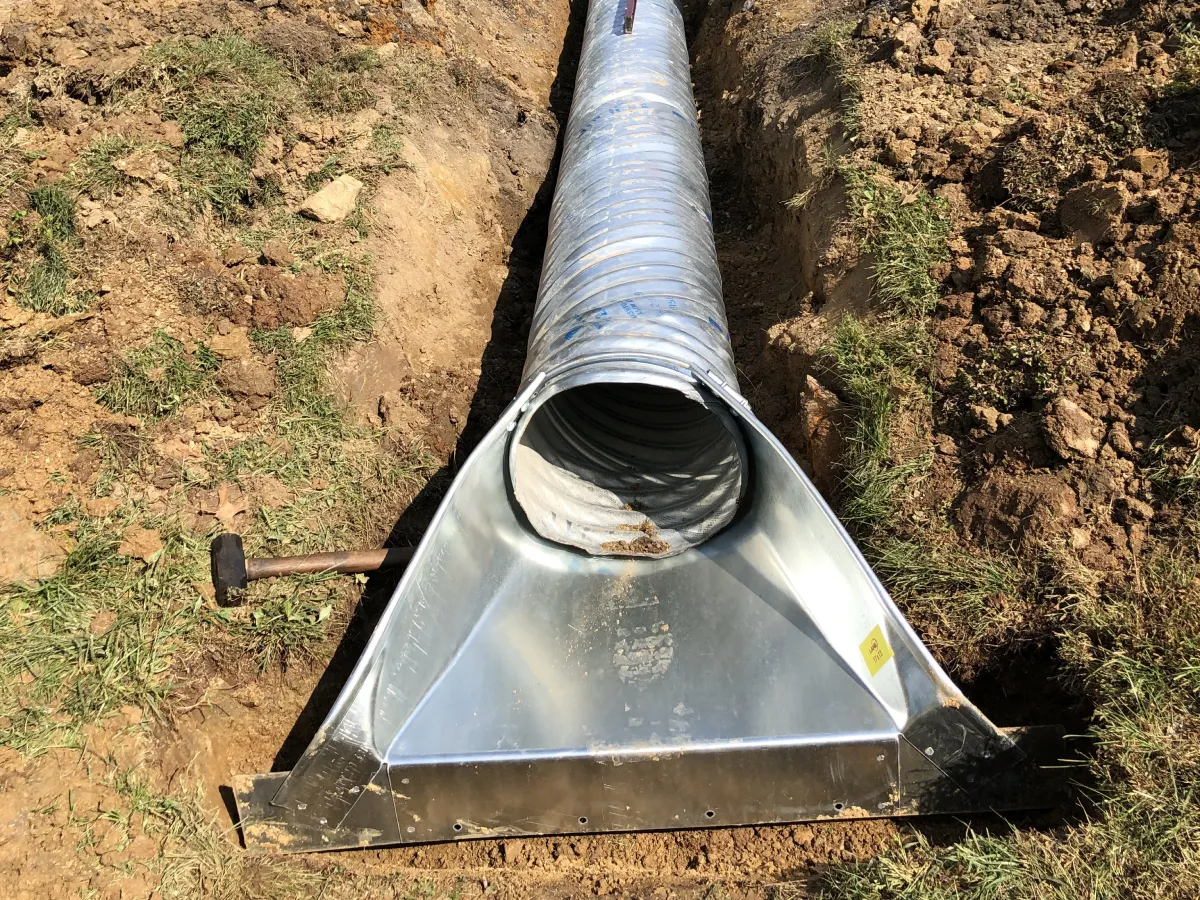
Some of Garrett Park’s oldest properties, particularly the 1890s Victorian homes on the original streets, have drainage infrastructure under their driveways that has been in the ground since the town was platted. When those pipes fail under a driveway that’s already showing its age, no surface repair holds. Montgomery County requires a permit for culvert work and an inspector on site. We handle the full job — excavation, pipe, base rebuild, and repaving — and we’ve done it regularly enough that the county process isn’t a reason to avoid the work.
Driveway Addition and Circular Driveway Resurfacing for John on Oxford Street
Garrett Park, MD — Completed 2025
What We Found
John’s property on Oxford Street in Garrett Park had two driveway problems. The existing circular driveway, about 1,320 square feet, was in poor condition — buckled, cracked throughout, and with edging that was inconsistent and uneven. Separately, John wanted a brand new driveway added — an 83 by 12 foot section built from the ground up off of the existing circular drive, giving the property a second approach that didn’t exist before. We priced both jobs separately, then did them together.
What We Did
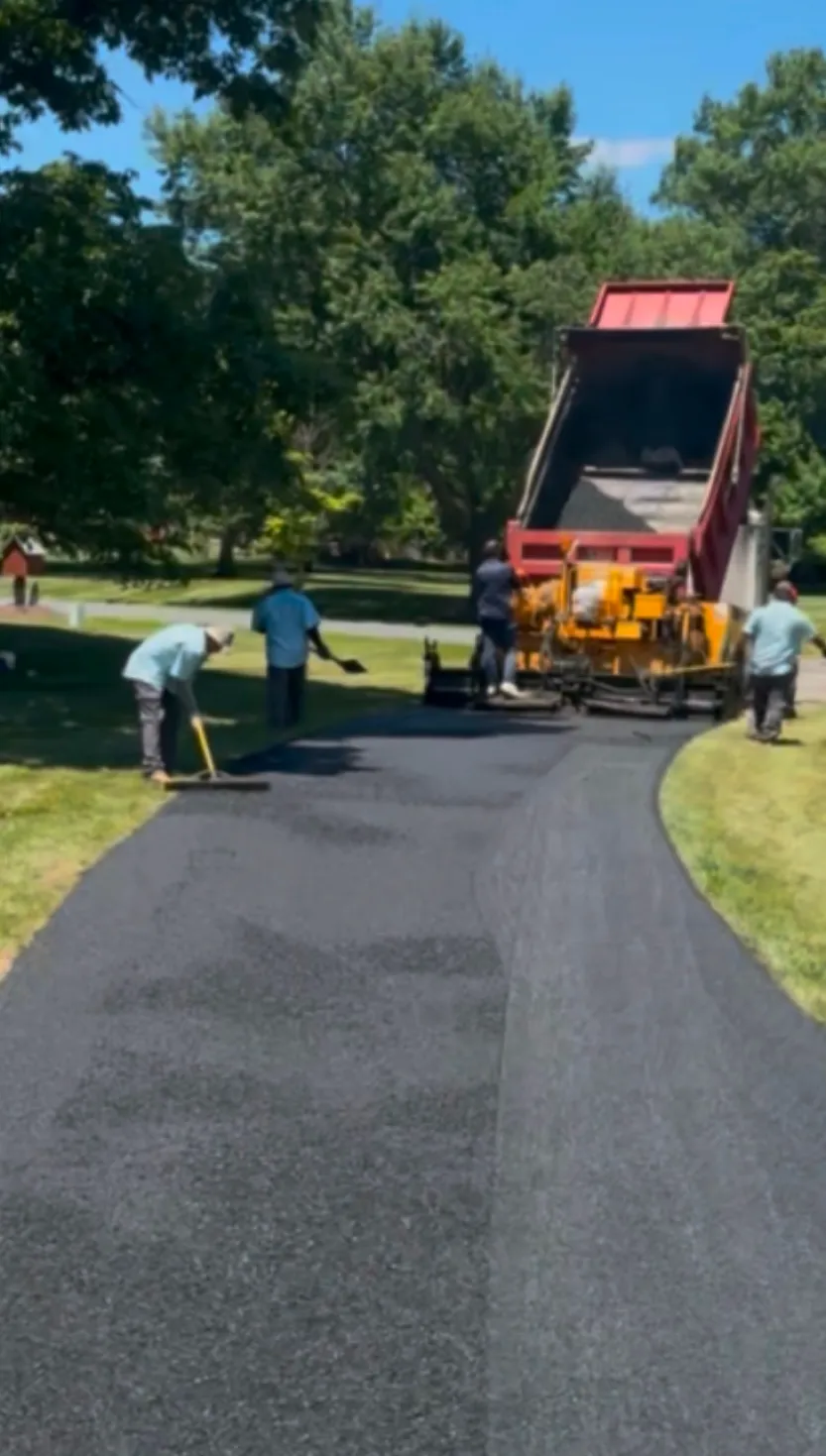
For the new driveway addition, we marked out the 83 by 12 foot area, removed the dirt and left it on site. We laid 3 inches of gravel and compacted it, then laid 3 inches of base asphalt and power rolled with a 3- to 5-ton roller. We cleaned the surface and applied a tack coating so the two layers would bond as one structure. We machine-laid 2.5 inches of topping asphalt and power rolled to a smooth finish. All edges were banked at a 45-degree angle.
For the existing circular driveway, we removed the old asphalt and hauled it away. We laid stone as needed and power rolled. We laid 2 inches of base asphalt and power rolled. We applied a tack coating, then machine-laid 2 inches of topping asphalt and power rolled. We reconfigured all the edging to give the circular drive a clean, uniform look instead of the uneven edges it had before. All edges were banked at a 45-degree angle and the job site was cleaned before leaving.
Both jobs were completed together. One-year workmanship warranty included on both.
The Result
John now has a property with two clean, properly built driveways — a brand new addition built from the ground up and a fully resurfaced circular drive with reconfigured edges that actually match.
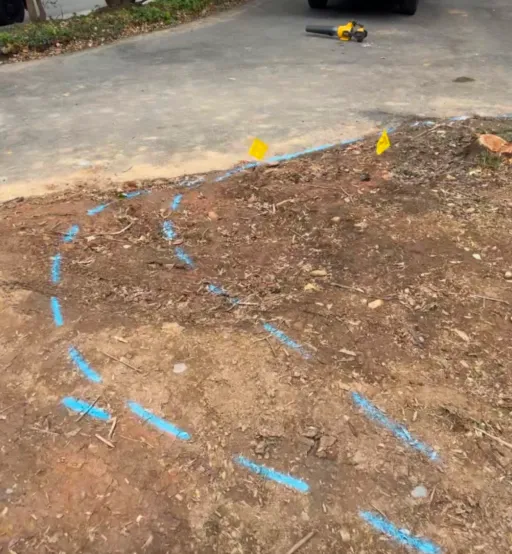
Blue spray paint marking the new driveway footprint — utility flags, existing concrete visible at top
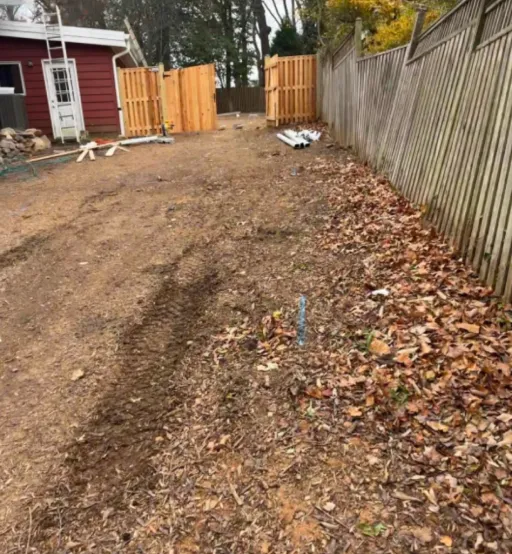
Before — cleared dirt where the new driveway addition will go, fence just installed
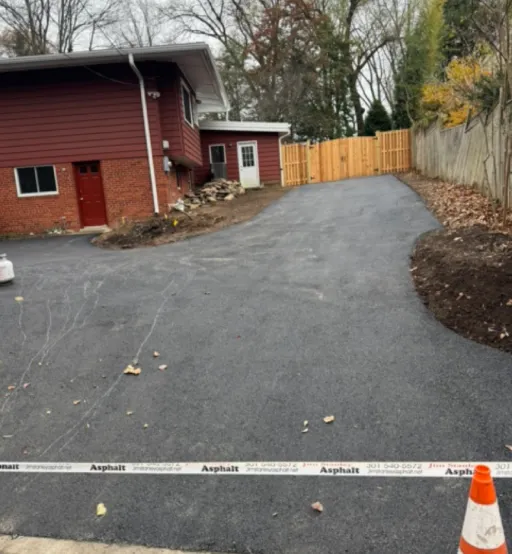
After — finished driveway addition on Oxford Street, J Stanley tape across front, fall foliage
Why Garrett Park Driveways Are Different
Garrett Park is an official Arboretum. The town has a dedicated committee that oversees the health and diversity of its trees — and those trees are everywhere, on every street, overhanging every driveway. The canopy keeps driveways damp long after rain has dried in open neighborhoods, which accelerates surface oxidation and creates the freeze-thaw conditions that crack asphalt from the edges inward. The root systems from those same trees push up from underneath, creating the uneven, buckled surfaces that are common on properties across all three of the town’s architectural eras.
The lots are also small and the streets are narrow. Equipment access in Garrett Park is tighter than anywhere else we work in Montgomery County. A crew that doesn’t know how to work within those constraints will damage root systems, tear up lawn edges, and leave a mess on streets that have no room to absorb one.
Garrett Park Neighborhoods and Landmarks
Garrett Park has no sub-neighborhoods — the entire town is the neighborhood. Oxford Street, where John’s property sits, is one of the original streets laid out when Henry Copp platted the town in 1886, named after a Walter Scott novel along with every other street in town.
Penn Place on Waverly Avenue is the town’s center — a town-owned building that houses the post office where residents pick up their own mail (there’s no home delivery in Garrett Park), the Black Market Bistro restaurant, and the Art at Penn Place gallery. A Saturday farmers market runs there through the growing season. Town Hall on Kenilworth Avenue was built in 1897 as a chapel and has served the community ever since.
Garrett Park Estates Park is 3.6 acres that borders both Rock Creek Regional Park and Strathmore Hall Arts Center. The MARC commuter train stops in town — the same B&O line that shaped the town’s founding. Grosvenor-Strathmore on the Red Line is about a mile away. Garrett Park Elementary School serves the town on Oxford Street itself.
The entire town has been a National Historic District since 1975. In 1962 it became the first community in the United States to declare itself a Nuclear Free Zone. It’s a place that has been doing things its own way for a long time.
Don’t see your street listed? We serve all of Garrett Park. Call and we’ll come take a look.
Own or manage a commercial property near Garrett Park? Visit our Montgomery County commercial page.
Why Garrett Park Homeowners Call Us
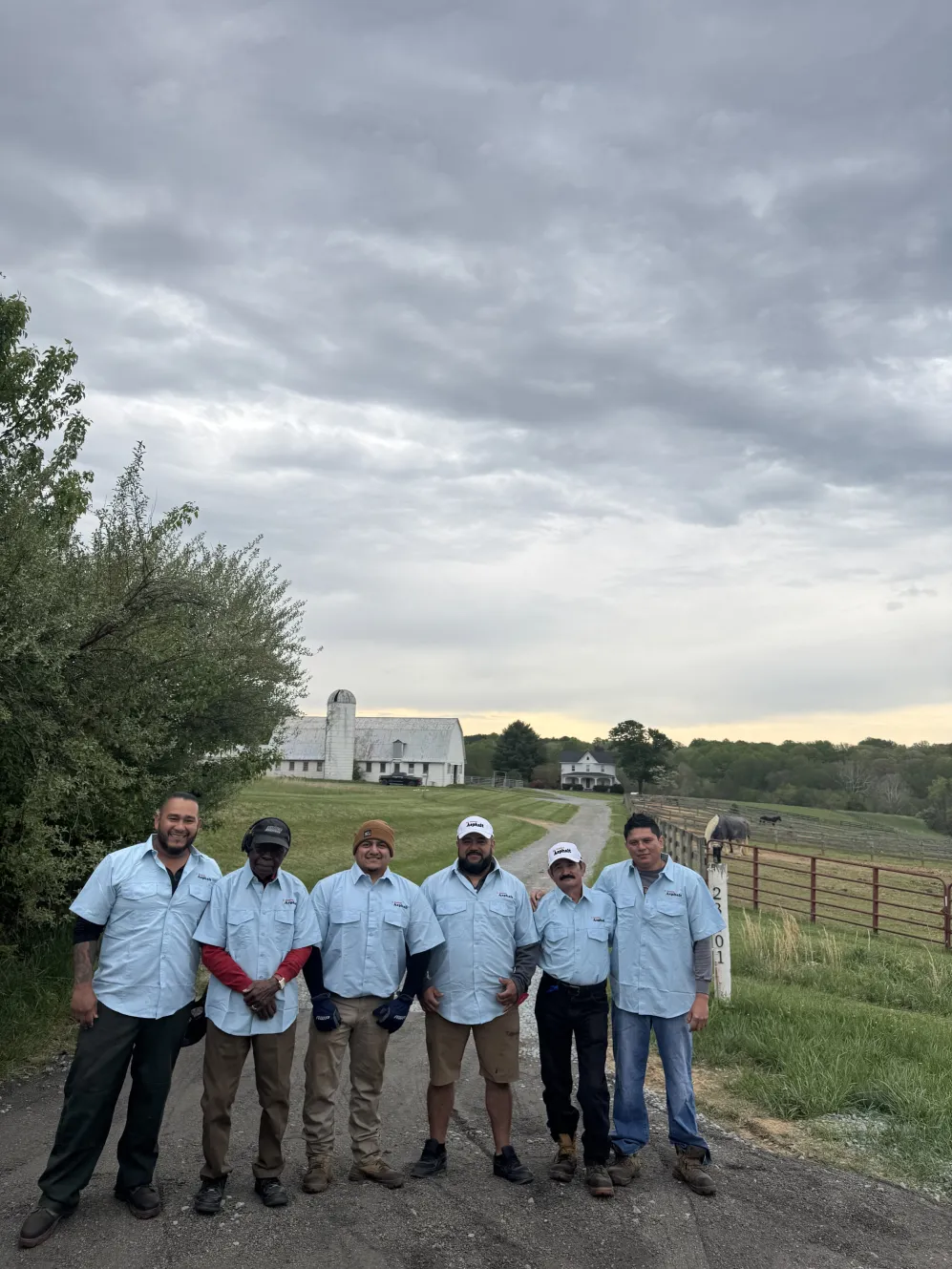
Same owner, same crew since 1988. Jim Stanley founded this company, and his son Mike runs it today. Jim or Mike is on every single job — not a salesman, not a project manager you never see again after the estimate. Our crew has been with us for years. These are experienced guys who know what they’re doing, and we don’t rotate them out or sub the work to whoever’s available that week. You get the same faces from estimate to completion.
We own our equipment. Our trucks, our paver, our roller — all ours. Not rented by the day, not borrowed from another crew. We show up ready, every time.
Highest rated on Google with verified reviews from your Montgomery County neighbors. Not bought, not incentivized — real people who hired us and took the time to write about it. Look us up before you decide.
Google Guaranteed, MHIC licensed, fully insured. We passed Google’s background check and screening. MHIC #01-66672 means we’re licensed by the State of Maryland. Both are on the record.
We don’t push unnecessary work. John priced his new driveway addition and his circular drive resurfacing as two separate jobs before deciding to do them together. We scoped each one honestly, and he made the call. That’s how we work on every property.
We know Garrett Park. The arboretum canopy and the root pressure it creates. The small lots and tight equipment access. The mix of Victorian, Chevy house, and Prairie Style homes — each era with its own driveway age and its own failure pattern. We’ve been paving here since 1988 and we’re not going anywhere.