
Parking Lot Paving in Montgomery County, MD
Commercial paving built for real traffic, real weight, and real accountability.
Commercial Parking Lots Built for Heavy, Everyday Use
A parking lot isn’t a big driveway. It takes more weight, more turns, more daily abuse from vehicles that are heavier and more frequent than anything a residential driveway sees. The materials are different. The equipment is different. The standards for what holds up and what doesn’t are different. We build commercial parking lots the same way we build everything else — with real specs, real equipment, and honest answers about what the job actually requires.
How Commercial Paving Differs from Residential
A residential driveway typically gets 9.5mm HMA topping asphalt, compacted with a 3 to 5 ton roller. That’s the right spec for passenger cars and light trucks on a private driveway. A commercial parking lot needs more — heavier base material, thicker layers, and bigger equipment to compact it properly. We use 12.5mm HMA topping asphalt on commercial jobs, a coarser, more durable mix designed to handle delivery trucks, garbage trucks, and the constant turning and braking that wears a parking lot surface down faster than straight-line driving ever would. For the base layer, we step up to 22.5mm HMA on soft ground or areas that need extra load-bearing capacity, and compact with 5 to 8 ton rollers that deliver the density a commercial surface needs to hold up under real use.
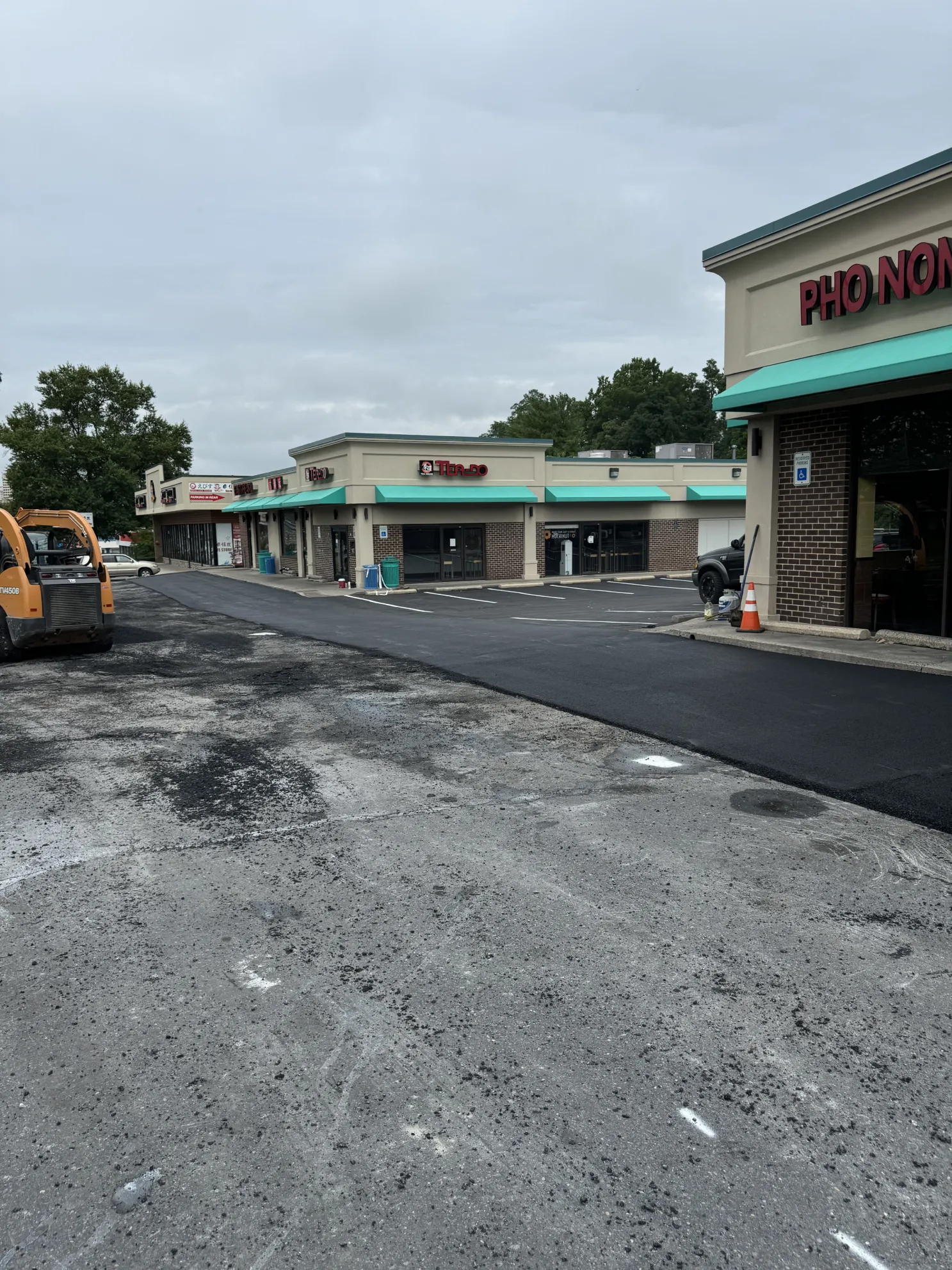
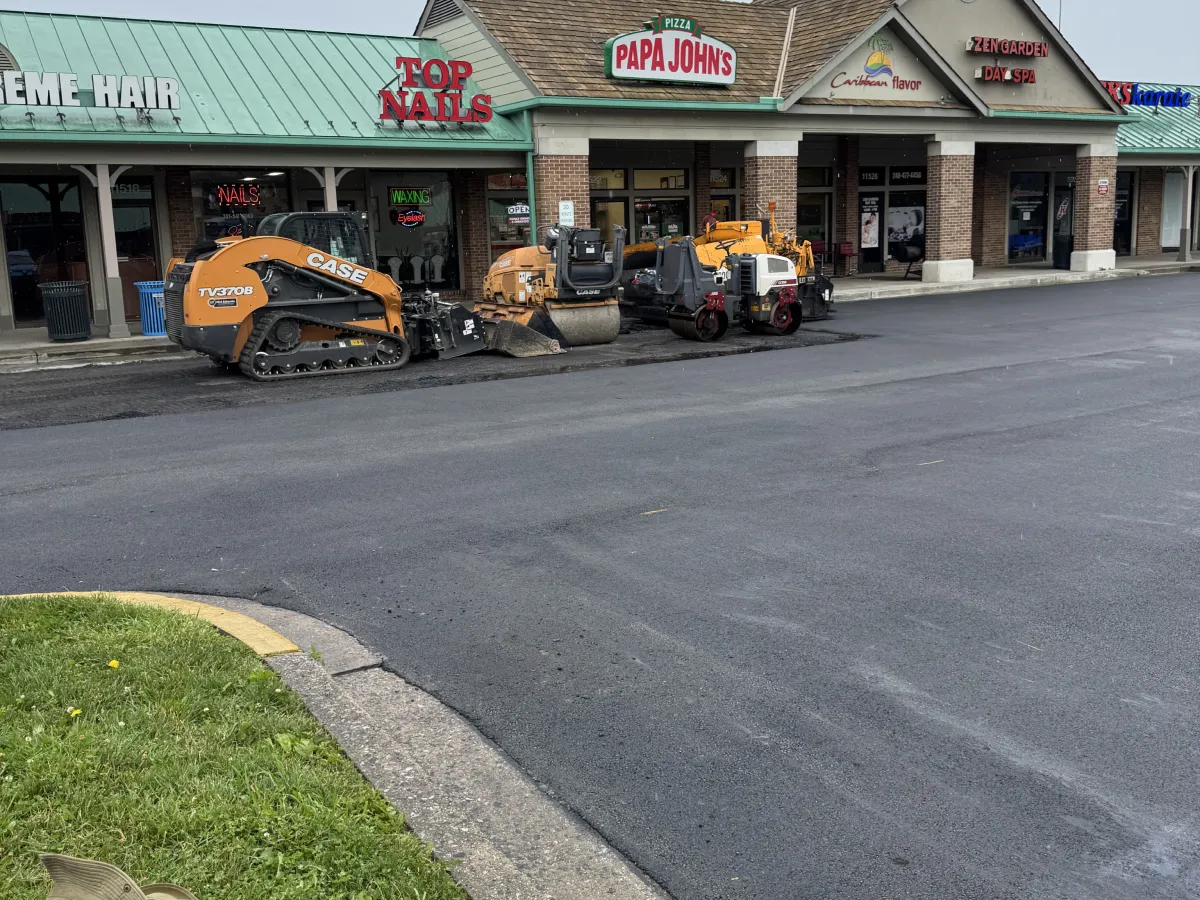
Shopping center lot — fresh commercial paving in progress
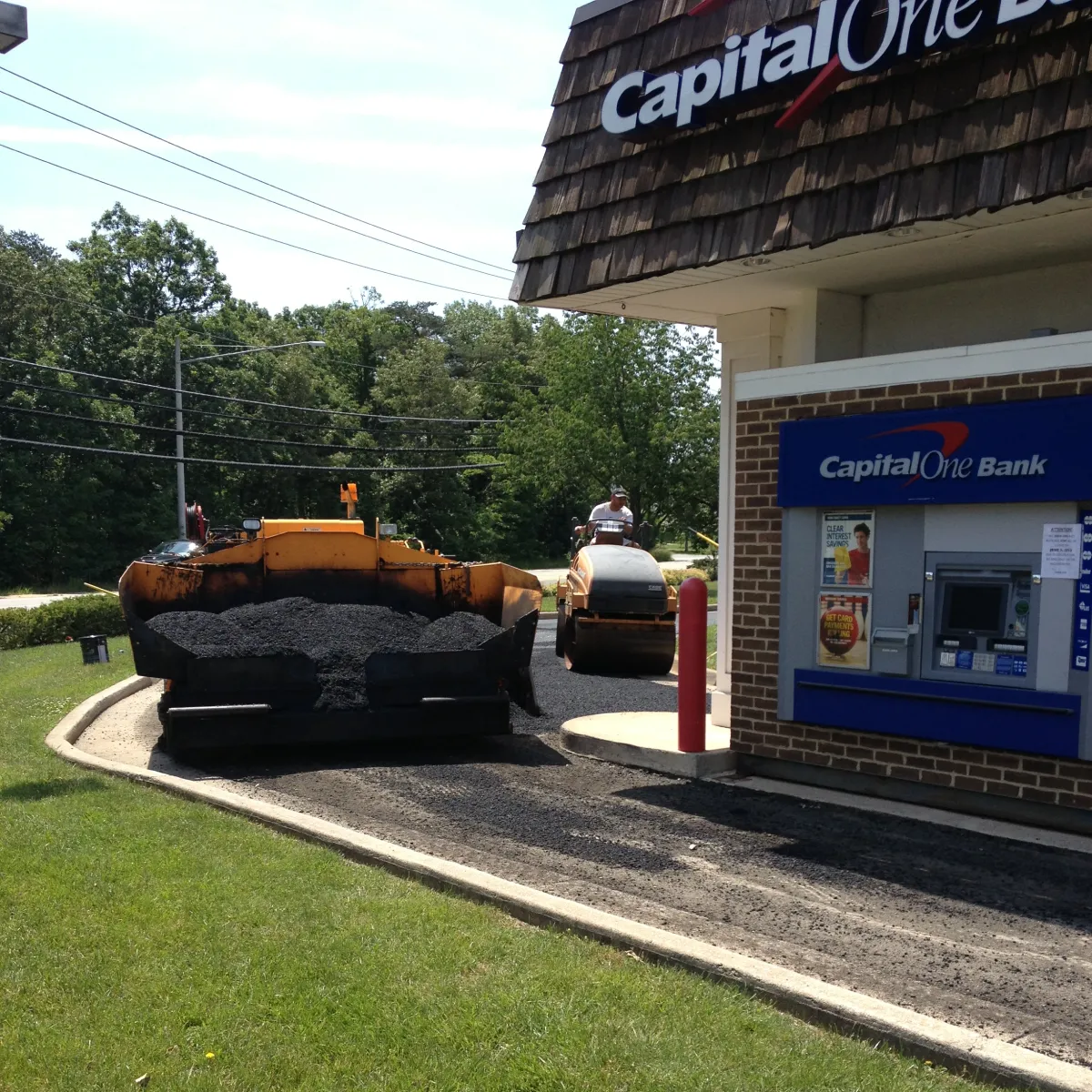
Paver laying asphalt at Capital One Bank drive-through
What Goes Into a Commercial Parking Lot Job
Every commercial paving job starts with the base — evaluating what’s there, whether it can support the new surface, and what needs to be added or rebuilt before asphalt ever goes down. On new construction, we build the base from scratch with proper stone and compaction. On repaves, we evaluate whether the existing base can support an overlay or whether sections need to come out and be rebuilt. We apply tack coat between layers so they bond as one structure, machine-lay the asphalt, and compact to the correct density for the traffic load the lot will actually carry.
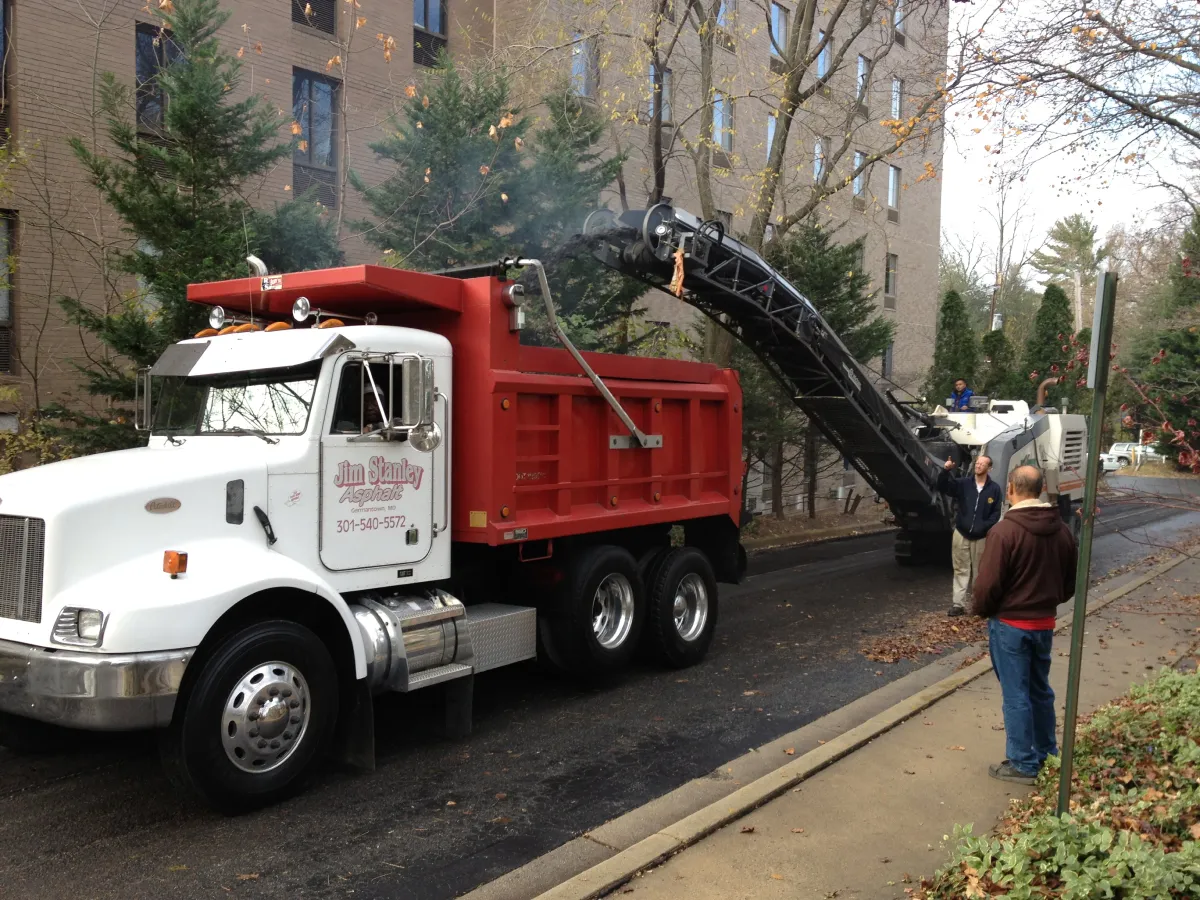
Milling
When a parking lot surface has worn unevenly or built up too high at transitions and curb lines, we mill it down — grinding off the damaged or excess layer to create a clean surface for an overlay or full repave. Removing that layer gives us room to lay new asphalt without raising the finished surface too high against curbs, entrances, or drainage points. Milling also lets us address specific problem areas without tearing out the entire lot, which can save time and money when only part of the surface has failed. We assess how much material needs to come off based on the condition of the pavement and the finished grade the lot needs. The milled asphalt gets recycled, just like the other asphalt we remove.
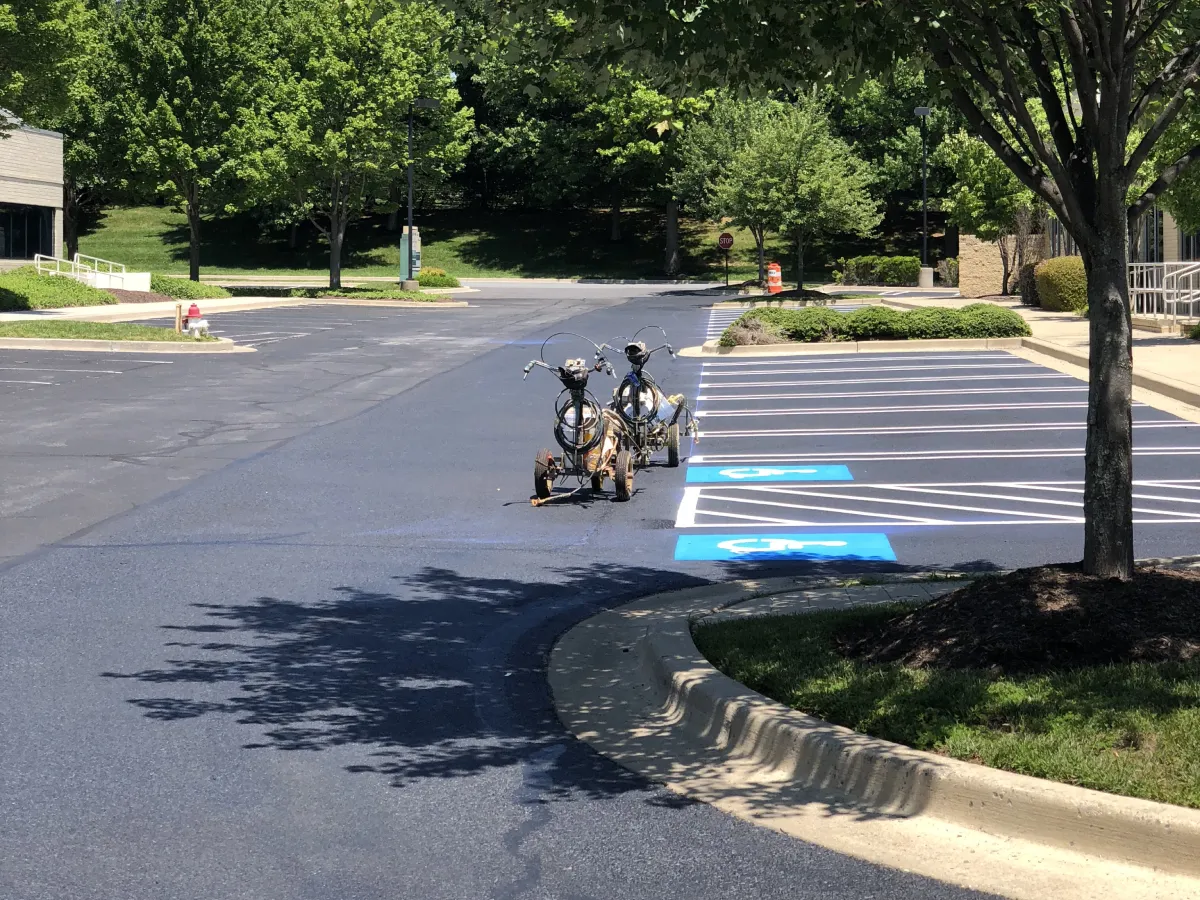
Line Striping and ADA Compliance
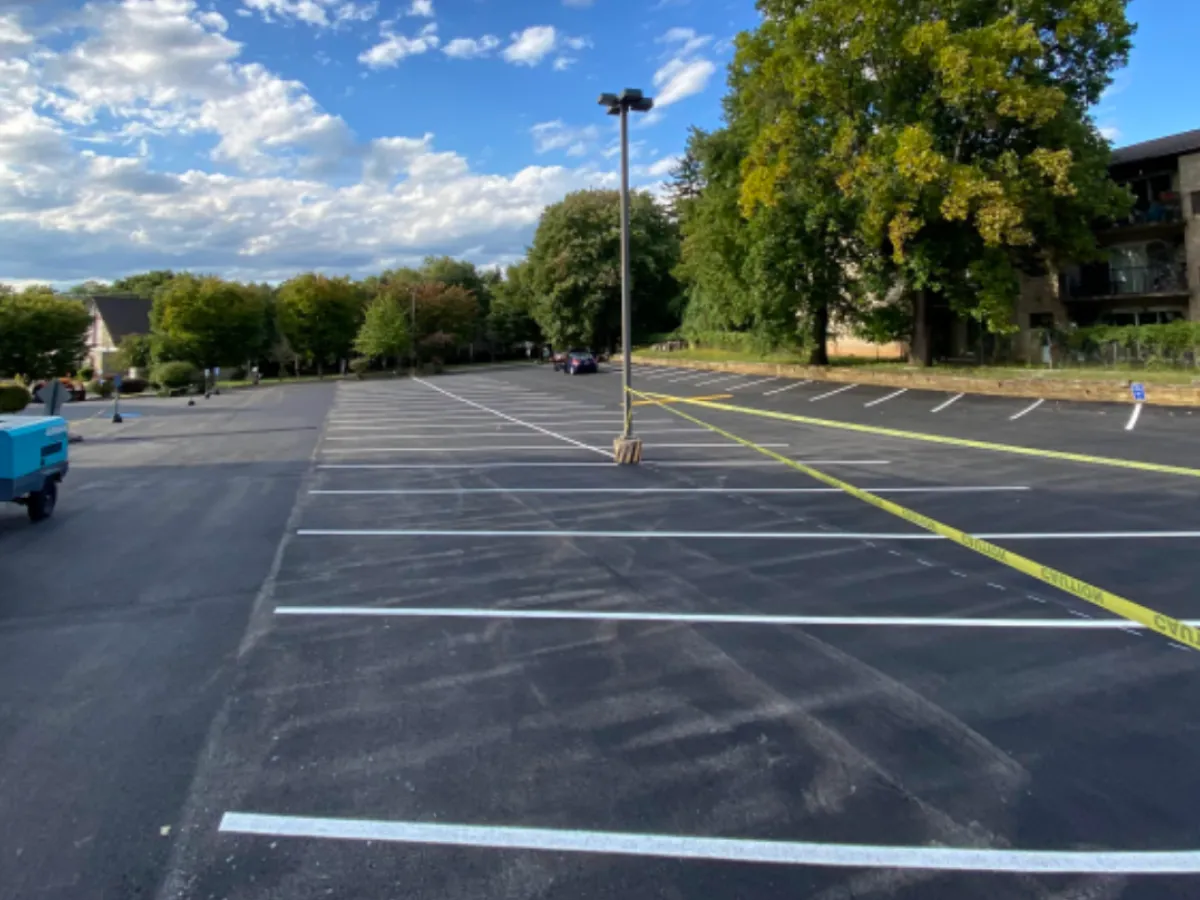
A freshly paved or resurfaced lot needs proper striping — parking stalls, fire lanes, handicap spaces, directional arrows, and any other markings required by code. Faded or missing striping on an older lot is one of the fastest ways to make a commercial property look neglected, and it’s also a liability issue. Handicap spaces, access aisles, and signage have to meet ADA requirements — non compliance isn’t just a code violation, it’s a legal exposure that falls on the property owner or manager. We handle striping as part of a paving or resurfacing job, or as standalone maintenance on an existing lot.
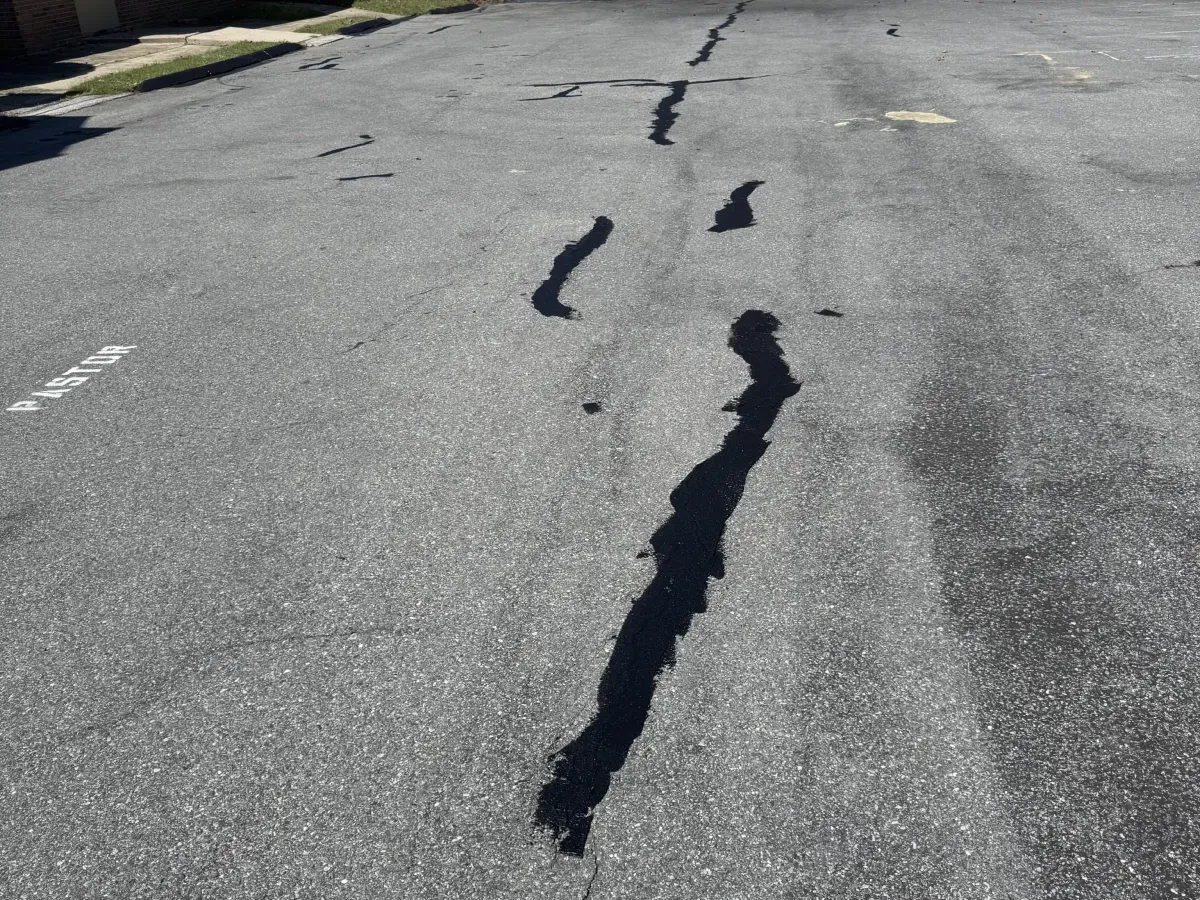
Crack Filling for Commercial Lots
The same freeze-thaw cycle that damages residential driveways hits commercial lots harder, because the surface area is larger and the traffic is heavier and more varied. Cracks in a parking lot spread faster than cracks in a driveway, and unrepaired cracks in high-traffic areas become potholes faster too. We fill with hot rubberized sealant and patch failed sections before they become trip hazards or vehicle damage — the kind of problems that turn into real liability for a property owner or manager.
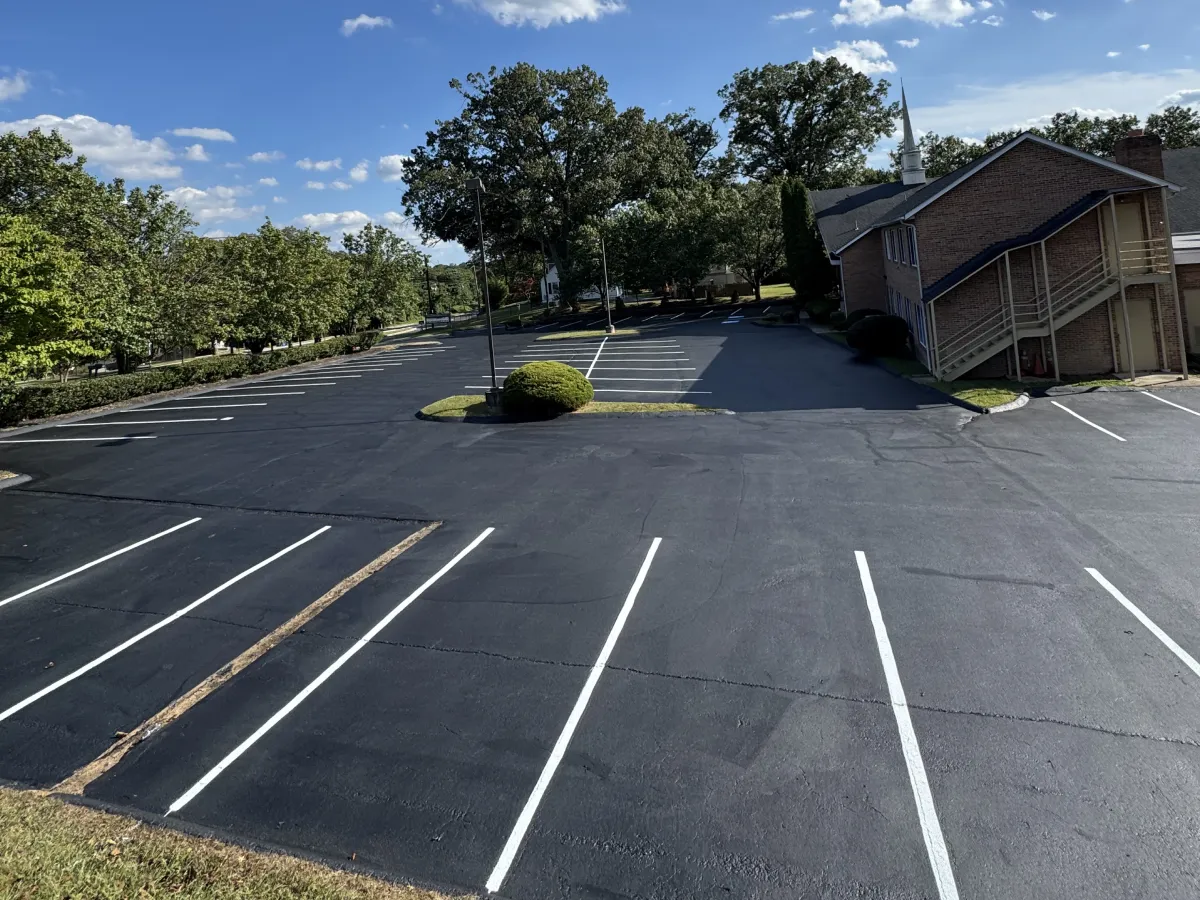
Sealcoating for Commercial Lots
Commercial lots take more UV exposure and more fluid contamination (oil, transmission fluid, coolant) than residential driveways, and both break down unsealed asphalt faster. A properly applied sealcoat extends the life of the surface and keeps the lot looking maintained rather than neglected. We recommend commercial lots get sealed on a regular cycle based on traffic volume and surface condition — not on a fixed calendar, but on what the lot actually needs when we look at it.
Bumper Blocks and Speed Bumps
Bumper blocks keep vehicles from overhanging sidewalks, landscaping, or building walls. Speed bumps control traffic flow through lots where pedestrians and vehicles share space — churches, schools, shopping centers, HOA communities. Both take real abuse from daily traffic and weather, and both need to be installed on a properly prepared surface so they don’t shift or crack loose after one winter. We install new ones as part of a paving job or replace damaged ones on existing lots.
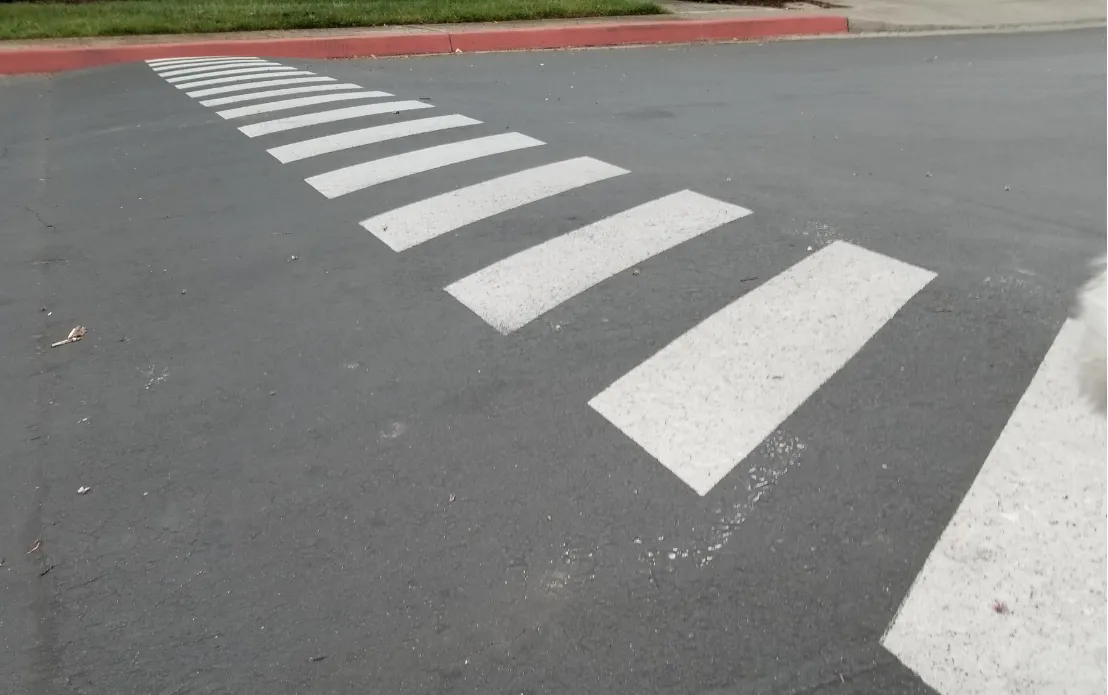
Ongoing Maintenance Matters More on Commercial Lots
A residential driveway gets used by the same few cars every day. A commercial lot gets used by everyone — customers, employees, delivery drivers, garbage trucks — and that volume of varied traffic wears the surface faster and less evenly than residential use does. Crack filling, patching, sealcoating, and restriping on a regular schedule aren’t optional extras for a commercial lot — they’re what keeps a parking lot functional and safe instead of becoming a liability.
Churches, HOAs, and Property Managers
A lot of our commercial work comes from property managers, church boards, and HOA communities — organizations that need the work done right but also need clear communication about what it’s going to cost and how long it’s going to take, because they’re answering to a board or a congregation, not just making a personal decision. We’re used to that dynamic. We give you a clear scope, a real timeline, and numbers you can take back to your decision-makers without having to translate contractor language into plain English.
See Real Commercial Projects
We’ve done parking lots, private roads, and commercial surfaces across Montgomery County. See real project details on our Montgomery County commercial page, including work for property management companies, churches, and retail centers.
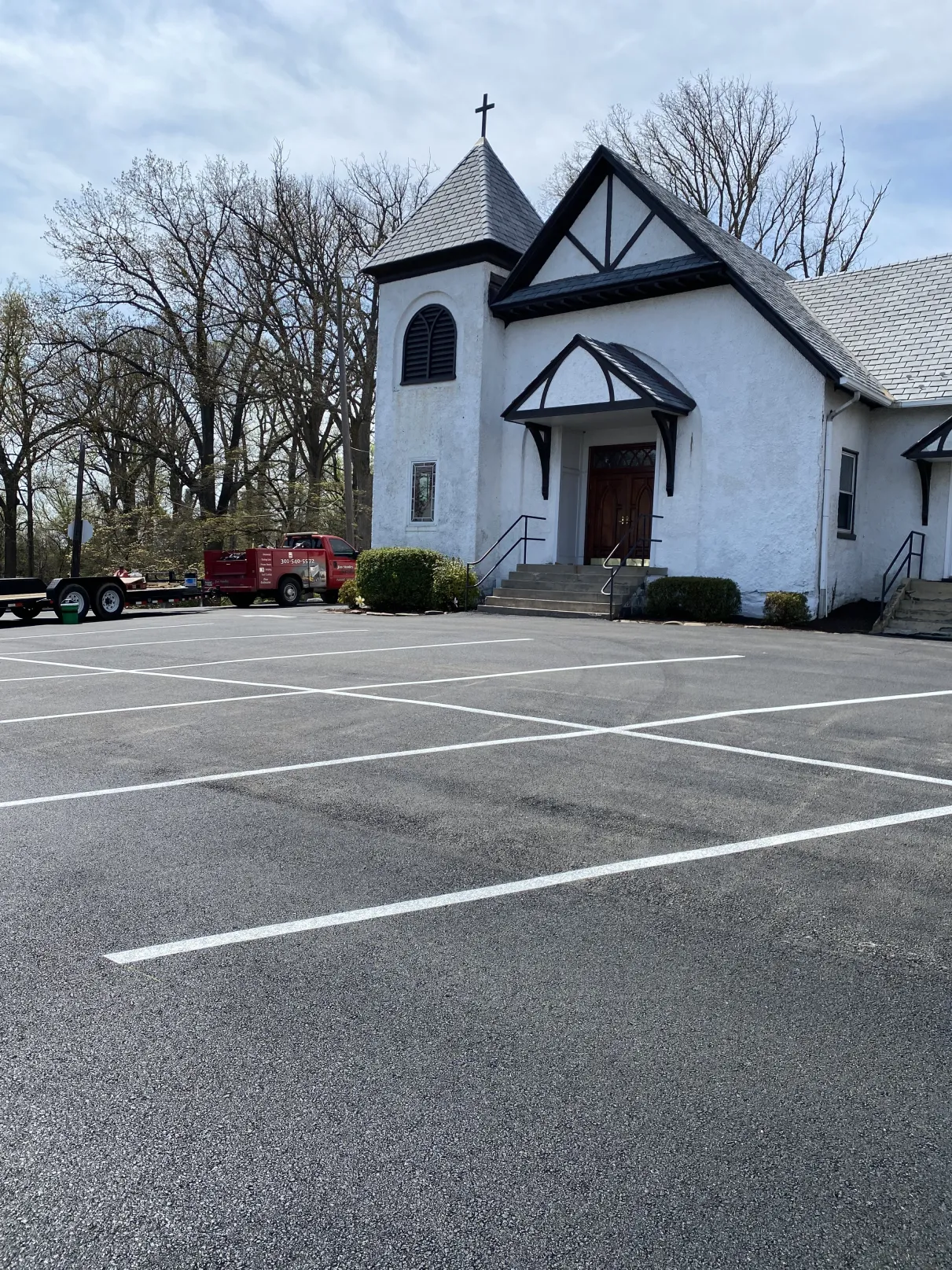
Church parking lot — mill and overlay with fresh line striping
Why Montgomery County Property Managers Call Us
Same owner, same crew since 1988. Jim or Mike is on every commercial job personally — not a salesman who disappears after the bid. We own our equipment, all of it — trucks, pavers, rollers — not rented by the day.
Highest rated on Google with verified reviews. Google Guaranteed, MHIC licensed, fully insured. MHIC #01-66672, on the record.
We don’t push unnecessary work. If your lot needs spot repairs and sealcoating, not a full repave, we’ll tell you that. If it needs to come out entirely, we’ll explain why and what it costs before we start.