
Culvert Pipe Replacement in
Montgomery County, MD
The job most paving companies won’t touch. We built our name on it.
Culvert Pipe Replacement Done Right
Ask five different paving companies about culvert pipe replacement and four of them will find a reason to pass. It’s not that the work is harder than paving a driveway – it’s that Montgomery County requires permits for it, and most companies would rather stick to jobs that don’t involve the county at all. We do this work regularly. If your driveway problem is actually happening underground, we’re one of the few companies in this county who will tell you that honestly and fix it right.
What a Culvert Actually Does
A culvert is the pipe that runs underneath your driveway, letting water pass through instead of pooling against it or eroding the ground around it. It’s easy to ignore because you can’t see it – until it fails, and then it becomes the only thing that matters. A driveway can look fine on the surface and still be sitting on top of a collapsed or corroded pipe that’s slowly taking the ground underneath it with it.
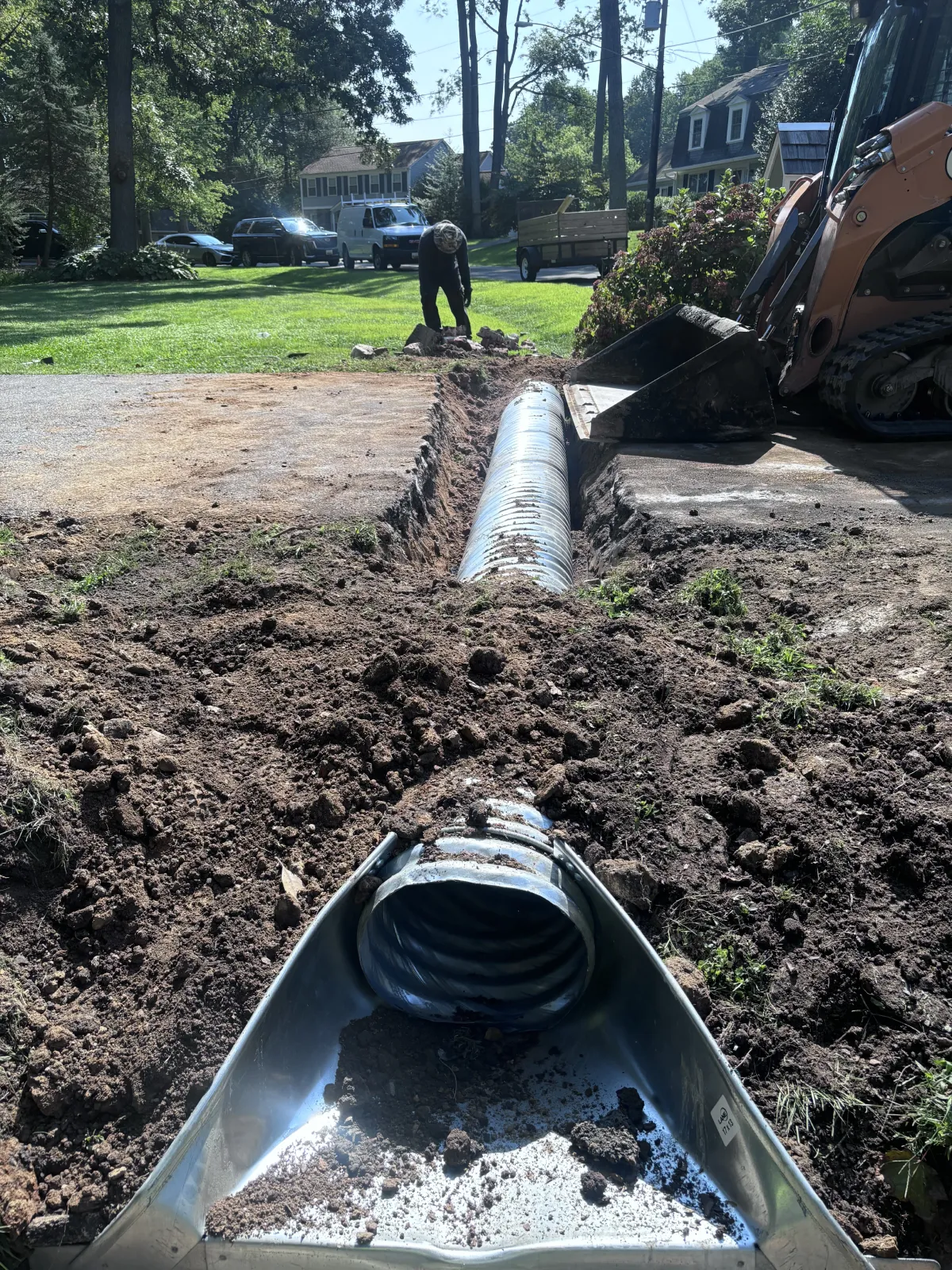
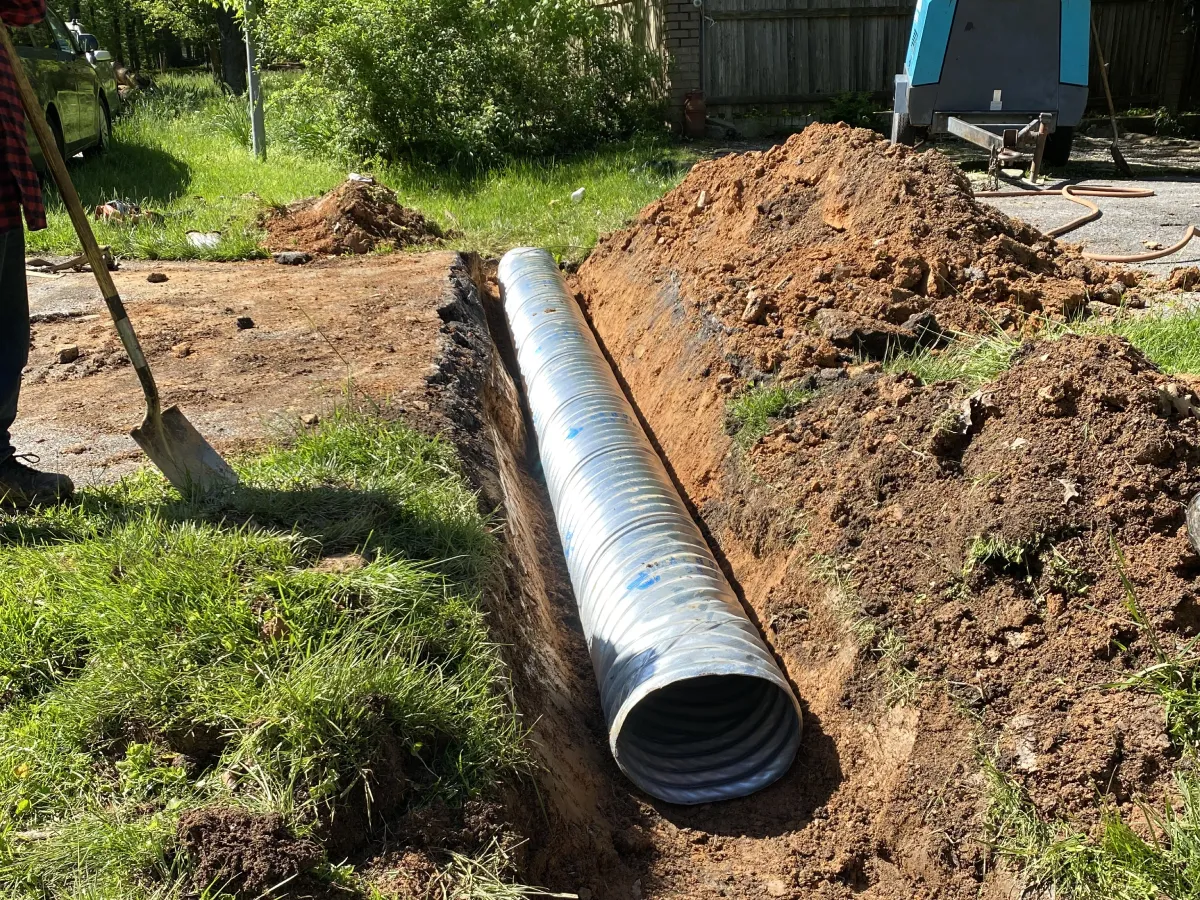
New metal culvert pipe set in the excavated ditch with flared end
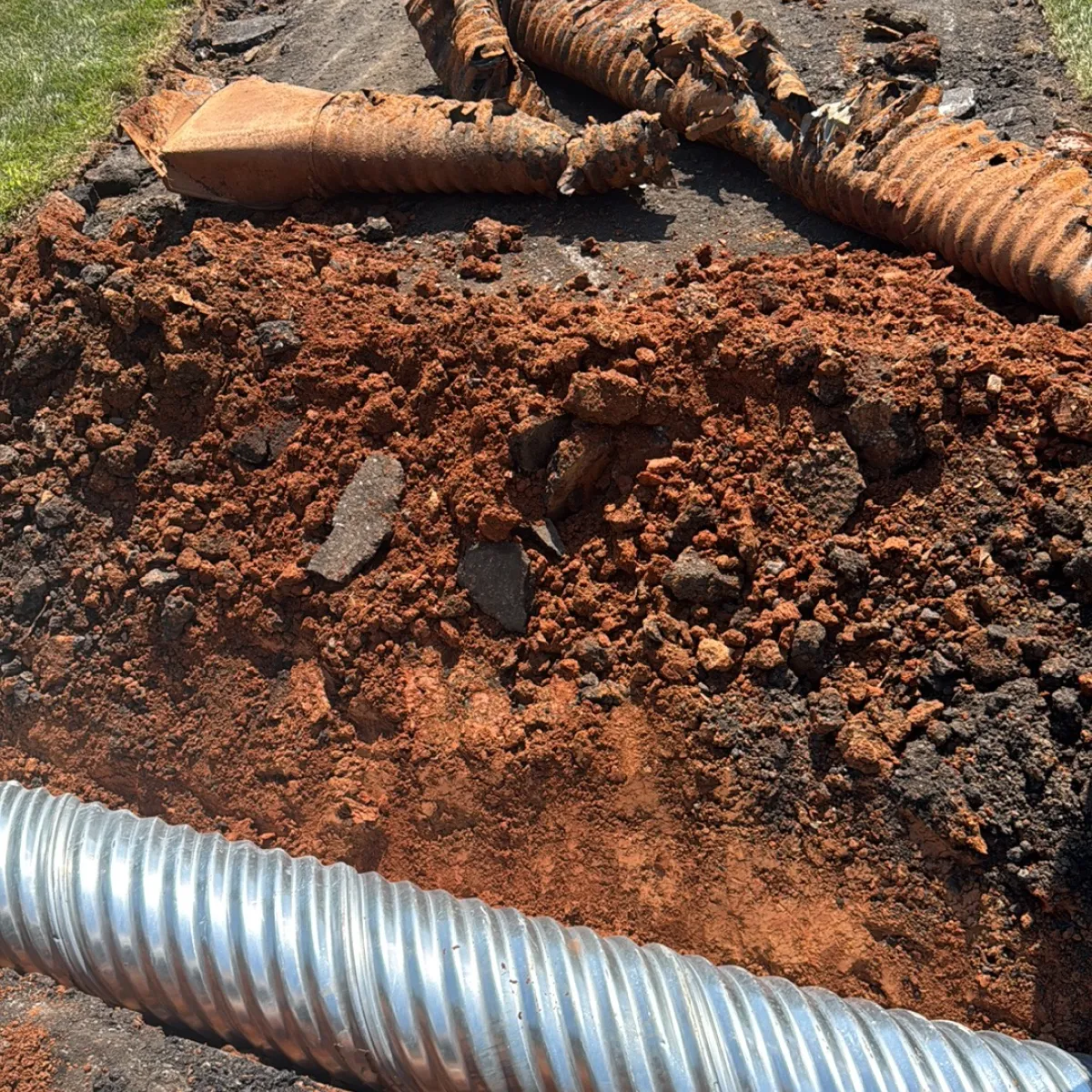
Rusted, collapsed old pipe removed—new metal pipe ready to replace it
Signs Your Culvert Has Failed
Water pooling in the same spot after every rain, no matter how well the rest of the driveway drains. A dip or soft spot that keeps returning even after it’s been patched. Standing water in the yard or ditch near where the driveway meets the road. Visible rust, cracking, or collapse if the pipe itself is exposed. Any of these usually points to a problem underground, not on the surface – and no amount of resurfacing or patching fixes a pipe that’s already failed.
Pipe Materials, and Why It Matters
The right pipe depends on how much coverage it’s going to have over the top of it, not just personal preference. For most residential driveways, we use Montgomery County approved metal pipe. Residential ditch lines are often already dug and tend to be shallow, which means the pipe doesn’t get the depth of earth, stone, and material sitting on top of it that deeper installations do. Without that coverage, HDPE plastic pipe can flex and shift under vehicle traffic, and that movement transfers up into the driveway surface as cracking. Metal pipe holds up better in that shallower, lighter coverage situation. On commercial properties, where there’s typically more depth and material covering the pipe, HDPE performs well and is a material we do use. We size the material to the actual site conditions, not the other way around.
Pipe Size and Length - The Math Most Homeowners Never Hear
A standard Montgomery County culvert pipe isn’t round – it’s a squash pipe, 13 inches by 17 inches. The length isn’t just whatever fits your driveway either; the county requires 5 feet of pipe extending past each edge of the driveway so homeowners don’t end up driving into the open ditch on either side. That means a 10 foot wide driveway needs a 20 foot pipe, and a 20 foot wide driveway needs a 30 foot pipe. There’s also a hard cap here: 20 feet is the maximum width allowed for a residential apron, unless the property is grandfathered in under older rules. We measure the driveway and account for those extensions before selecting a pipe, because a pipe that only spans the paved area leaves the ditch exposed right where vehicles enter and exit.
Widening a Driveway with an Existing Culvert
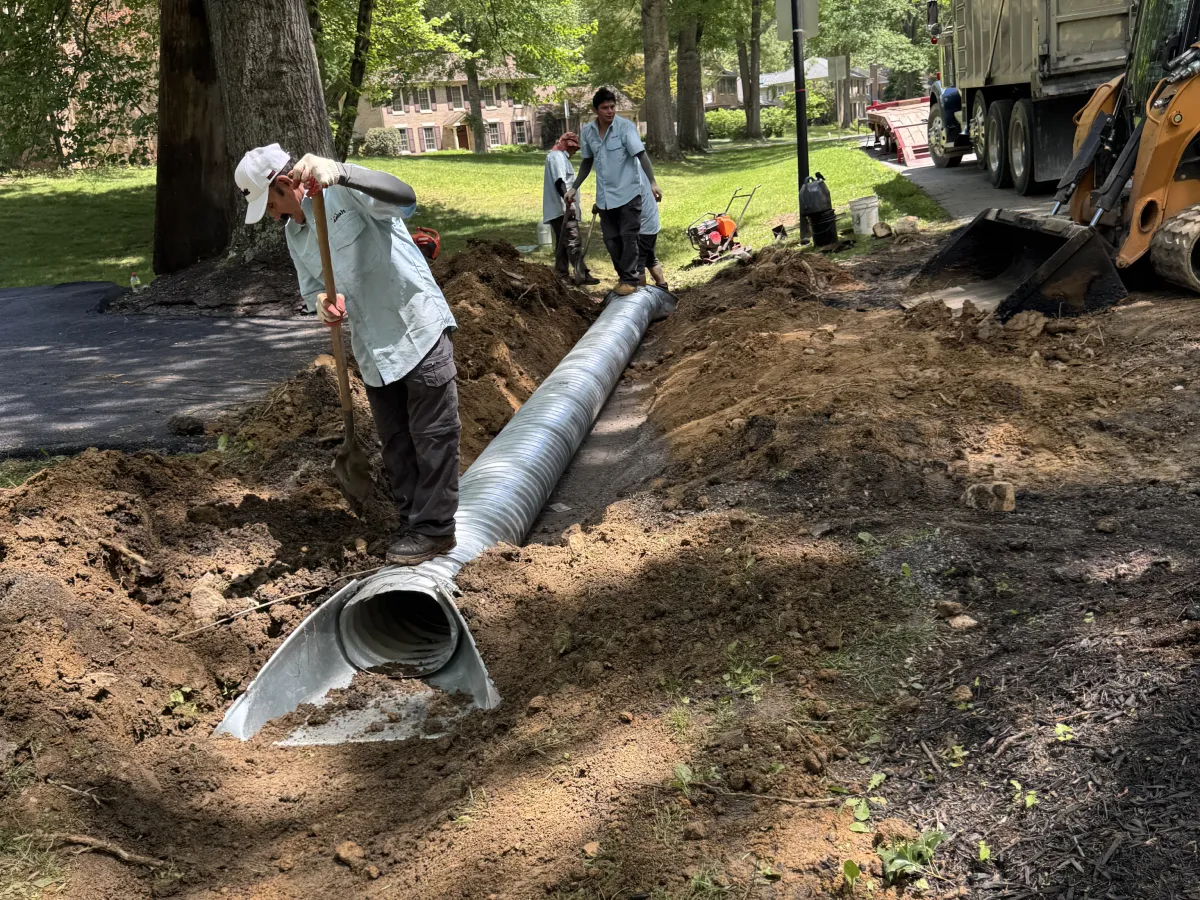
Sometimes a homeowner with a 10 foot driveway and a 20 foot pipe already in the ground decides the driveway itself feels too narrow and wants it widened a few feet. That changes the math on the pipe too. Since pipe length is tied directly to driveway width, widening the driveway means the existing pipe is no longer long enough to meet the 5 feet past each edge requirement. Depending on the situation, that either means extending the existing pipe on one side to make up the difference, or replacing the whole thing with a longer pipe if extending it isn’t practical.
Setting and Leveling the Pipe
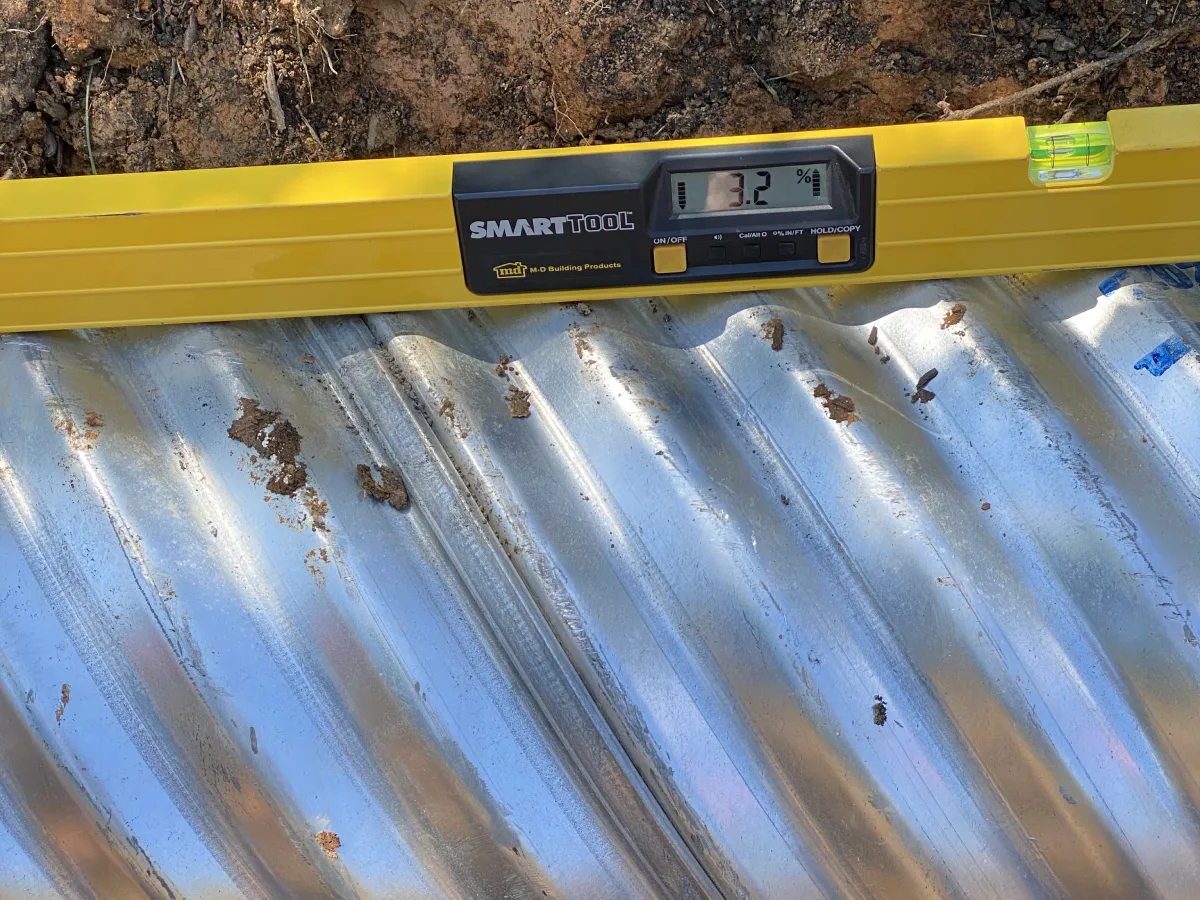
Before any material goes on top, the pipe has to be checked for bow and set with the proper fall so water drains through it instead of collecting in the middle. We check how the pipe sits along the ditch line and make sure its ends are positioned to let water enter and leave freely. It also has to be locked in place so it can’t shift or bounce once weight starts going on top of it. That matters during installation as well as after the driveway is in use: adding material around a pipe that isn’t secure can move it out of position before the job is finished. Skip these steps and you can end up with a sag in the middle of the pipe that holds standing water permanently.
Built to Real Standards, Not Just What’s Convenient
We’ve done enough of these to know exactly what Montgomery County inspectors are checking for. The county requires a solid, compactable foundation underneath the pipe – 6 inches of stone, or a dirt and stone mixture, but never soft material or red clay. Before the new pipe goes in, that ditch line has to be compacted first. Over the top of the pipe, the county requires roughly a foot of coverage, which includes 4 inches of base asphalt and 2 inches of topping asphalt – more than the standard 3 inches of base we’d use elsewhere. The flared end also has to connect at the last rib of the pipe, bolted and tightened at that exact connection point.
See Real Examples of Our Work
See the full story, with real photos and real project details, on our Rockville Culvert, Potomac Culvert, and Olney Culvert pages.
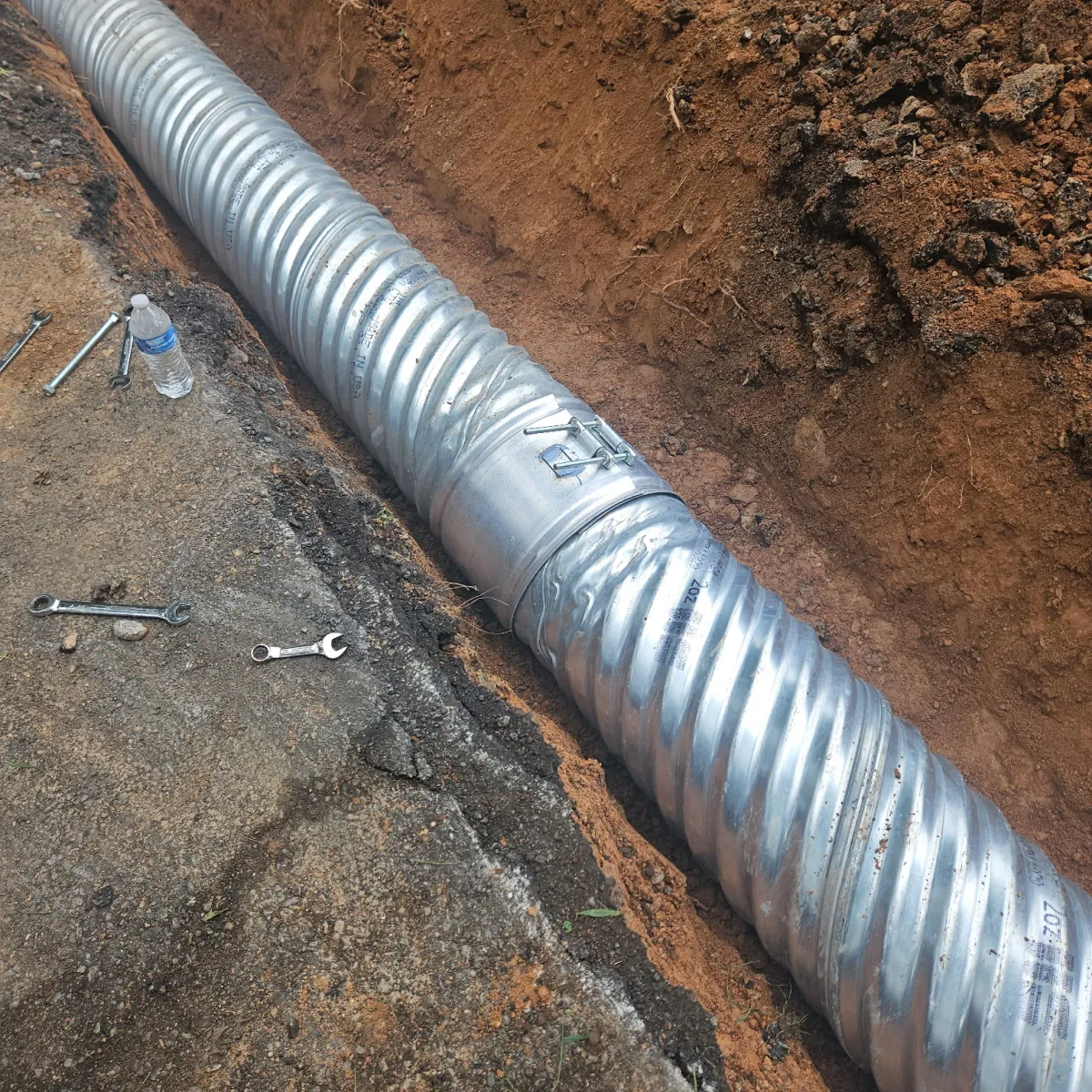
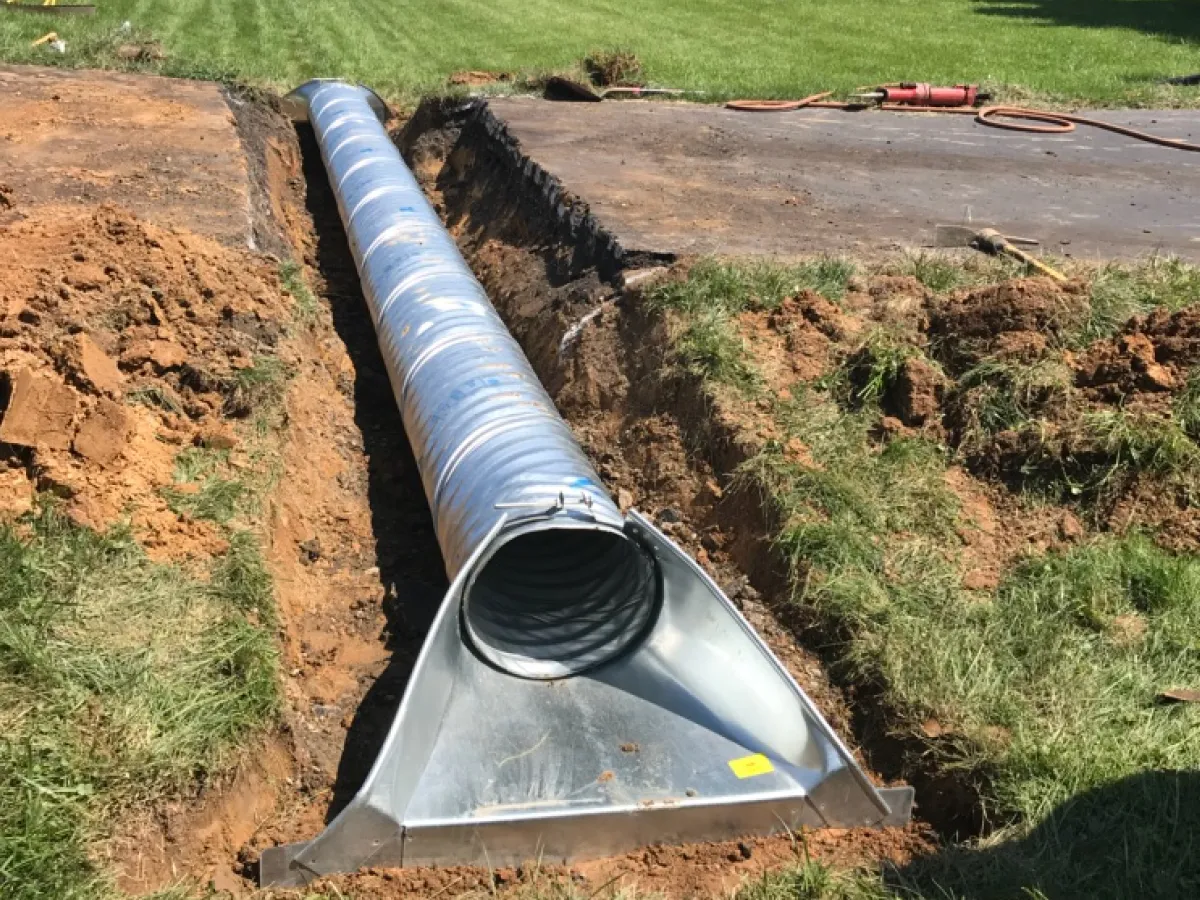
30-foot pipe — two sections joined with a coupler. Pipes don’t come in one piece at this length.
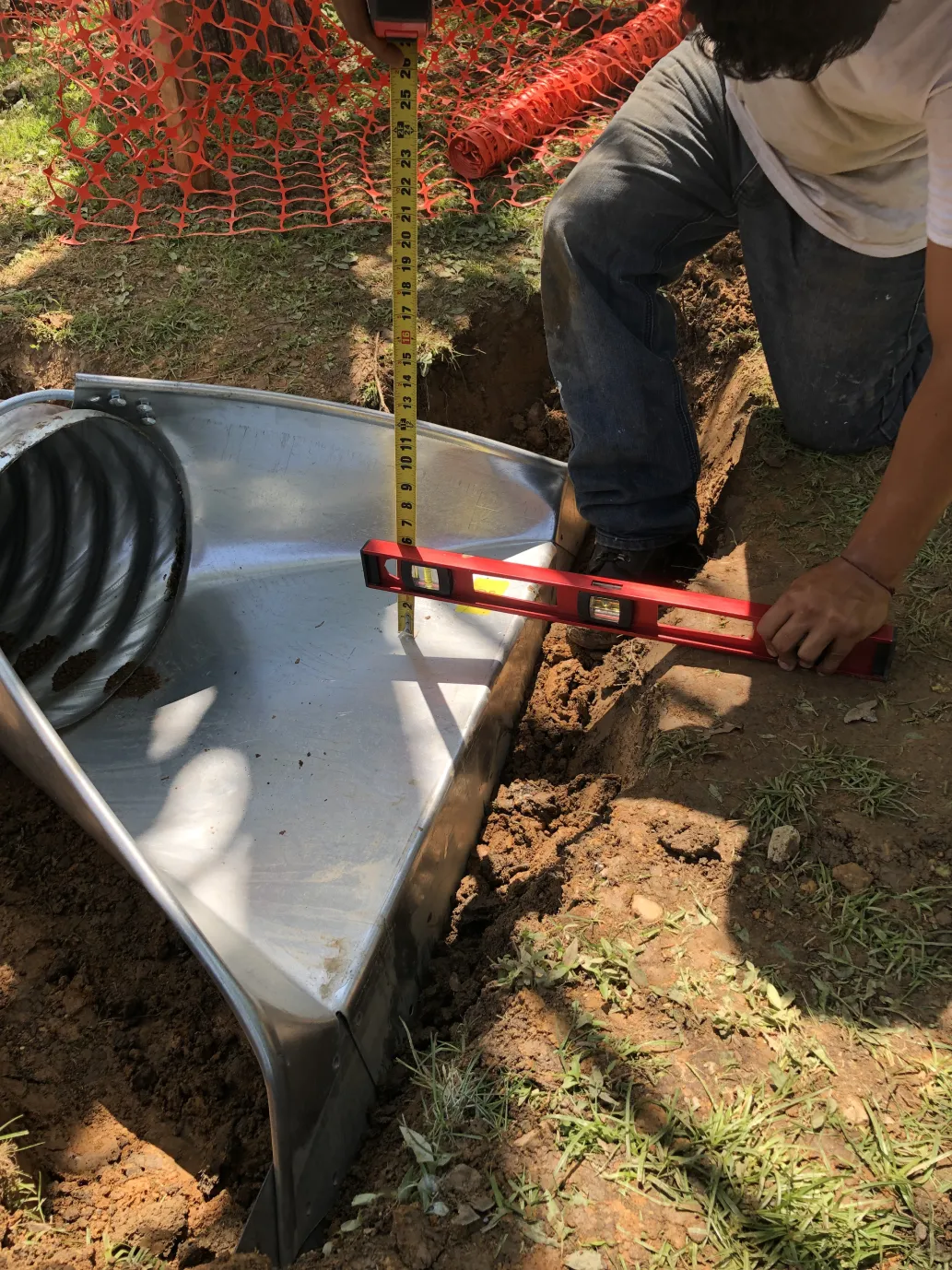
Measuring depth at the flared end — checking county coverage requirements
When the Ditch Line Doesn’t Have Enough Coverage
Most of the time, about 80 to 90 percent of jobs, the ditch line has plenty of depth and this isn’t something you’ll ever need to think about. Occasionally the ditch line was graded shallow by the county long before we ever get involved, and there isn’t a full foot of coverage available over the pipe no matter what we do. When we run into this, we flag it directly with the inspector and work out a solution together, usually building up the asphalt base further to make up the difference.
Who Actually Pays for This
The county technically owns the culvert pipe and the apron section of your driveway, because of setback and right of way rules. You’d think that means the county is responsible for fixing or replacing them. It doesn’t. The homeowner is the one who pays for the repair or replacement, even though the county owns what’s being repaired.
Navigating the Permit Process
Montgomery County requires a permit for culvert work, and by design, it’s the homeowner who applies for it, not the contractor. The process itself isn’t complicated, but it can feel overwhelming if you’re not comfortable navigating a county website. Once the homeowner has that permit in hand, we take it from there – scheduling with the inspector, coordinating the work around that timeline, and handling the rest of the process from that point forward.
The County Apron
Culvert work and the county apron usually go hand in hand. Montgomery County has specific dimension requirements here as well: a 7 foot wing on each side of the flared section, a 1 foot straight point, and a clean saw cut where the new surface meets the existing street.
What’s Not Included – Landscaping and Seeding
Most culvert permits require the disturbed ground around the new pipe to be backfilled with fresh grass, sod, or seed once the work is done. We try to leave the surrounding grass as intact as possible while we work, but realistically, about 95 percent of the time some amount of dirt, sod, or seed work is still needed afterward. We do asphalt work, not landscaping, so that part is on the homeowner to handle.
Own or manage a commercial property? Drainage pipes fail under parking lots the same way they do under driveways. Visit our Montgomery County commercial page.
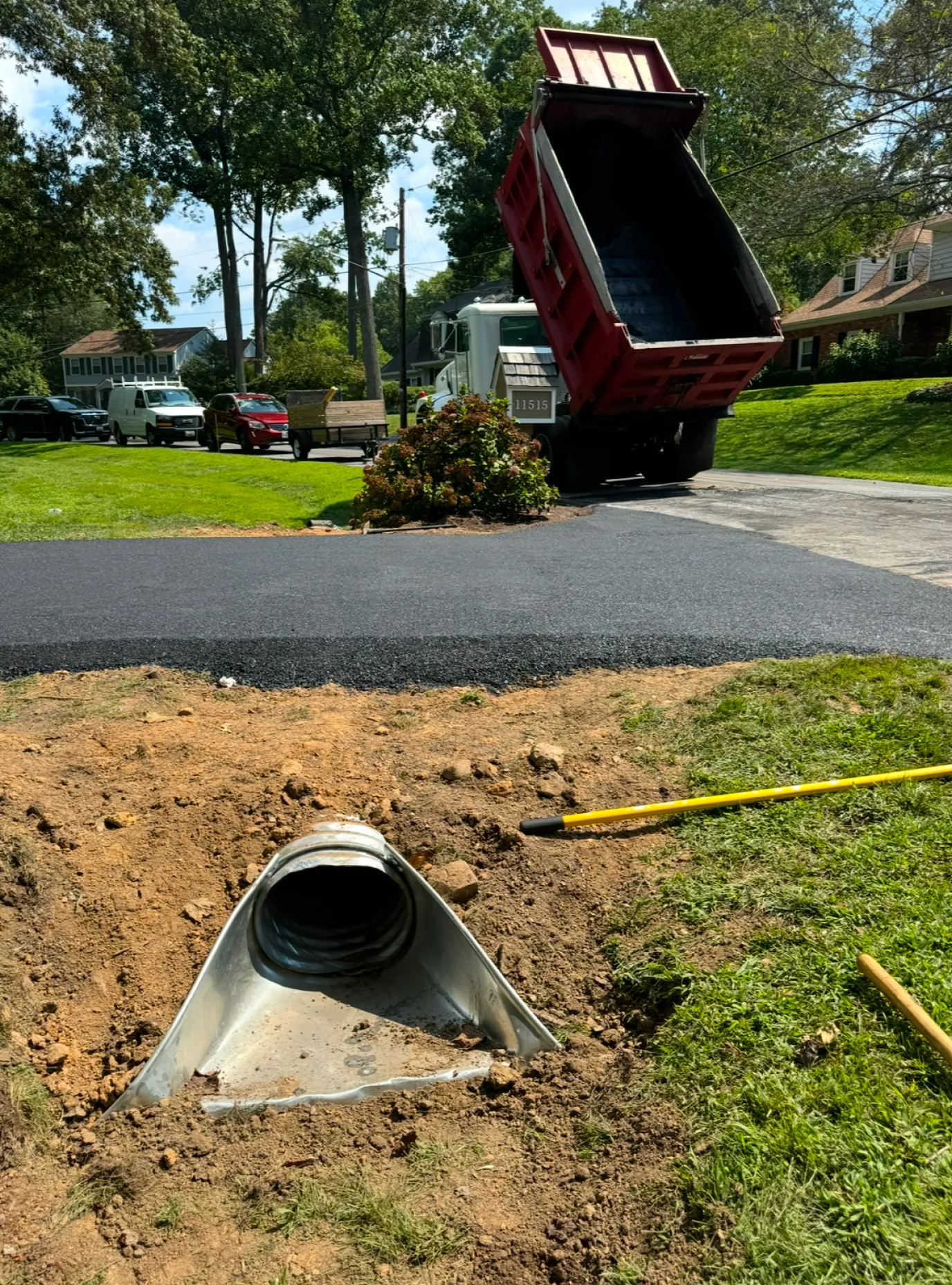
Finished apron — fresh asphalt over new culvert, flared end visible

Why Montgomery County Homeowners Call Us
Same owner, same crew since 1988. Jim or Mike is on every single job. We own our equipment, all of it. Highest rated on Google with verified reviews from real Montgomery County customers. Google Guaranteed, MHIC licensed, fully insured, MHIC #01-66672. We don’t push unnecessary work.